
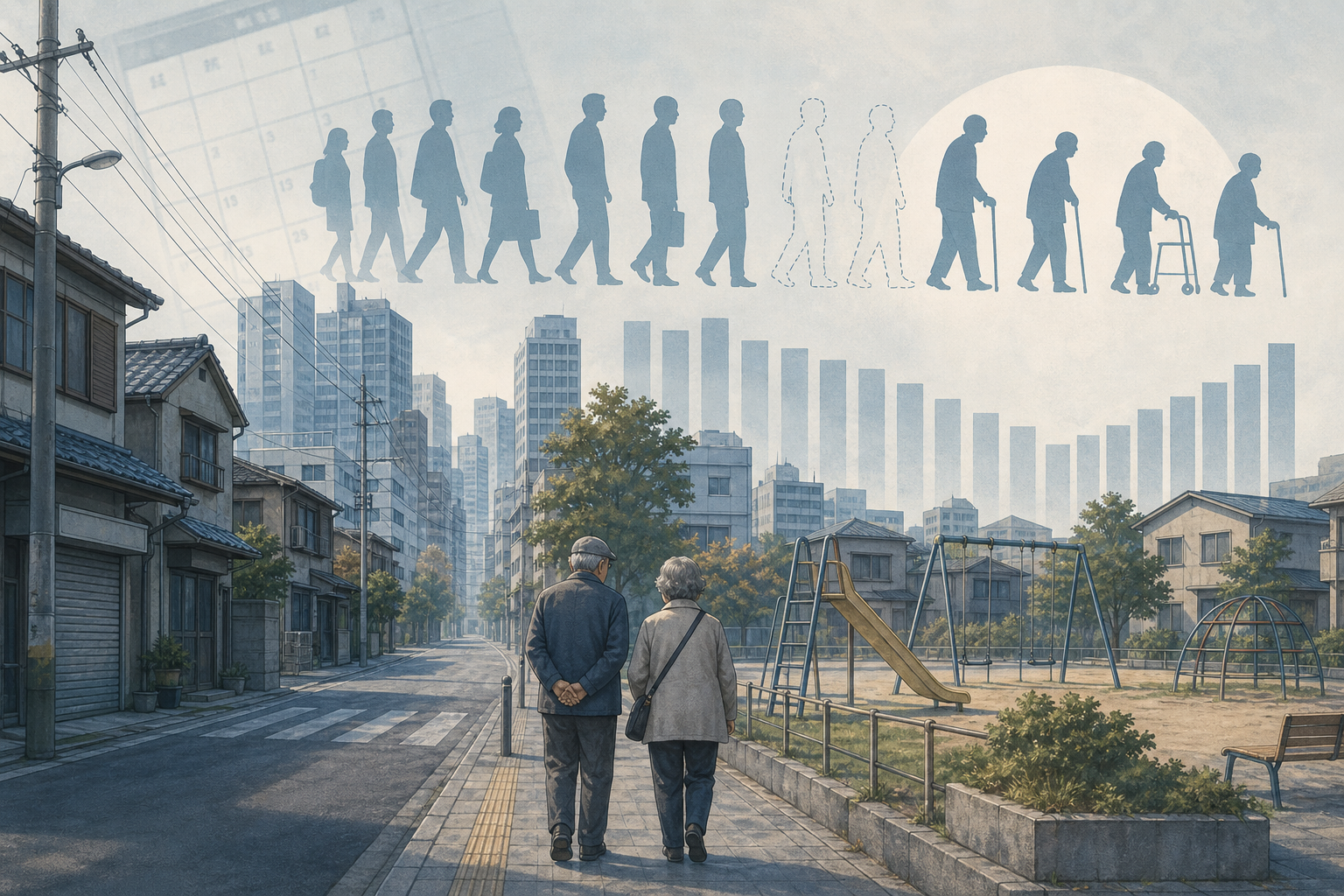
A country with fewer people may not sound like a country in crisis. Trains may be less crowded, housing may become easier to find, and fewer consumers may produce less pollution. Some people therefore question why governments are so worried about population decline. The answer is that the number of people is only part of the issue. What matters just as much is who is becoming fewer—and who is becoming more numerous.
人口が少ない国は、危機にある国のように聞こえないかもしれません。電車は混雑が減り、住宅は見つけやすくなり、消費者が減れば汚染も減るかもしれません。だから一部の人は、政府がなぜ人口減少をそれほど心配するのか疑問に思います。答えは、人数は問題の一部にすぎないということです。同じくらい重要なのは、誰が減っているか、そして誰が増えているかです。
Japan, China, and South Korea all have very low birth rates and rapidly aging populations. When fewer children are born but people continue to live longer, the country’s age structure changes. The number of older people grows in relation to the working-age population. Japan’s working-age population, for example, fell by 16 percent between its 1995 peak and 2024. The OECD projects a further major decline by 2060.
日本、中国、韓国はいずれも出生率が非常に低く、急速に高齢化しています。生まれる子どもが減る一方で人々が長生きし続けると、国の年齢構成が変わります。高齢者の数は、生産年齢人口との関係で増えます。たとえば日本の生産年齢人口は、1995年のピークから2024年までに16パーセント減少しました。OECDは、2060年までにさらに大きな減少を予測しています。
Economists often describe this relationship using the dependency ratio. Imagine a society with 60 working-age adults and 20 older people. There are three potential workers for every older person. Years later, there may be only 45 working-age adults but 30 older people. The total population has not collapsed, but the balance has changed: fewer workers must support more people who may need pensions, medical care, and daily assistance.
経済学者はしばしば、この関係を従属人口指数を使って説明します。生産年齢の成人が60人、高齢者が20人の社会を想像してください。高齢者一人につき、潜在的な労働者は三人います。数年後には、生産年齢の成人が45人しかおらず、高齢者が30人いるかもしれません。総人口は崩壊していませんが、バランスは変わりました。より少ない労働者が、年金、医療、日常の支援を必要としうるより多くの人を支えなければなりません。
The effects soon appear in everyday life. A labor shortage develops when employers cannot find enough people to fill necessary positions. Hospitals may lack nurses, construction companies may delay projects, and restaurants may shorten their opening hours. Some businesses respond by raising wages or introducing machines. Others close, especially in rural communities where both workers and customers are disappearing.
影響はまもなく日常生活に現れます。雇用主が必要な職を埋めるのに十分な人を見つけられないとき、労働力不足が生じます。病院には看護師が足りず、建設会社は工事を遅らせ、レストランは営業時間を短くするかもしれません。一部の企業は賃金を上げたり機械を導入したりして対応します。他は閉店します。特に、労働者と顧客の両方が消えていく地方の地域でそうです。
Population aging also affects public finances. In many countries, current workers and employers pay taxes and contributions that help finance the pension system and medical care for today’s older population. If the number of contributors falls while the number of recipients rises, governments face difficult choices. They may raise taxes, reduce benefits, increase the retirement age, borrow more money, or transfer spending away from other services.
人口高齢化は公共財政にも影響します。多くの国では、現在の労働者と雇用主が税金と拠出金を支払い、今日の高齢者人口のための年金制度と医療を賄う助けとしています。拠出者が減る一方で受給者が増えると、政府は難しい選択に直面します。増税、給付の削減、退職年齢の引き上げ、さらなる借入、または他のサービスからの支出の振り替えをするかもしれません。
Immigration is one possible response, but it is not the only one. Governments can raise productivity by helping each worker produce more through technology, education, and better management. They can increase labor-force participation by making it easier for women, older people, and people with disabilities to remain employed. Family policies may support people who want children, although they usually take many years to affect the size of the labor force.
移民は可能な対応の一つですが、唯一のものではありません。政府は、技術、教育、より良い経営を通じて各労働者がより多く生産するよう助けることで、生産性を高められます。女性、高齢者、障がいのある人々が就業を続けやすくすることで、労働力参加を増やすこともできます。家族政策は子どもを望む人々を支えるかもしれませんが、労働力の規模に影響するには通常何年もかかります。
Younger immigrants can help offset worker shortages more quickly. They may fill essential jobs, pay taxes, establish businesses, and care for older residents. However, immigration cannot permanently stop population aging by itself. Immigrants also grow older, and sufficiently large numbers may be needed to change national population trends. New residents also need housing, language education, fair working conditions, and a realistic path to becoming part of the community.
より若い移民は、労働者不足をより早く相殺する助けとなりえます。必須の職を埋め、税金を払い、事業を起こし、高齢の住民を介護するかもしれません。しかし、移民だけでは人口高齢化を永久に止めることはできません。移民もまた年を取り、国の人口動向を変えるには十分に大きな数が必要かもしれません。新しい住民にはまた、住宅、言語教育、公正な労働条件、そして共同体の一員になる現実的な道筋も必要です。
A shrinking population is therefore not automatically an economic disaster, and endless population growth is neither possible nor necessarily desirable. The real challenge is managing the transition without placing an unfair burden on younger generations or allowing essential services to weaken. Northeast Asian countries can use technology, social reform, longer working lives, and immigration in different combinations. The harder question is which changes their societies are prepared to accept.
したがって人口減少は自動的に経済的災害ではなく、無限の人口増加も可能でも必ずしも望ましいものでもありません。本当の課題は、若い世代に不公平な負担をかけず、必須のサービスが弱まることも許さずに、移行を管理することです。北東アジアの国々は、技術、社会改革、より長い就労生活、移民を異なる組み合わせで使えます。より難しい問いは、その社会がどの変化を受け入れる用意があるかです。