
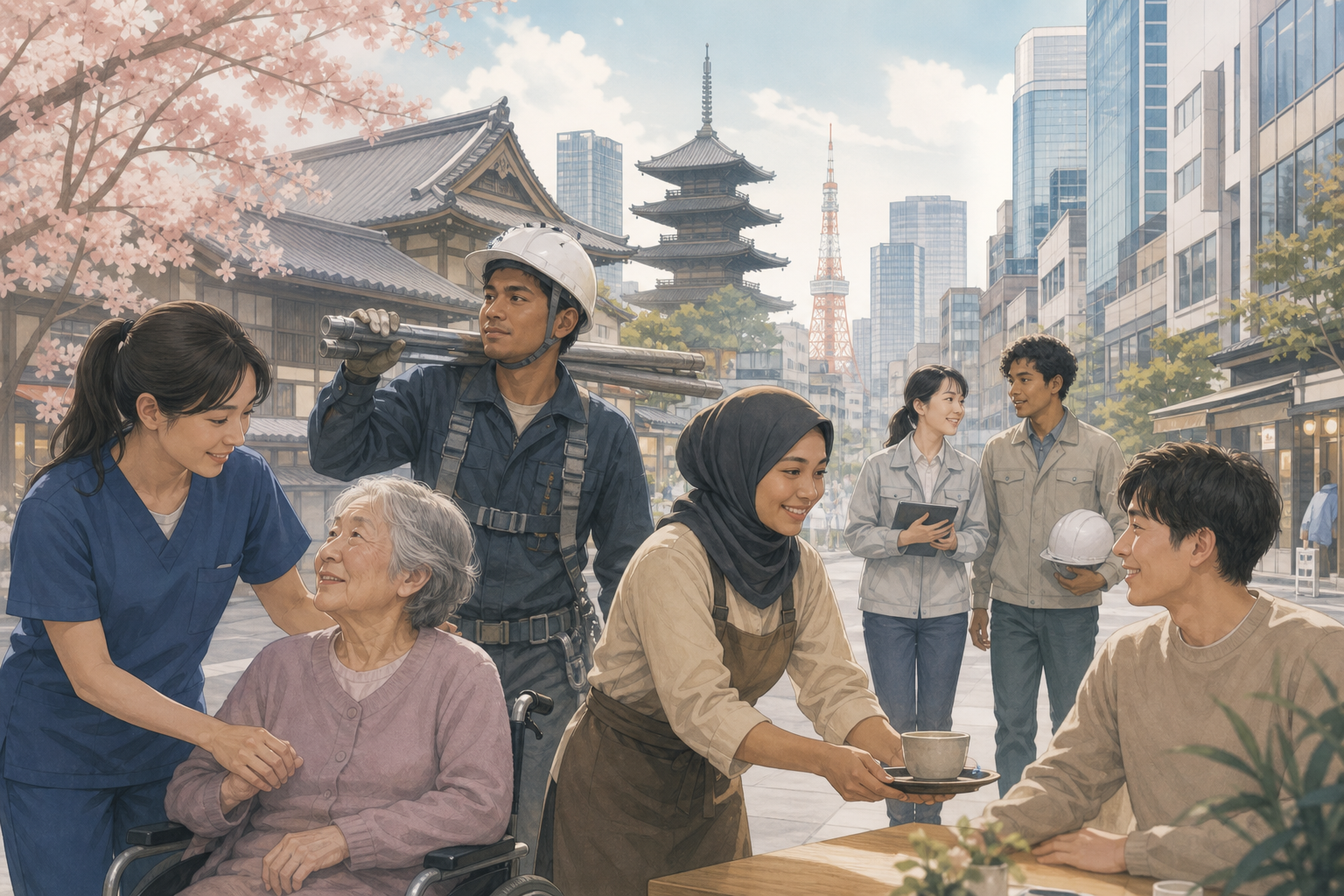
Japan is often described as a country with very little immigration. Yet the number of foreign residents has grown rapidly. By the end of 2025, it had more than doubled from its 2012 level, reaching approximately 4.13 million. Foreign residents accounted for about 3.3 percent of Japan’s total population. This is still a small share compared with many Western countries, but the change has become increasingly visible in workplaces and communities across Japan.
日本はしばしば移民が非常に少ない国だと言われます。しかし、外国人在留者の数は急速に増えています。2025年末までに、2012年水準の2倍以上となり、およそ413万人に達しました。外国人在留者は日本の総人口の約3.3パーセントを占めています。これは多くの欧米諸国と比べれば依然として小さい割合ですが、その変化は日本全国の職場や地域でますます目立つようになっています。
It is important to distinguish among the different groups included in this discussion. Foreign residents may be permanent residents, workers, students, spouses, or children. Tourists are not residents, while asylum seekers and people who overstay their visas are separate groups governed by different rules. Using the single word “foreigners” for all of them can make public debate confusing and sometimes misleading.
この議論に含まれるさまざまなグループを区別することが重要です。外国人在留者は、永住者、労働者、学生、配偶者、子どもなどの立場にありえます。観光客は住民ではなく、亡命申請者やビザを超過して滞在する人々は、異なるルールで管理される別のグループです。これらすべてを「外国人」という一つの言葉で呼ぶと、公共の議論が分かりにくくなり、時には誤解を招くことがあります。
Japan increasingly relies on foreign workers in industries facing serious staff shortages. They work in nursing care, food services, construction, agriculture, manufacturing, hotels, and transportation. In 2019, Japan introduced the Specified Skilled Worker system for sectors that could not recruit enough people domestically. By 2024, the system covered 16 fields. Some workers can stay for up to five years, while those with higher-level skills may renew their status indefinitely and bring family members.
日本は、深刻な人手不足に直面している産業で、外国人労働者への依存をますます強めています。彼らは介護、飲食、建設、農業、製造、ホテル、運輸などで働いています。2019年に日本は、国内で十分な人材を確保できなかった分野向けに、特定技能制度を導入しました。2024年までに、この制度は16分野を対象としていました。一部の労働者は最長5年まで滞在できますが、より高度な技能を持つ者は、在留資格を無期限に更新し、家族を帯同できる場合があります。
However, Japan does not have one simple route called “immigration.” People enter through different residence categories with different purposes and conditions. Some international students later find employment, while highly skilled professionals may receive faster access to permanent residence. Most other applicants must usually live in Japan for ten years before they qualify. The government has therefore expanded opportunities for foreign workers without clearly presenting these separate programs as one long-term immigration policy.
しかし、日本には「移民」という一つのシンプルな経路はありません。人々は、目的と条件の異なるさまざまな在留資格を通じて入国します。一部の留学生は後に就職し、高度な専門人材は永住権へのより早い道を与えられるかもしれません。それ以外のほとんどの申請者は、資格を得るまで通常10年間日本に住まなければなりません。そのため政府は、これらの個別の制度を一つの長期的な移民政策として明確に示すことなく、外国人労働者の機会を拡大してきました。
At the same time, some requirements have been tightened. One example is the Business Manager residence status. Previously, applicants could generally meet its financial condition with five million yen in capital or by employing two full-time workers. The revised rules raised the capital requirement to 30 million yen and added stricter conditions. This was a major change to one particular route for foreign entrepreneurs, but it did not close Japan to all foreign residents.
同時に、いくつかの要件は厳しくなっています。一例は、経営・管理の在留資格です。以前は、申請者は一般に500万円の資本金、または常勤雇用者2人を雇うことで、その財務条件を満たすことができました。改正後の規則は、資本金要件を3000万円に引き上げ、より厳しい条件を追加しました。これは外国人起業家向けの一つの経路に対する大きな変更でしたが、すべての外国人在留者に対して日本の門を閉じたわけではありません。
The government has also emphasized that foreign residents must comply with rules concerning visas, taxes, social insurance, and other obligations. Applying the law fairly is a legitimate government responsibility. However, reports of individual violations should not be used to generalize about millions of people. A debate about better enforcement is different from claiming, without sufficient evidence, that foreign residents as a group are more likely to misuse public systems.
政府はまた、外国人在留者はビザ、税金、社会保険、その他の義務に関するルールを守らなければならないと強調しています。法律を公正に適用することは、政府の正当な責任です。しかし、個別の違反の報道をもとに、数百万人全体について一般化してはなりません。より良い執行についての議論は、十分な証拠なく、外国人在留者というグループ全体が公共の制度を不正利用しやすいと主張することとは異なります。
Japan must also consider what happens after people arrive. Workers who stay for many years need language education, housing, schools for their children, access to information, and protection from unfair employment practices. Local communities may need help understanding unfamiliar cultures and religious customs. Foreign residents also have a responsibility to learn local rules and communicate with their neighbors. Successful societies do not simply admit workers; they help people integrate into everyday life.
日本は、人々が到着したあとに何が起きるかも考えなければなりません。長年滞在する労働者には、語学教育、住宅、子どもの学校、アクセスできる情報、そして不当な雇用慣行からの保護が必要です。地域社会は、馴染みのない文化や宗教的習慣を理解する助けを必要とするかもしれません。外国人在留者にも、地域のルールを学び、近所の人々とコミュニケーションをとる責任があります。成功する社会は単に労働者を受け入れるだけではなく、人々が日常生活に統合されるよう助けます。
Japan is therefore already accepting immigration in practice, even if its policies do not always use that label. The unresolved question is what kind of future the country is offering. Are foreign residents temporary workers expected to leave when their jobs end, or can they become permanent members of Japanese society? Japan may be able to postpone that decision, but it cannot avoid it while the number of foreign residents continues to rise.
したがって日本は、政策が必ずしもその呼び方を使わなくても、実際にはすでに移民を受け入れています。未解決の問いは、この国がどのような未来を提供しているかです。外国人在留者は仕事が終われば去るべき一時的な労働者なのでしょうか、それとも日本社会の恒久的な一員になれるのでしょうか。日本はその決定を先延ばしにできるかもしれませんが、外国人在留者の数が増え続ける限り、それを避けることはできません。