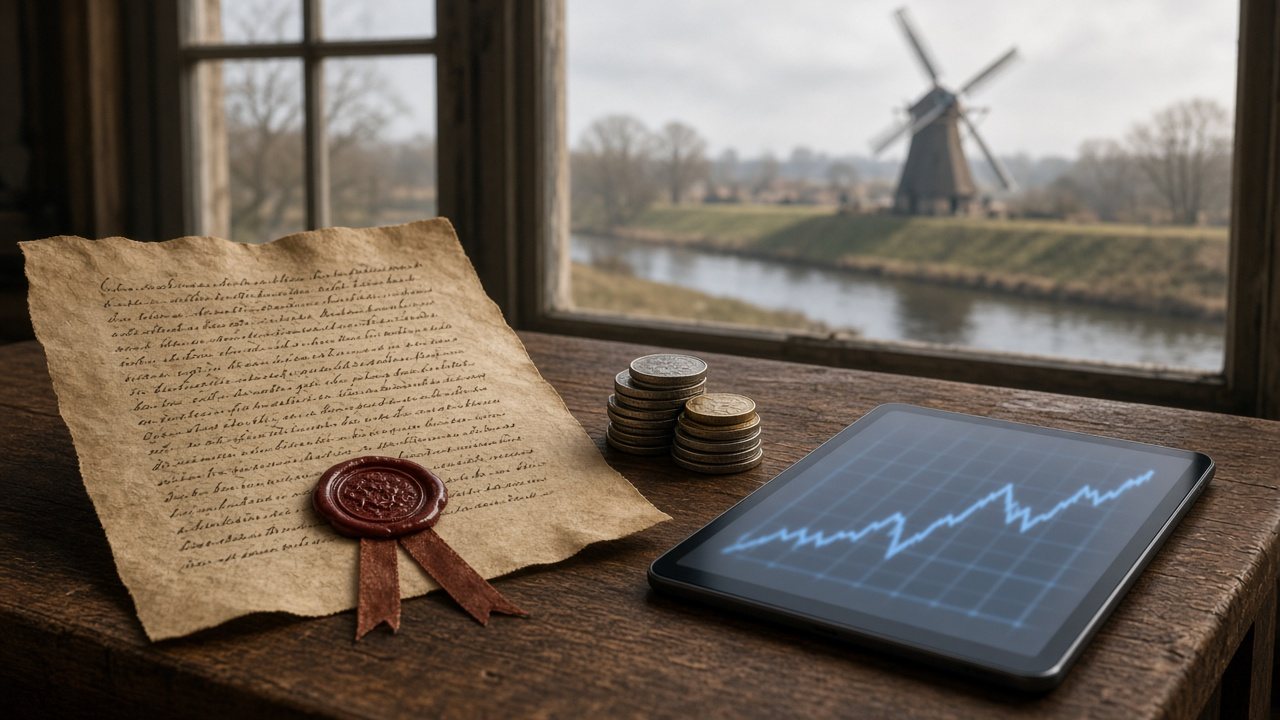
In January 2026, Yale University reported that it still earns interest on a bond issued in 1648 by a Dutch water authority. The money helped finance flood protection, and the agreement was written on goatskin. This is a perpetual bond: it has no fixed repayment date. Most bonds work differently, but this remarkable survivor raises a basic question. What exactly does someone own when they own a bond?
2026年1月、イェール大学は、1648年にオランダの水管理委員会が発行した債券から、今も利息を受け取っていると報告しました。その資金は洪水対策の財源となり、契約はヤギの革に書かれていました。これは永久債です。つまり、決まった返済日がありません。ほとんどの債券は仕組みが異なりますが、この驚くべき生き残りは、基本的な問いを投げかけます。債券を持っているとき、人は正確には何を所有しているのでしょうか?
A bond records a debt and the borrower’s obligation to make agreed payments. Governments and companies sell bonds to raise money from investors. When you buy a newly issued bond, you are lending money to the organization that issued it. In return, you receive a right to future payments under the bond’s terms. The document, whether on goatskin or stored electronically, represents that financial relationship.
債券は、借金と、合意した支払いを行うという借り手の義務を記録したものです。政府や企業は、投資家から資金を集めるために債券を売ります。新しく発行された債券を買うとき、あなたはそれを発行した組織にお金を貸しているのです。その見返りとして、債券の条件に基づいて将来の支払いを受け取る権利を得ます。その証書は、ヤギの革に書かれていても電子的に保存されていても、その金銭的な関係を表しています。
Consider a simple example. A company sells you a five-year bond for $1,000. It promises to pay $40 in interest each year and return the $1,000 at the end of five years. The $1,000 is the principal, and the final repayment date is the maturity date. If the company makes every payment as promised, you receive $200 in interest over five years, plus your principal back.
簡単な例を考えてみましょう。ある企業があなたに、5年物の債券を1,000ドルで売ります。企業は毎年40ドルの利息を支払い、5年後に1,000ドルを返すと約束します。この1,000ドルが元本で、最終的な返済日が満期日です。企業が約束どおりにすべての支払いを行えば、あなたは5年間で200ドルの利息を受け取り、さらに元本も戻ってきます。
Buying this bond does not make you a shareholder. A shareholder owns part of the company and may benefit from its growing profits. A bondholder is a creditor: someone the company owes money to. With the ordinary fixed-interest bond in our example, your agreed payments do not increase just because the business becomes more successful. You have lent to the company rather than bought a share of it.
この債券を買っても、あなたは株主にはなりません。株主は会社の一部を所有し、会社の利益が増えればその恩恵を受けることがあります。債券保有者は債権者、つまり会社がお金を借りている相手です。この例のような通常の固定金利の債券では、事業がより成功したからといって、合意した支払いが増えるわけではありません。あなたは会社の一部を買ったのではなく、会社にお金を貸したのです。
However, you may not want to wait five years. If another investor is willing to buy your bond, you can transfer your right to the remaining payments. That investor pays you, and the company now owes those payments to the new owner. The company receives no additional money from this sale between investors. Its debt continues; the person entitled to collect it changes.
しかし、5年も待ちたくないかもしれません。別の投資家があなたの債券を買う意思があれば、残りの支払いを受け取る権利を移すことができます。その投資家があなたに代金を払い、会社は今後その支払いを新しい所有者に対して行うことになります。投資家どうしのこの売買によって、会社が新たにお金を受け取ることはありません。会社の借金は続き、それを受け取る権利のある人が変わるのです。
This makes the bond a tradable asset. The borrower can obtain funding for several years, while investors have a possible way to recover cash earlier by selling. But the sale price is not guaranteed to equal the original $1,000. A buyer might offer more or less. The amount promised at maturity and the amount someone will pay for the bond today are two different things.
このことが、債券を売買可能な資産にしています。借り手は数年間にわたって資金を確保でき、投資家は売却によって早めに現金を取り戻せる可能性があります。しかし、売却価格が当初の1,000ドルと同じになる保証はありません。買い手はそれより高い額を提示することも、低い額を提示することもあるでしょう。満期に約束されている金額と、今その債券に誰かが支払う金額は、別のものなのです。
That difference also shows why a promise is not the same as certainty. A borrower may default by failing to make a required payment. Even if it pays everything on time, inflation can reduce what the money buys. An investor who needs to sell early may also face a loss. These are different risks: getting paid, preserving the money’s buying power, and finding an acceptable sale price.
その違いは、約束が確実性と同じではない理由も示しています。借り手は、必要な支払いを行えずに債務不履行に陥ることがあります。たとえすべてを期日どおりに支払ったとしても、インフレによってそのお金で買えるものが減ることがあります。早く売る必要がある投資家は、損失を被ることもあります。これらは、支払いを受けられるか、お金の購買力を保てるか、そして納得できる売却価格を見つけられるかという、それぞれ異なるリスクです。
Bonds therefore connect people and institutions with money available today to organizations that need funding now. They can help finance business investment and public services. The same bond is a debt for the borrower and an asset for its owner. At its heart, buying a bond means acquiring a claim to future payments. Investors can buy and sell this right to future payments. The price they agree on is the bond’s market price.
このように債券は、今お金を持っている人々や機関と、今資金を必要としている組織とを結びつけています。債券は、企業の投資や公共サービスの資金を賄う助けになります。同じ債券が、借り手にとっては借金であり、その所有者にとっては資産なのです。つまり債券を買うとは、本質的には将来の支払いを受け取る権利を手に入れることです。投資家は、この将来の支払いを受け取る権利を売り買いすることができます。彼らが合意した価格が、その債券の市場価格です。