
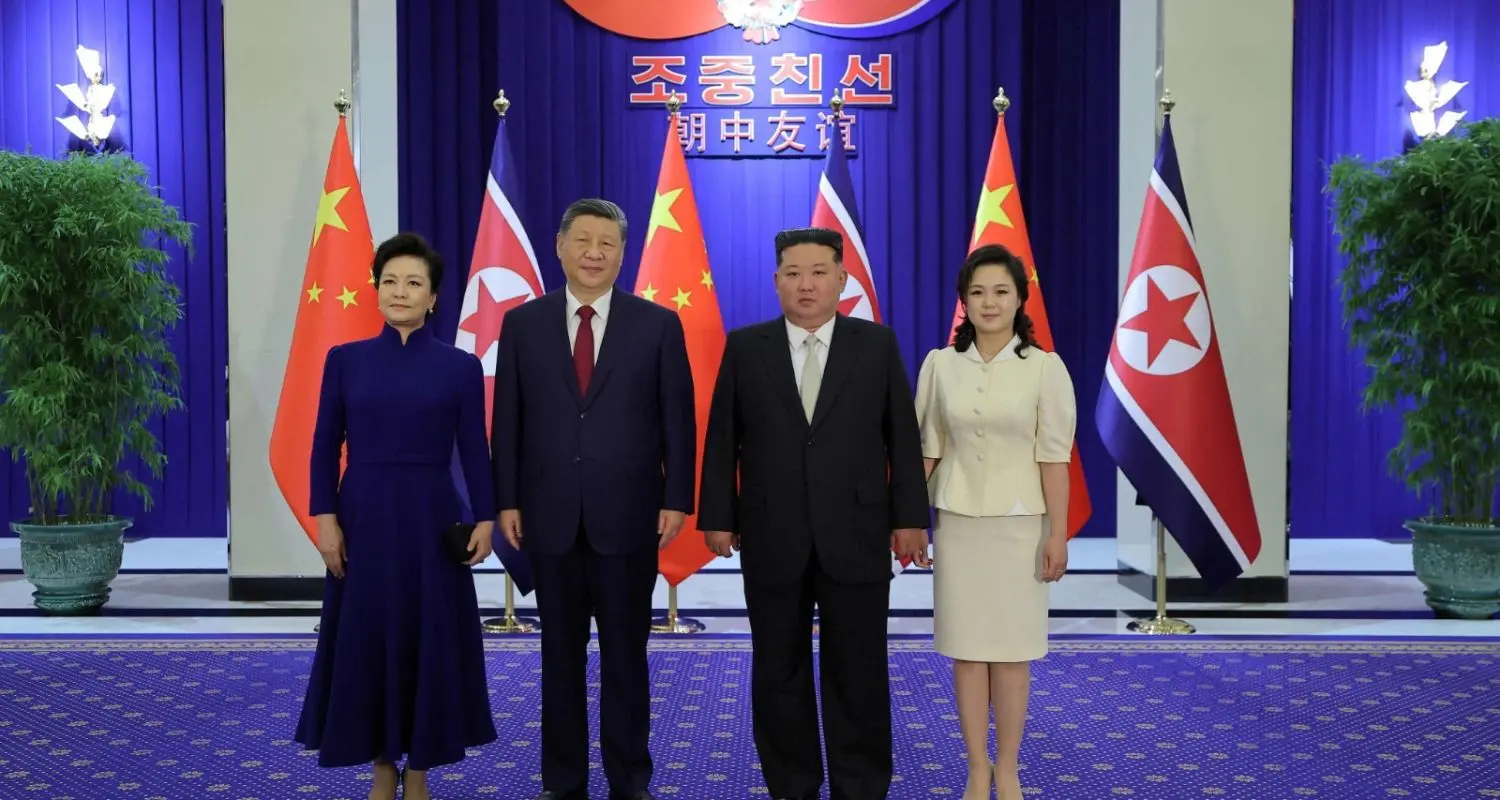
Chinese President Xi Jinping's visit to North Korea has highlighted the changing balance among China, North Korea and Russia. The trip was presented by both Beijing and Pyongyang as a show of friendship, complete with military honors, public ceremonies and messages of strategic cooperation. Yet behind the symbolism lies a more complicated question: how much influence does China still have over North Korea as Pyongyang deepens its ties with Moscow?
中国の習近平国家主席による北朝鮮訪問は、中国、北朝鮮、ロシアの間で変化しつつある力関係を浮き彫りにした。今回の訪問は、北京と平壌の双方によって、軍による儀仗、公式行事、そして戦略的協力を強調するメッセージを伴う友好の表明として演出された。しかし、その象徴的な演出の背後には、より複雑な問いが横たわっている。平壌がモスクワとの関係を深める中で、中国は依然としてどれほど北朝鮮に対する影響力を保持しているのだろうか。
For decades, China has been North Korea's most important economic lifeline. It has provided trade, fuel, food, political cover and access to the outside world. International sanctions have limited North Korea's economy, but China's willingness to maintain cross-border trade has helped keep the regime stable. For Pyongyang, renewed Chinese support could bring practical benefits, including more travel, trade and tourism.
数十年にわたり、中国は北朝鮮にとって最も重要な経済的生命線であり続けてきた。中国は貿易、燃料、食料、政治的な後ろ盾、そして外部世界への窓口を提供してきた。国際的な制裁は北朝鮮経済を圧迫してきたが、中国が国境を越えた貿易を維持しようとする姿勢が、同政権の安定を保つ助けとなってきた。平壌にとって、中国からの支援が再び強まることは、往来、貿易、観光の拡大など実質的な利益をもたらす可能性がある。
The strategic picture has changed, however, since Russia's invasion of Ukraine. North Korea has moved much closer to Moscow, reportedly providing military support and receiving money, fuel, technology or other benefits in return. This gives Kim Jong Un more diplomatic room. If North Korea has both China and Russia as major backers, it may feel less dependent on Beijing than it did in the past.
しかし、ロシアによるウクライナ侵攻以降、その戦略的な構図は変化した。北朝鮮はモスクワとの関係を大きく深め、軍事的な支援を提供する見返りに資金、燃料、技術その他の恩恵を受けていると報じられている。これにより、金正恩指導者はより大きな外交的な裁量を得ている。中国とロシアの両方を主要な後ろ盾とすることで、北朝鮮は以前ほど北京に依存しているとは感じなくなっている可能性がある。
That shift matters for China. Beijing does not want North Korea to collapse, but it also does not want Pyongyang to create uncontrolled instability on its border. A more confident North Korea could conduct more weapons tests, deepen military cooperation with Russia or provoke a stronger response from South Korea, Japan and the United States. From China's perspective, that could encourage an arms race in Northeast Asia and bring more US-aligned military activity closer to Chinese territory.
この変化は中国にとって重要な意味を持つ。北京は北朝鮮が崩壊することを望まないが、同時に、平壌が自国の国境沿いで制御不能な不安定さを生み出すことも望んでいない。より自信を強めた北朝鮮は、より多くの兵器実験を行ったり、ロシアとの軍事協力を深めたり、韓国、日本、アメリカからより強い反応を引き出したりする可能性がある。中国の視点から見れば、それは北東アジアにおける軍拡競争を助長し、米国と足並みを揃えた軍事活動を中国領土の近くにまで引き寄せることになりかねない。
The visit therefore appears to be less about a single trade deal and more about political signaling. North Korea used the ceremonies to show that it is not isolated, while China used the visit to remind Pyongyang and the wider region that it remains a central player. The absence of major public progress on denuclearization also suggests that Beijing's priority may not be to pressure North Korea, but to preserve influence and manage risk.
したがって今回の訪問は、単一の貿易協定というよりも、政治的なシグナルを送る意味合いが強いように見える。北朝鮮はこの式典を利用して、自国が孤立していないことを示そうとし、一方の中国はこの訪問を通じて、自らが依然として中心的な存在であることを平壌および地域全体に再認識させようとした。非核化について目立った公的進展が見られなかったことも、北京の優先事項が北朝鮮に圧力をかけることではなく、影響力を保持しリスクを管理することにあるのかもしれないことを示唆している。
In this sense, the China-North Korea relationship is not simply an alliance based on shared ideology. It is a relationship shaped by dependence, leverage and mutual caution. North Korea needs economic support and diplomatic protection, while China needs a stable buffer state that does not trigger a regional security crisis. Xi's visit showed unity on the surface, but it also revealed how North Korea's growing ties with Russia may be changing the power dynamics behind that unity.
この意味で、中国と北朝鮮の関係は、単に共通のイデオロギーに基づく同盟関係ではない。それは依存、駆け引き、そして相互の警戒によって形作られている関係である。北朝鮮は経済的な支援と外交的な保護を必要としており、中国は地域の安全保障上の危機を引き起こさない安定した緩衝国家を必要としている。習主席の訪問は表面的には結束を示したが、同時に、北朝鮮とロシアの関係深化がその結束の裏側にある力関係をどのように変えつつあるかをも露呈させた。