
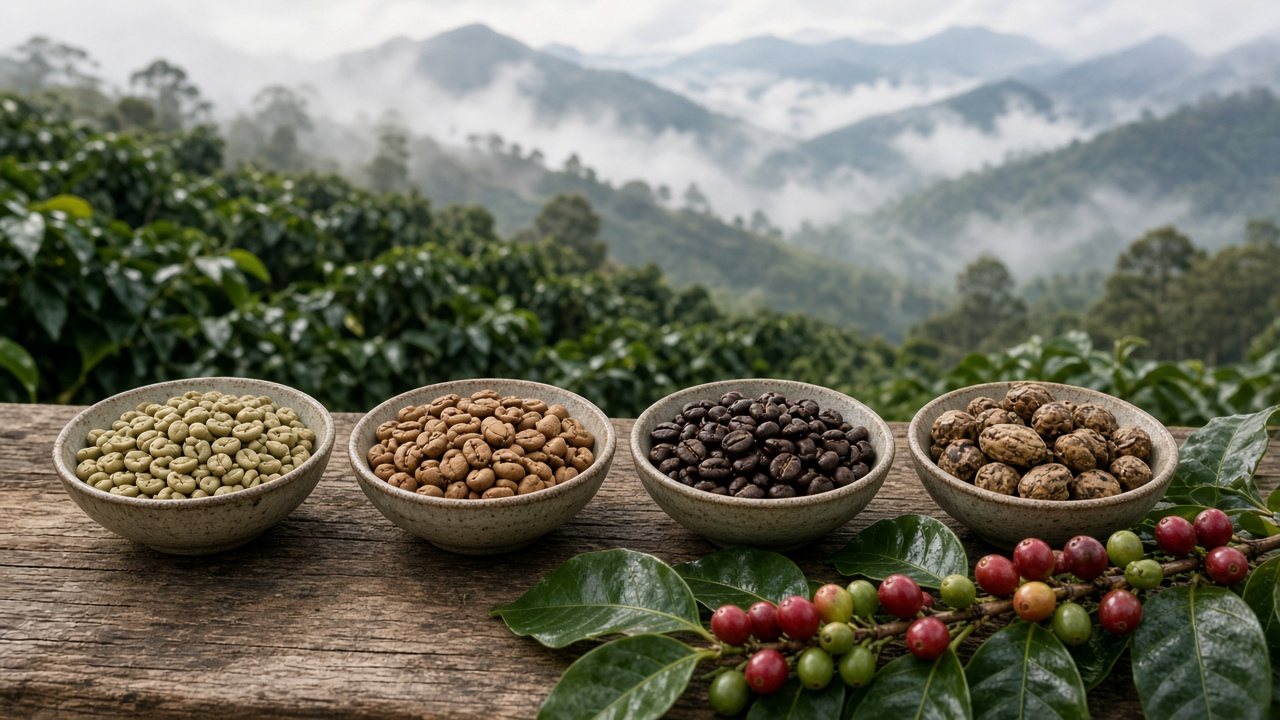
Imagine ordering two cups of black coffee in Tokyo. One has a light, floral smell and a fruity taste. The other is darker, stronger, and more bitter. Roasting and brewing explain part of the difference, but the story begins much earlier—with the plant itself. Coffee comes from different species, and each one responds differently to heat, rain, soil, and height above sea level.
東京でブラックコーヒーを2杯注文するところを想像してみてください。1杯は軽やかで花のような香りがあり、フルーティーな味がします。もう1杯は色がより深く、より濃く、より苦い味です。焙煎や抽出の方法で違いの一部は説明できますが、話はもっと前、植物そのものから始まっています。コーヒーにはいくつもの種があり、それぞれが熱、雨、土壌、標高に対して異なる反応を示すのです。
Most coffee is grown in the “coffee belt,” a wide area around the equator. Brazil, Vietnam, Colombia, Indonesia, and Ethiopia are among the major producers, but they do not grow exactly the same coffee. Even within one country, farms at different levels of altitude can produce beans with different flavors. Cooler temperatures in high areas often make coffee cherries ripen more slowly, giving more time for complex flavors to develop.
コーヒーの大半は、赤道周辺の広い地域である「コーヒーベルト」で栽培されています。ブラジル、ベトナム、コロンビア、インドネシア、エチオピアは主要な生産国ですが、まったく同じコーヒーを育てているわけではありません。一つの国の中でも、標高の異なる農園では、異なる風味の豆ができることがあります。高地の涼しい気温は、多くの場合コーヒーチェリーがゆっくり熟すようにし、複雑な風味が育つ時間を長くします。
Arabica is generally associated with sweetness, acidity, and fruit or flower-like flavors. It often thrives in cooler highlands. However, the plant is relatively delicate and can be badly affected by heat, disease, and sudden changes in rainfall. It may also yield fewer beans than Robusta. These risks, together with the flavors that many consumers prefer, help explain why Arabica often receives a higher market price. Still, the Arabica name alone does not guarantee excellent coffee. Poor farming or processing can produce poor Arabica beans.
アラビカは一般に、甘み、酸味、果物や花のような風味と結びつけられています。アラビカは涼しい高地でよく育つことが多いです。しかし、この植物は比較的デリケートで、暑さ、病気、降雨の急な変化から大きな影響を受けることがあります。また、ロブスタより収穫できる豆の量が少ないこともあります。こうしたリスクに加え、多くの消費者が好む風味であることが、アラビカがしばしば高い市場価格で取引される理由の説明になります。それでも、アラビカという名前だけで素晴らしいコーヒーが保証されるわけではありません。栽培や加工がよくなければ、質の低いアラビカ豆ができてしまいます。
Robusta, whose scientific name is Coffea canephora, generally grows better at lower elevations and in warmer conditions. It contains more caffeine and usually has a stronger, more bitter taste. Because it can produce more beans and resist some diseases better than Arabica, it is widely used in instant coffee and in an espresso blend. Vietnam is the world’s leading supplier of Robusta. Its strong flavor also works well with the condensed milk used in traditional Vietnamese coffee. However, calling all Robusta “low quality” is misleading. Carefully grown and processed Robusta can have chocolate, nut, and caramel notes and can be sold as a specialty product.
ロブスタは学名をコフィア・カネフォラといい、一般に標高の低い場所や暖かい環境でよく育ちます。カフェインを多く含み、通常はより強く苦い味がします。アラビカより多くの豆を生産でき、一部の病気にも強いため、インスタントコーヒーやエスプレッソのブレンドに広く使われています。ベトナムは世界最大のロブスタの供給国です。その強い風味は、伝統的なベトナムコーヒーに使われるコンデンスミルク(加糖練乳)ともよく合います。しかし、ロブスタをすべて「低品質」と呼ぶのは誤解を招きます。丁寧に栽培・加工されたロブスタは、チョコレート、ナッツ、キャラメルのような風味を持つことがあり、スペシャルティ製品として販売されることもあります。
Liberica and Excelsa are produced in much smaller quantities. Liberica trees are tall and produce unusually large fruit, while Excelsa is often treated scientifically as a type of Liberica. Their flavors can be very different from familiar Arabica and Robusta coffee. These plants may become more important because researchers need a wider range of coffee plants from which to develop new, more resilient varieties. However, rare species cannot immediately replace the enormous global supply provided by Arabica and Robusta.
リベリカとエクセルサは、はるかに少ない量しか生産されていません。リベリカの木は背が高く、非常に大きな実をつけます。一方、エクセルサは科学的にはリベリカの一種として扱われることが多いです。これらの風味は、なじみのあるアラビカやロブスタのコーヒーとは大きく異なることがあります。研究者たちは、より強い新しい品種を開発するために、より幅広い種類のコーヒーの植物を必要としているため、これらの植物は今後より重要になるかもしれません。しかし、希少な種が、アラビカとロブスタが担う膨大な世界の供給量にすぐに取って代わることはできません。
Does this mean that a warmer world will simply replace Arabica with Robusta? The answer is no. Arabica farmers may try moving production higher up mountains, but suitable land becomes more limited as they climb. Robusta can tolerate more heat, but it can still suffer from drought, extreme temperatures, and irregular rain. Researchers and farmers are therefore testing hybrids, improving farming methods, and reconsidering species that the global market once largely ignored.
では、温暖化が進む世界では、アラビカが単純にロブスタに置き換わるのでしょうか?答えはノーです。アラビカの生産者は生産地を山のより高い場所へ移そうとするかもしれませんが、高く登るほど適した土地は限られていきます。ロブスタはより暑さに耐えられますが、それでも干ばつ、極端な気温、不規則な雨の影響を受けることがあります。そのため研究者や農家は、交配種を試したり、栽培方法を改善したり、かつて世界の市場がほとんど無視していた種を見直したりしています。
A bean’s species influences its taste and price, but it is only one part of the story. Soil, weather, harvesting, processing, roasting, rarity, and marketing also affect what consumers finally experience. A high-quality Robusta may cost more than an ordinary Arabica, just as two Arabica beans can taste completely different. The next time we choose a cup of coffee, we may really be choosing among different plants, landscapes, farming decisions, and ideas about what “good coffee” should mean.
豆の種は味や価格に影響しますが、それは話の一部にすぎません。土壌、天候、収穫、加工、焙煎、希少性、マーケティングも、消費者が最終的に味わうものに影響します。2つのアラビカ豆がまったく違う味になることがあるように、質の高いロブスタが普通のアラビカより高価なこともあります。次にコーヒーを1杯選ぶとき、私たちは実は、異なる植物、風景、農家の判断、そして「おいしいコーヒー」とは何を意味すべきかという考え方の中から選んでいるのかもしれません。