
← News Topics

Coffee Beyond the Cup

Beans, Vietnam, and the Global Coffee Business — Day 3: Who Gets the Money From Your Cup of Coffee?

カップの向こうのコーヒー ― 豆、ベトナム、そして世界のコーヒービジネス ― 第3日:あなたの1杯のコーヒー代は誰の手に渡るのか

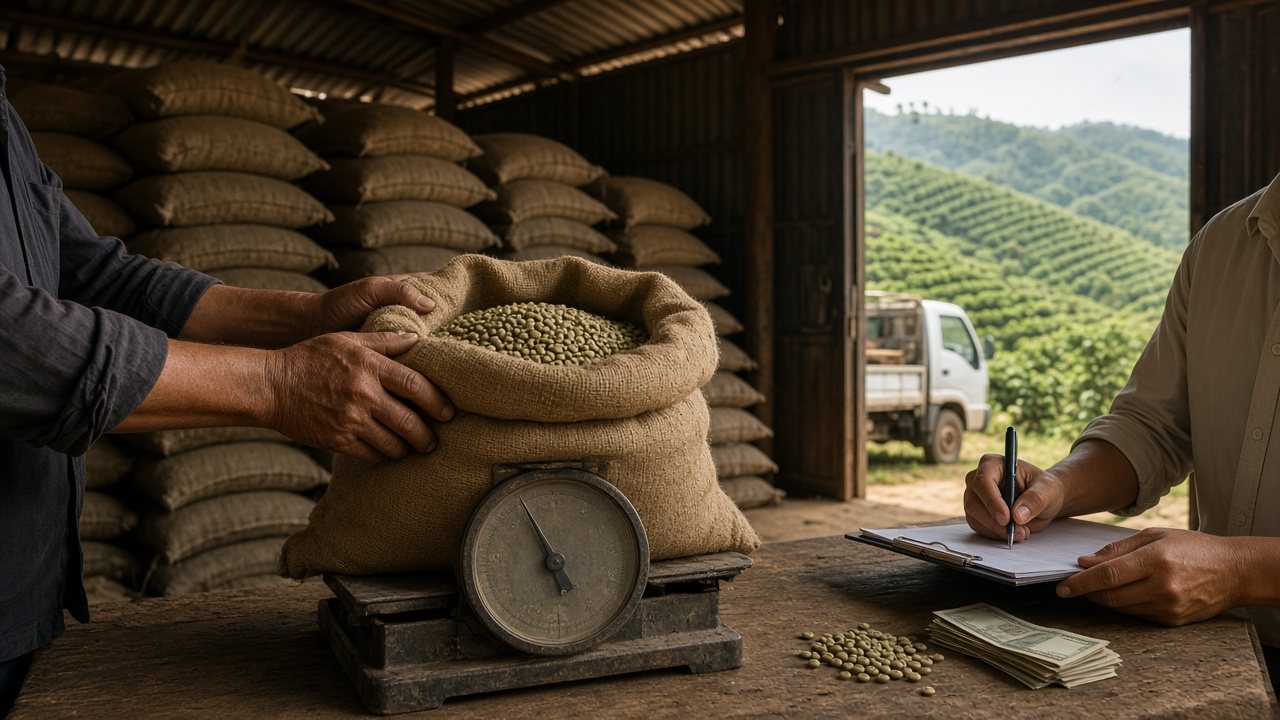
Hands of a farmer and a buyer over a sack of green coffee beans on an old scale in a warehouse, with coffee hills visible through the doorway

In a German supermarket, a bag of coffee can contain Vietnamese beans without naming Vietnam. A study found that Vietnamese Robusta often appears in blends sold without its origin being identified. The beans become an anonymous ingredient: shoppers see the brand, but not the grower.

ドイツのスーパーマーケットでは、コーヒーの袋にベトナム産の豆が入っていても、ベトナムの名前が記されていないことがあります。ある研究によると、ベトナム産のロブスタは、産地が明示されないまま販売されるブレンドに使われていることが多いとわかりました。豆は名もなき原料になってしまうのです。買い物客にはブランドは見えても、生産者は見えません。

Between the farm and the shelf are drying, shipping, roasting, packaging, and sales. Each adds costs, so the difference between farm and retail prices is not pure profit. A store’s margin must also help pay for staff and rent.

農園と店の棚の間には、乾燥、輸送、焙煎、包装、販売といった工程があります。それぞれの工程で費用がかかるため、農園での価格と小売価格の差がそのまま利益になるわけではありません。店の利ざやは、従業員の給料や家賃の支払いにも充てなければなりません。

Farm prices hide costs too. Vietnamese growers pay for fertilizer and harvest workers. One study found that a family’s net income after these recorded expenses must also reward the family’s own work and fund future investment. A good selling price does not guarantee a good living.

農園での価格にも、見えない費用が隠れています。ベトナムの生産者は、肥料や収穫作業員にお金を払っています。ある研究によると、こうした記録された経費を差し引いた後の家族の純収入で、家族自身の労働に報い、将来への投資も賄わなければならないことがわかりました。よい売値が、よい暮らしを保証するわけではないのです。

A large roaster can buy beans from different sources; a small farm with limited storage may have few buyers. That difference affects the farmer’s bargaining power. Vietnam’s huge output does not mean each grower can influence the price.

大手の焙煎業者は、さまざまな供給元から豆を買うことができます。一方、貯蔵設備が限られた小さな農園には、買い手がわずかしかいないかもしれません。その違いが、農家の交渉力に影響します。ベトナム全体の生産量が膨大だからといって、一人ひとりの生産者が価格に影響を与えられるわけではありません。

In Lâm Đồng province, a farmer whom researchers call Huy processes his coffee carefully to create distinctive flavors. His beans can command a premium of about twice the ordinary price. Yet he also runs a mill and hires workers. These extra costs can offset some of the gain, and not every farmer can find buyers for specialty coffee.

ラムドン省で、研究者たちがフイと呼ぶ農家は、独特の風味を生み出すためにコーヒーを丁寧に加工しています。彼の豆は、通常の価格の約2倍という割増価格で売れることがあります。しかし彼は精製所も運営し、作業員を雇っています。こうした追加の費用は利益の一部を相殺することがあり、またすべての農家がスペシャルティコーヒーの買い手を見つけられるわけではありません。

Europe’s coming rules add another challenge. From late 2026, large and medium businesses placing coffee on the EU market must show that it was not grown on recently deforested land. This requires traceability: information about farms and the movement of beans. EU businesses must comply with the rules, but if they pass on the cost of gathering information, smaller growers may struggle to keep selling to them.

ヨーロッパでまもなく始まる規則は、さらなる課題をもたらします。2026年末から、EU市場にコーヒーを流通させる大企業と中規模企業は、そのコーヒーが最近森林伐採された土地で栽培されたものではないことを示さなければなりません。そのためにはトレーサビリティ、つまり農園や豆の移動に関する情報が必要です。規則を守らなければならないのはEUの企業ですが、企業が情報収集の費用を転嫁すれば、小規模な生産者は彼らへの販売を続けるのに苦労するかもしれません。

Japan also buys Vietnamese beans. A Japanese customer can see the final price, but not how much the grower kept or who paid to meet new requirements. Paying more may help farmers, but the terms between buyers and growers determine whether the extra money reaches the farm.

日本もベトナム産の豆を買っています。日本の客は最終的な価格を見ることはできますが、生産者がいくら手元に残したのか、新しい要件を満たすための費用を誰が負担したのかは見えません。より多く支払うことは農家の助けになるかもしれませんが、その上乗せ分が農園まで届くかどうかを決めるのは、買い手と生産者の間の取引条件なのです。

Vocabulary

  1. anonymous — not named or identified. Example: Several employees gave anonymous comments about the company’s new policy.
  2. margin — the difference between a selling price and the direct cost of the product, before other business expenses are paid. Example: The store’s margin on each book must help pay its staff and electricity bills.
  3. net income — money left after recorded costs have been taken away from earnings. Example: Her net income fell after the cost of running her business increased.
  4. bargaining power — the ability to influence the price or conditions of an agreement. Example: Workers may gain bargaining power when several employers are competing to hire them.
  5. command a premium — to sell for a higher price than similar products or services. Example: Apartments near the station often command a premium.
  6. offset — to reduce or balance the effect of a cost, loss, or disadvantage. Example: Lower transport costs helped offset the rise in fuel prices.
  7. traceability — the ability to find out where a product came from and follow its path through production and sale. Example: The company improved traceability so it could identify the source of a faulty part.
  8. comply with — to act according to a rule, law, or request. Example: All visitors must comply with the museum’s safety rules.
  9. pass on — to make someone else pay a cost or bear its effect. Example: The airline passed on part of its higher fuel costs to passengers.

Comprehension Questions

  1. What did the study of coffee sold in Germany find about Vietnamese Robusta?
    1. It was usually sold only in cafés.
    2. It often appeared in blends without Vietnam being named as an origin.
    3. German shoppers refused to buy it.
    4. Vietnamese farmers set its final retail price.

    ドイツで販売されているコーヒーに関する研究は、ベトナム産のロブスタについて何を明らかにしましたか?

  2. Why does the article caution against treating the gap between farm and shop prices as profit?
    1. Farmers sell directly to most supermarket customers.
    2. Coffee has no costs after it leaves the farm.
    3. Governments set the same price at every stage.
    4. Processing, transport, roasting, and retail all involve expenses.

    記事が、農園での価格と店での価格の差を利益とみなすことに注意を促しているのはなぜですか?

  3. Why might a Vietnamese farming family’s net income overstate what it has earned from its work?
    1. The family’s own labor may not be counted as an expense.
    2. The study counted café rent as a farm expense.
    3. Farmers never pay for fertilizer.
    4. All coffee is sold before it is harvested.

    ベトナムの農家の家族の純収入が、その労働で得たものを実際より多く見せてしまうことがあるのはなぜですか?

  4. What does Huy’s example show?
    1. Every farmer can double their income by using the same method.
    2. Ordinary commercial coffee cannot be sold abroad.
    3. A higher bean price may require additional work, investment, and buyers.
    4. Processing coffee removes the risk of changing prices.

    フイの例は何を示していますか?

  5. What concern does the article raise about the EU’s deforestation rules?
    1. The rules require every coffee farmer to open a café.
    2. Small farms may struggle if the costs of providing information fall on them.
    3. The rules prevent buyers from paying farmers higher prices.
    4. Coffee from Vietnam cannot meet the rules.

    記事は、EUの森林伐採に関する規則について、どのような懸念を示していますか?

Discussion Questions

  1. What information on a coffee package would help you understand the grower’s role? What would a label still fail to tell you?

    コーヒーのパッケージにどのような情報があれば、生産者の役割を理解する助けになりますか?それでも表示からはわからないことは何でしょうか?

  2. How could a group of small farmers improve its bargaining power? What difficulties might the group face?

    小規模農家のグループは、どうすれば交渉力を高めることができますか?そのグループはどのような困難に直面するでしょうか?

  3. Under what conditions would producing higher-priced specialty coffee be a good choice for a farmer?

    どのような条件のもとであれば、より高価なスペシャルティコーヒーを生産することが農家にとってよい選択になりますか?

  4. How could buyers help small farms meet anti-deforestation requirements while keeping the rules effective?

    規則の効果を保ちながら、買い手はどのようにして小規模農園が森林伐採防止の要件を満たせるよう支援できますか?

  5. If a Japanese coffee company wanted to improve farmers’ earnings, how could it check whether its higher retail prices actually reached them?

    日本のコーヒー会社が農家の収入を改善したいと考えた場合、より高い小売価格が実際に農家に届いているかを、どのように確かめられますか?

Speaking Practice

Speak for about one minute about how a coffee company could make its supply chain fairer.

コーヒー会社がどうすればサプライチェーンをより公正にできるかについて、約1分間話してください。

Include:

  • one reason the shop price does not show a farmer’s income

    店の価格が農家の収入を示していない理由一つ

  • one way farmers might earn more

    農家がより多く稼ぐための方法一つ

  • a cost or risk that farmers should not have to carry alone

    農家だけに負わせるべきではない費用やリスク一つ

  • how the company could check whether its approach works

    会社がその取り組みの効果をどのように確かめられるか