
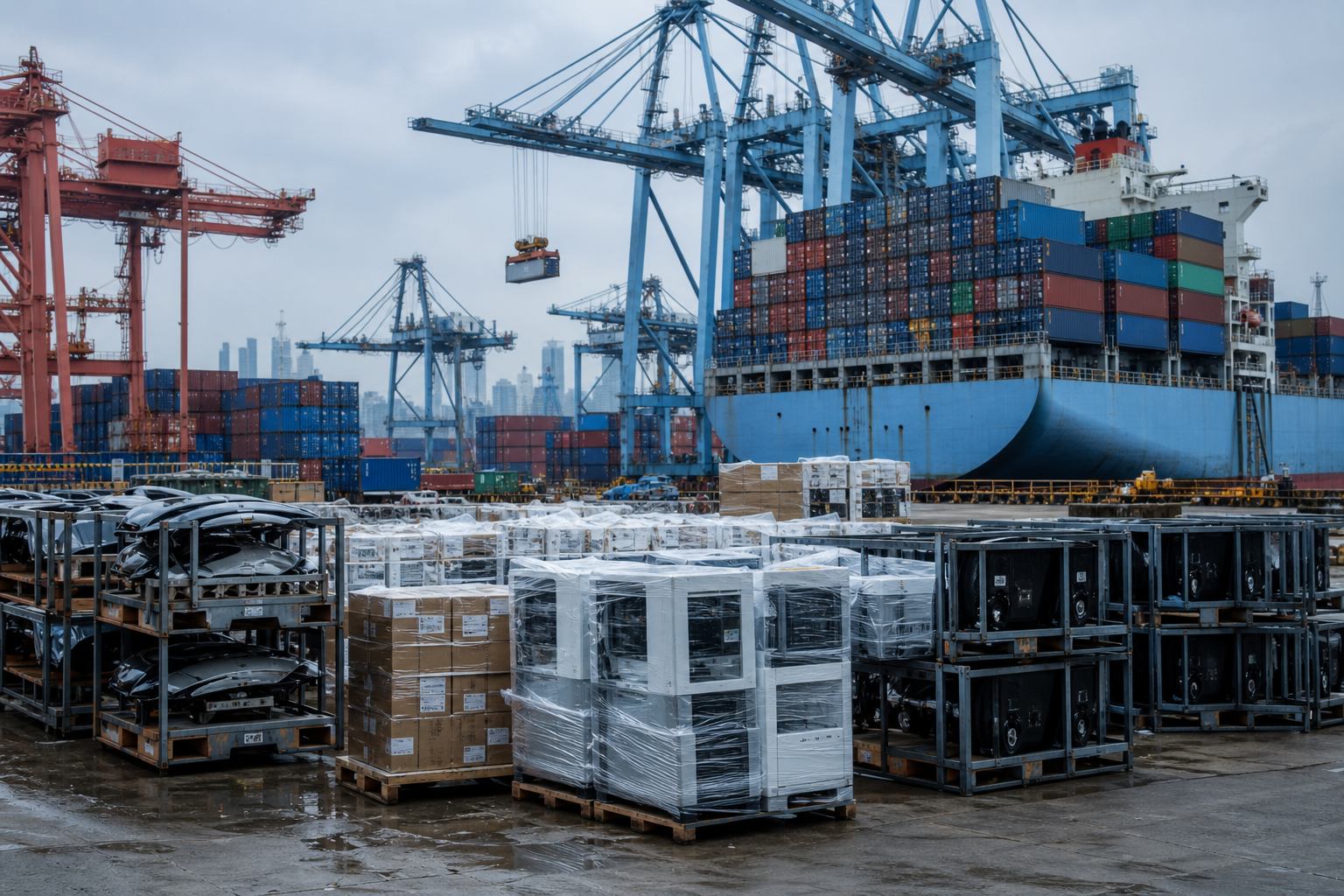
China’s weak household spending is not only a domestic issue. China is also the world’s largest manufacturing economy and a major exporter of cars, electronics, machinery, batteries, solar panels, and many other products. When such a large economy produces far more than its households consume, the effects can spread across the world.
中国の弱い家計支出は、国内だけの問題ではありません。中国はまた世界最大の製造経済であり、自動車、電子機器、機械、電池、太陽光パネルなど多くの製品の主要な輸出国です。これほど大きな経済が、家計が消費する量をはるかに超えて生産するとき、その影響は世界に広がりえます。
China has run a large trade surplus, meaning that it sells more goods abroad than it buys from other countries. This does not mean that weak consumer spending alone causes the surplus. Exchange rates, business investment, savings, global demand, and government policy all play a role. However, when domestic demand is relatively weak, Chinese companies have a stronger reason to look for customers overseas.
中国は大きな貿易黒字を計上してきました。つまり、他国から買う量よりも海外へ売る量の方が多いということです。これは弱い消費者支出だけが黒字の原因だという意味ではありません。為替レート、企業投資、貯蓄、世界の需要、政府政策もすべて役割を果たします。しかし国内需要が比較的弱いとき、中国企業は海外で顧客を探すより強い理由を持ちます。
This has led to an international debate about overcapacity. Critics in the United States, Europe, and some developing economies argue that China has built more production capacity in certain industries than its domestic market can absorb. They worry that large quantities of low-priced Chinese exports could undercut local manufacturers in their own countries. China rejects the idea that its export strength is simply the result of excess capacity and points instead to efficient factories, technological improvement, strong supply chains, and intense competition.
これが過剰生産能力をめぐる国際的な議論につながっています。米国、欧州、一部の発展途上経済の批判者は、中国が国内市場が吸収できる以上の生産能力を一部産業で築いたと主張します。彼らは、大量の低価格な中国輸出品が自国の地元製造業者を値下げ競争で打ち負かすかもしれないと懸念しています。中国は、輸出の強さが単なる過剰能力の結果だという考えを拒否し、代わりに効率的な工場、技術改善、強いサプライチェーン、激しい競争を指摘します。
For consumers in other countries, Chinese exports can bring real benefits. Lower-cost electric vehicles, electronics, batteries, and solar equipment can make useful technologies more affordable. Competition may also force other companies to improve their products. But the same imports can create difficulties for local factories that have higher labor, energy, or production costs. If those companies lose market share, jobs and industrial skills may also be affected.
他国の消費者にとって、中国の輸出は実際の利益をもたらすことがあります。低コストの電気自動車、電子機器、電池、太陽光設備は、有用な技術をより手頃な価格にすることができます。競争は他社に製品改善を迫ることもあります。しかし同じ輸入品は、より高い労働、エネルギー、生産コストを持つ地元工場に困難を生み出すこともあります。それらの企業が市場シェアを失えば、雇用や産業技能も影響を受けるかもしれません。
Governments therefore face a difficult choice. Some have introduced tariffs, anti-subsidy measures, or other forms of trade protection. Such policies may give domestic industries more time to compete, but they can also raise prices for consumers and cause trade friction. Other countries may respond with restrictions of their own. A policy designed to protect one industry can therefore create costs elsewhere in the economy.
したがって政府は難しい選択に直面します。一部は関税、反補助金措置、または他の形態の貿易保護を導入しています。そうした政策は国内産業に競争する時間を与えるかもしれませんが、消費者の価格を上げ、貿易摩擦を引き起こすこともあります。他国が独自の制限で応じるかもしれません。一つの産業を守るために設計された政策は、したがって経済の他の場所にコストを生み出すことがあります。
The effects can be particularly complicated for developing countries. Affordable Chinese machinery or solar panels may help businesses grow and improve infrastructure. At the same time, local manufacturers may struggle to compete with large Chinese producers. This is an example of an economic spillover: decisions and economic conditions in one large country can strongly affect industries and workers in another.
影響は発展途上国にとって特に複雑になりえます。手頃な価格の中国製機械や太陽光パネルは、事業の成長とインフラ改善を助けるかもしれません。同時に、地元製造業者は大規模な中国生産者と競争するのに苦しむかもしれません。これは経済的スピルオーバーの一例です。一つの大国における決定と経済状況が、別の国の産業と労働者に強く影響しうるのです。
Many economists therefore argue that China should rebalance its economy by giving households a larger role. This could involve higher household incomes, stronger pensions and healthcare, more secure employment, and less dependence on property as a source of wealth. If families felt more financially secure, they might save less for emergencies and spend more on goods and services, including travel, entertainment, education, healthcare, and products from other countries.
したがって多くの経済学者は、中国は家計により大きな役割を与えることで経済を再均衡させるべきだと主張します。これには、より高い家計所得、より強い年金と医療、より安定した雇用、そして富の源としての不動産への依存の低下が含まれえます。家族がより経済的に安心を感じれば、緊急時のための貯蓄を減らし、旅行、娯楽、教育、医療、他国の製品を含む財・サービスにより多く支出するかもしれません。
But rebalancing does not have to mean encouraging people to buy more physical products simply for the sake of economic growth. The deeper question is how national income is shared and what kinds of economic activity improve people’s lives. China may need stronger household demand while also considering resource use, waste, environmental pressure, and the quality of growth. That leads to a much broader question: Does a healthy economy always need people to consume more and more?
しかし再均衡は、経済成長のためだけに人々にもっと物理的な製品を買うよう促すことを意味する必要はありません。より深い問いは、国民所得がどう分配され、どのような経済活動が人々の生活を改善するかです。中国は、資源利用、廃棄物、環境圧力、成長の質も考慮しながら、より強い家計需要を必要とするかもしれません。それははるかに広い問いにつながります。健全な経済は、いつも人々がますます多く消費することを必要とするのでしょうか?