
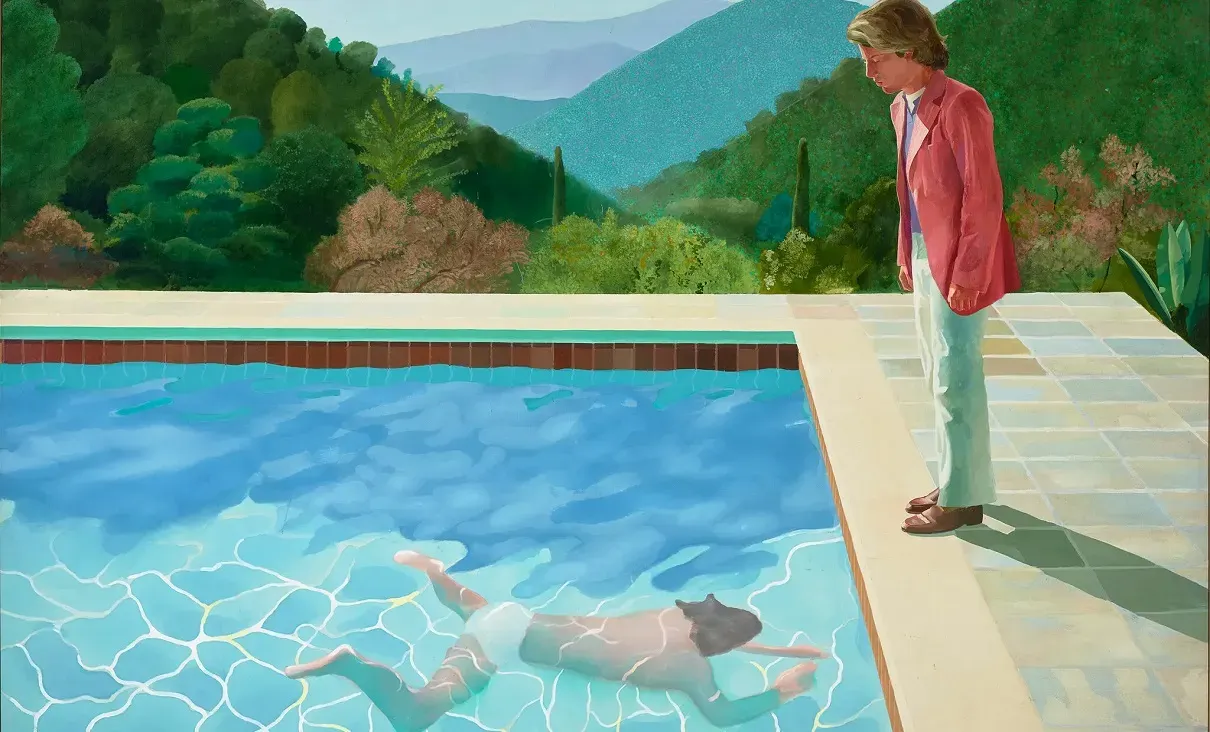
David Hockney's death at 88 has renewed attention not only to his paintings, but to a rarer achievement: his ability to remain contemporary for more than six decades. Many artists become closely associated with one style, one period or one generation. Hockney, by contrast, repeatedly changed his methods while preserving a recognizable sense of color, clarity and visual pleasure.
デイヴィッド・ホックニーが88歳で亡くなったことは、彼の絵画作品だけでなく、より稀有な功績、すなわち60年以上にわたって現代的であり続けたその能力にも改めて注目を集めさせている。多くの芸術家は、一つの様式、一つの時代、あるいは一つの世代と強く結びついて記憶される。それに対してホックニーは、色彩、明快さ、視覚的な喜びという彼と分かる特徴を保ちながら、繰り返し自らの手法を変え続けた。
He first emerged in the 1960s as part of the British pop art generation, but his reputation soon became tied to California. Swimming pools, glass houses, sunlit interiors and relaxed bodies helped create an image of Los Angeles that was both artificial and seductive. These works were accessible, but not simplistic. They turned everyday leisure into a carefully composed visual language.
彼は1960年代、英国のポップアート世代の一員として頭角を現したが、その名声はまもなくカリフォルニアと結びつくようになった。プール、ガラス張りの家、光あふれる室内、くつろいだ人々の姿は、人工的でありながら魅惑的なロサンゼルスのイメージを作り上げるのに役立った。これらの作品は分かりやすくはあったが、単純なものではなかった。それらは日常的な余暇の光景を、綿密に構成された視覚言語へと変えたのである。
What made Hockney unusual was not only talent, but reinvention. He moved across painting, drawing, printmaking, photography, stage design, photocollage and digital images. Long before it became fashionable for artists to discuss technology, Hockney treated new tools as extensions of seeing. His iPad landscapes were not side projects by an elderly painter trying to stay relevant. They were part of a lifelong habit of testing how images can be made.
ホックニーを特異な存在にしたのは、才能だけでなく、絶えざる自己刷新であった。彼は絵画、素描、版画、写真、舞台美術、フォトコラージュ、デジタル画像といった領域を横断して活動した。芸術家がテクノロジーについて語ることが流行するはるか以前から、ホックニーは新しい道具を「見ること」の拡張として捉えていた。彼のiPadによる風景画は、時代に取り残されまいとする高齢の画家による余技などではなかった。それは、画像がどのように作られうるかを試し続ける、生涯にわたる習慣の一部だったのである。
This constant renewal helped explain his unusually broad appeal. Hockney attracted museum curators, collectors and casual viewers at the same time. His work could be joyful without being shallow, popular without becoming merely decorative, and experimental without losing emotional warmth. In a contemporary art world often associated with irony, darkness or theory, Hockney's brightness became almost radical.
この絶え間ない刷新は、彼の異例なまでに幅広い支持を説明する一助となる。ホックニーは、美術館の学芸員、コレクター、そして気軽な鑑賞者を同時に引きつけた。彼の作品は、浅薄にならずに喜びに満ち、単なる装飾に堕することなく大衆的であり、そして感情的な温かみを失うことなく実験的でありえた。皮肉、暗さ、理論としばしば結びつけられる現代美術の世界において、ホックニーの明るさはほとんど急進的とさえ言えるものになった。
The art market also magnified his reputation. In 2018, Portrait of an Artist (Pool with Two Figures) sold for more than $90 million, then a record for a living artist. After his death, demand for major works may increase further, especially because masterpieces from his strongest periods are limited. Yet focusing only on prices risks missing the deeper reason for his value. Hockney did not simply produce collectible objects; he produced a way of looking that remained open to change.
美術市場もまた、彼の名声を一層大きなものにした。2018年、『芸術家の肖像(プールと二人の人物)』は9000万ドル以上で落札され、当時、存命の芸術家としては記録的な価格となった。彼の死後、特に最も脂の乗った時期の傑作が限られていることから、主要作品への需要はさらに高まるかもしれない。しかし、価格だけに注目していては、彼の真の価値の理由を見失う恐れがある。ホックニーは単に収集の対象となる作品を生み出したのではなく、変化に対して開かれ続けるものの見方そのものを生み出したのである。
His legacy therefore lies in more than the pool paintings that made him famous. It lies in the discipline of remaining curious. Hockney showed that an artist can age without becoming nostalgic, use technology without surrendering craft, and reach mass audiences without losing seriousness. That is why his career matters beyond the art market: it challenges the assumption that innovation belongs only to the young.
したがって、彼の遺産は、彼を有名にしたプールの絵画作品にとどまるものではない。それは、好奇心を持ち続けるという規律の中にある。ホックニーは、芸術家が郷愁に浸ることなく歳を重ね、技巧を手放すことなくテクノロジーを使いこなし、そして真剣さを失うことなく大衆に届くことができることを示した。だからこそ、彼のキャリアは美術市場を超えて重要な意味を持つ。それは、革新は若者だけのものだという思い込みに疑問を投げかけているのである。