
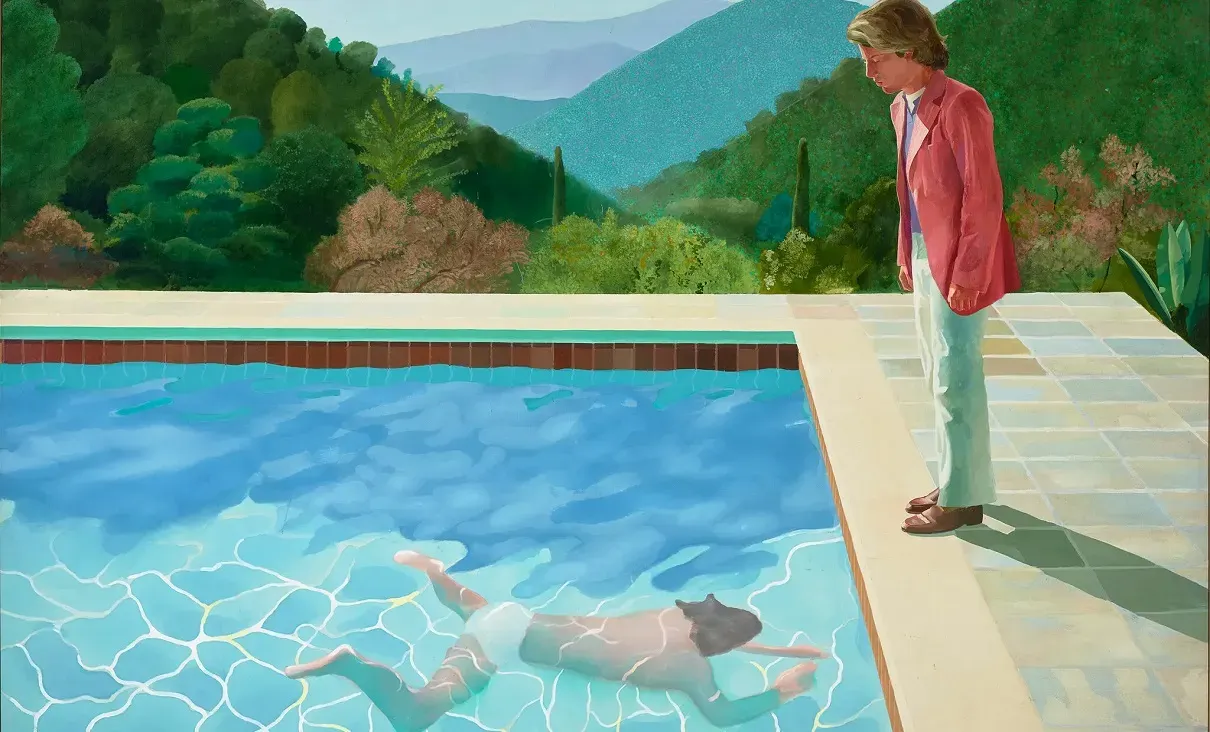
British artist David Hockney has died at the age of 88. He was one of the most influential artists of his generation, known for bright colors, swimming pools, portraits and landscapes. Many people connect him with California, but his career began in Britain and lasted for more than six decades.
英国の芸術家デイヴィッド・ホックニーが88歳で亡くなった。彼は同世代で最も影響力のある芸術家の一人であり、鮮やかな色彩、プール、肖像画、風景画で知られていた。多くの人は彼をカリフォルニアと結びつけて考えるが、彼のキャリアは英国で始まり、60年以上にわたって続いた。
Hockney became famous in the 1960s, during the pop art movement. Later, he painted Los Angeles swimming pools, sunny homes and everyday scenes in a way that felt fresh and open. His pictures were serious art, but they were also easy for many people to enjoy. This combination helped him reach both museums and ordinary viewers.
ホックニーは1960年代、ポップアートの運動が起きていた時期に有名になった。その後、彼はロサンゼルスのプールや陽光あふれる家々、日常の風景を、新鮮で開放的に感じられる形で描いた。彼の絵は本格的な芸術作品でありながら、多くの人にとって楽しみやすいものでもあった。この組み合わせが、美術館と一般の鑑賞者の双方に彼の作品を届ける助けとなった。
One reason Hockney stayed important for so long was that he kept changing. He did not repeat the same style forever. He worked with painting, photography, collage, stage design and digital tools. In later life, he even used iPads to create colorful landscapes. For Hockney, new technology was not a threat to art. It was another way to look at the world.
ホックニーが長きにわたって重要な存在であり続けた理由の一つは、彼が変化し続けたことにある。彼は同じスタイルをいつまでも繰り返すことはなかった。絵画、写真、コラージュ、舞台美術、デジタルツールなど、さまざまな手法に取り組んだ。晩年には、iPadを使って色鮮やかな風景画を制作することさえあった。ホックニーにとって、新しい技術は芸術を脅かすものではなく、世界を見るためのもう一つの方法だったのだ。
His art also became extremely valuable. In 2018, his painting Portrait of an Artist (Pool with Two Figures) sold for more than $90 million, then a record price for a living artist. After an artist dies, collectors sometimes pay even more attention to the work. But Hockney's importance was not only about money. His popularity came from his ability to make people feel light, curious and alive.
彼の作品は非常に高い価値を持つようにもなった。2018年、彼の絵画『芸術家の肖像(プールと二人の人物)』は9000万ドル以上で落札され、当時、存命の芸術家としては最高額の記録となった。芸術家が亡くなった後、コレクターがその作品にさらに注目することもある。しかし、ホックニーの重要性は金銭面だけにあるのではない。彼の人気は、人々に軽やかさ、好奇心、そして生き生きとした感覚を与える能力に由来していた。
Hockney's life raises a larger question about art. Some artists become famous for one period and then slowly disappear from public attention. Hockney did the opposite. He kept reinventing himself, while keeping a clear sense of joy in his work. That may be why he remained modern until the end.
ホックニーの人生は、芸術についてのより大きな問いを投げかけている。ある時期に有名になり、その後徐々に世間の注目から姿を消していく芸術家もいる。ホックニーはその逆だった。彼は自分自身を作り変え続けながら、作品の中に明確な喜びの感覚を保ち続けた。だからこそ、彼は最後まで現代的であり続けたのかもしれない。