
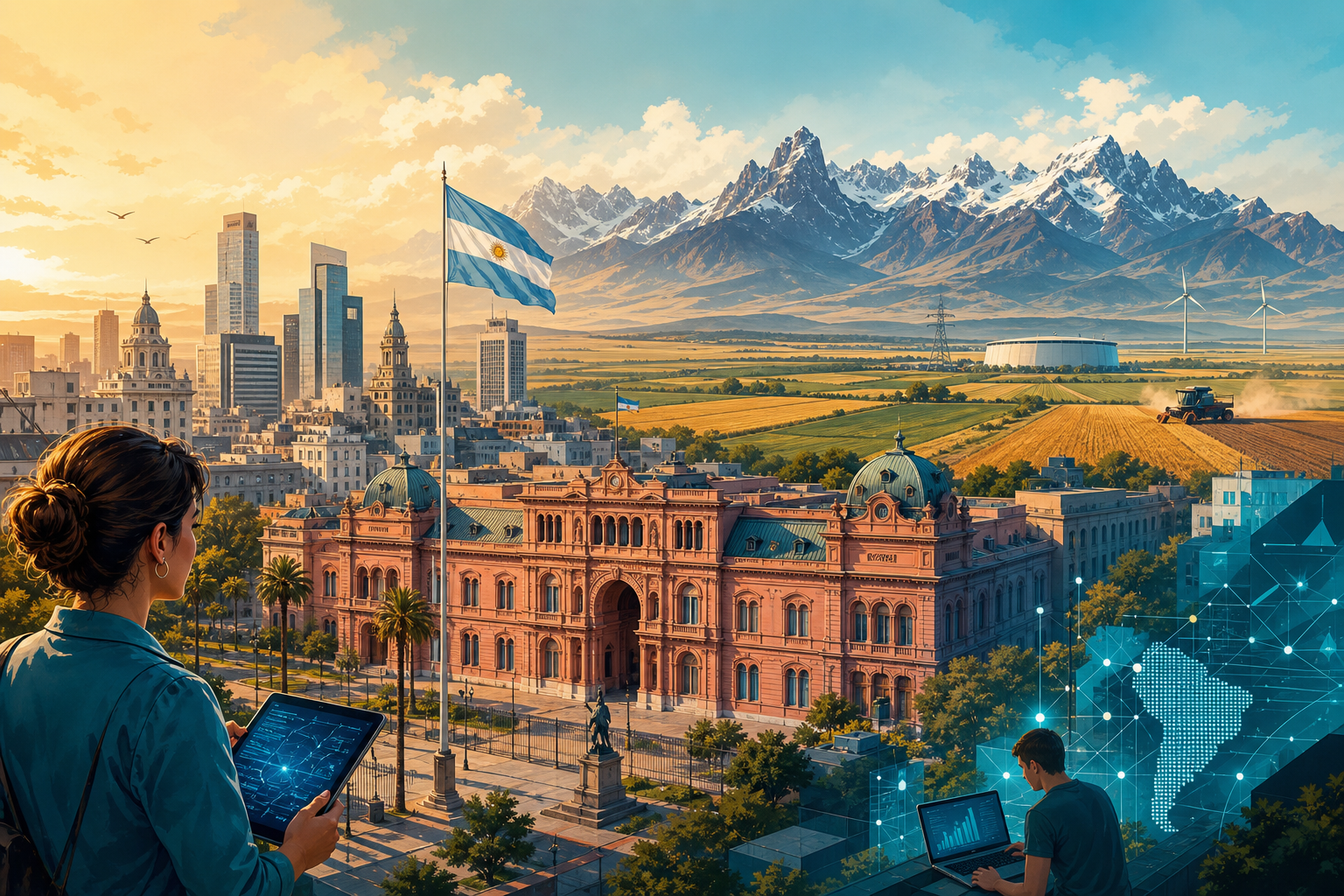
In April 2026, Argentine President Javier Milei welcomed Peter Thiel, a billionaire technology investor who co-founded PayPal and Palantir, to the presidential palace in Buenos Aires. Argentina is also seeking major investment in energy, artificial intelligence, and data centers. These developments may seem surprising to people who mainly associate the country with football, inflation, or political crises. However, Argentina has a long history of believing that natural wealth, foreign knowledge, and ambitious projects can transform its future.
2026年4月、アルゼンチンのハビエル・ミレイ大統領は、PayPalとPalantirを共同創業した億万長者の技術投資家ピーター・ティールを、ブエノスアイレスの大統領府に迎えました。アルゼンチンはまた、エネルギー、人工知能、データセンターへの大規模投資も求めています。これらの動きは、この国を主にサッカー、インフレ、または政治危機と結びつける人々には意外に見えるかもしれません。しかしアルゼンチンは、自然の富、外国の知識、野心的な計画が未来を変えられると信じる長い歴史を持っています。
At the beginning of the 20th century, Argentina was one of the world’s most prosperous countries. Its economy grew by selling beef, grain, and other agricultural products to Europe. Foreign money helped build railways, ports, and modern cities. However, this export-based model had a weakness. Argentina depended heavily on overseas demand and prices that it could not control. Wealth was also distributed unevenly, and much of the best land was owned by a relatively small number of families.
20世紀の初め、アルゼンチンは世界で最も繁栄した国の一つでした。牛肉、穀物、その他の農産物をヨーロッパに売ることで経済が成長しました。外国資本が鉄道、港、近代的な都市の建設を助けました。しかし、この輸出依存型のモデルには弱点がありました。アルゼンチンは、自ら制御できない海外の需要と価格に大きく依存していました。富も不均等に分配され、最良の土地の多くは比較的少数の家族が所有していました。
Large-scale immigration changed the country as well. Millions of immigrants, especially from Italy and Spain, arrived between the late 19th and early 20th centuries. They helped make Buenos Aires a major cultural and economic center. At the same time, military campaigns had removed many Indigenous people from their land as the state expanded southward. Modern Argentina was therefore built through both immigration and exclusion. Many people saw it as a European-style nation in South America, although its society was always more complex than that image suggested.
大規模な移民も国を変えました。特にイタリアとスペインから、19世紀末から20世紀初めにかけて何百万人もの移民が到着しました。彼らはブエノスアイレスを主要な文化・経済の中心にする助けとなりました。同時に、国家が南へ拡大するにつれ、軍事作戦が多くの先住民を土地から排除していました。したがって近代アルゼンチンは、移民と排除の両方を通じて築かれました。多くの人はそれを南米のヨーロッパ風の国と見ましたが、その社会は常にそのイメージが示すより複雑でした。
Economic difficulties and inequality created political pressure. In 1930, a military coup removed an elected president, beginning a period in which the armed forces repeatedly entered politics. Juan Perón was elected president in 1946 and built a powerful political movement with strong support from workers and labor unions. His government expanded social benefits, promoted industry, and increased the state’s role in the economy. Supporters viewed him as a defender of ordinary people. Critics accused him of weakening independent institutions and concentrating power. This polarization became an important part of Argentine politics.
経済困難と不平等が政治的圧力を生みました。1930年、軍事クーデターが民選大統領を排除し、軍が繰り返し政治に介入する時期が始まりました。フアン・ペロンは1946年に大統領に選ばれ、労働者と労働組合の強い支持を得て強力な政治運動を築きました。彼の政府は社会給付を拡大し、産業を推進し、経済における国家の役割を増やしました。支持者は彼を普通の人々の擁護者と見ました。批判者は、独立した制度を弱め、権力を集中させたと非難しました。この分極化は、アルゼンチン政治の重要な一部となりました。
Perón was removed by the military in 1955, but Peronism survived. Later leaders used the same name while following very different policies. Some expanded public spending and chose to nationalize major industries. Others opened markets or privatized state companies. Argentina moved repeatedly between these approaches while facing inflation, foreign debt, and currency crises. A violent military dictatorship ruled from 1976 to 1983, but democratic government has continued since then. Elections became stable even though the economy often did not.
ペロンは1955年に軍によって排除されましたが、ペロン主義は存続しました。後の指導者は、まったく異なる政策をとりながら同じ名前を使いました。公的支出を拡大し、主要産業の国有化を選ぶ者もいました。市場を開くか国有企業を民営化する者もいました。アルゼンチンは、インフレ、対外債務、通貨危機に直面しながら、これらのアプローチのあいだを繰り返し行き来しました。暴力的な軍事独裁が1976年から1983年まで支配しましたが、それ以降は民主主義政府が続いています。経済がしばしば不安定でも、選挙は安定するようになりました。
Another part of Argentina’s history has shaped its international image. After World War II, some Nazi war criminals found refuge in the country through escape networks, sometimes with help from officials. Adolf Eichmann lived near Buenos Aires under a false name until Israeli agents captured him in 1960. Yet this history should not be used to describe the whole country. Argentina also received tens of thousands of Jews escaping Nazi persecution, and it developed one of the world’s largest Jewish communities outside Israel and the United States. The country was not one united actor with a single attitude toward Nazism.
アルゼンチンの歴史の別の部分が、その国際的イメージを形づくりました。第二次世界大戦後、一部のナチス戦争犯罪者が、時には当局者の助けを借りて、逃亡ネットワークを通じて国内に避難場所を見つけました。アドルフ・アイヒマンは、1960年にイスラエルの工作員が捕らえるまで、偽名でブエノスアイレス近郊に住んでいました。しかしこの歴史は、国全体を語るために使われるべきではありません。アルゼンチンはまた、ナチスの迫害から逃れる何万人ものユダヤ人を受け入れ、イスラエルと米国以外では世界最大級のユダヤ人共同体の一つを発展させました。この国は、ナチズムに対する単一の態度を持つ一つのまとまった行為者ではなかったのです。
The government’s search for foreign knowledge also produced one of Argentina’s most unusual scientific stories. Austrian-born Ronald Richter convinced Perón to finance a secret nuclear fusion project on Huemul Island in Patagonia. In 1951, Perón announced that Argentina had achieved controlled fusion. A later scientific investigation found that the evidence did not support the claim, and the project was closed. The failure damaged the government’s credibility, but it did not end Argentina’s nuclear ambitions. Research institutions later established near Bariloche became respected centers of physics and nuclear engineering.
外国の知識を求める政府の姿勢はまた、アルゼンチンで最も珍しい科学の物語の一つを生みました。オーストリア生まれのロナルド・リヒターは、パタゴニアのウエムル島で秘密の核融合計画に資金を出すようペロンを説得しました。1951年、ペロンはアルゼンチンが制御された核融合を達成したと発表しました。後の科学調査は、証拠がその主張を支持しないと見出し、計画は中止されました。失敗は政府の信頼性を損ないましたが、アルゼンチンの原子力への野心を終わらせはしませんでした。後にバリローチェ近郊に設立された研究機関は、物理学と原子力工学の尊敬される中心となりました。
Argentina’s history contains both remarkable achievements and costly failures. The country has often combined rich resources, skilled people, foreign investment, and ambitious government plans. However, it has also struggled to maintain stable economic rules and public trust. This background helps explain why today’s AI and energy plans are creating both hope and concern. The important question is not whether Argentina should be ambitious, but how its new projects will be tested, financed, and managed—and who will benefit from them. Can Argentina turn its technological ambitions into greater economic stability and a better future?
アルゼンチンの歴史には、注目すべき成果と、高くついた失敗の両方があります。この国はしばしば、豊かな資源、熟練した人材、外国投資、野心的な政府計画を組み合わせてきました。しかし、安定した経済ルールと公の信頼を維持することにも苦しんできました。この背景は、今日のAIとエネルギー計画が希望と懸念の両方を生んでいる理由を説明する助けとなります。重要な問いは、アルゼンチンが野心的であるべきかどうかではなく、新しい計画がどう検証され、資金調達され、管理されるか、そして誰がそれから利益を得るかです。アルゼンチンは技術的野心を、より大きな経済的安定とより良い未来に変えられるでしょうか。