
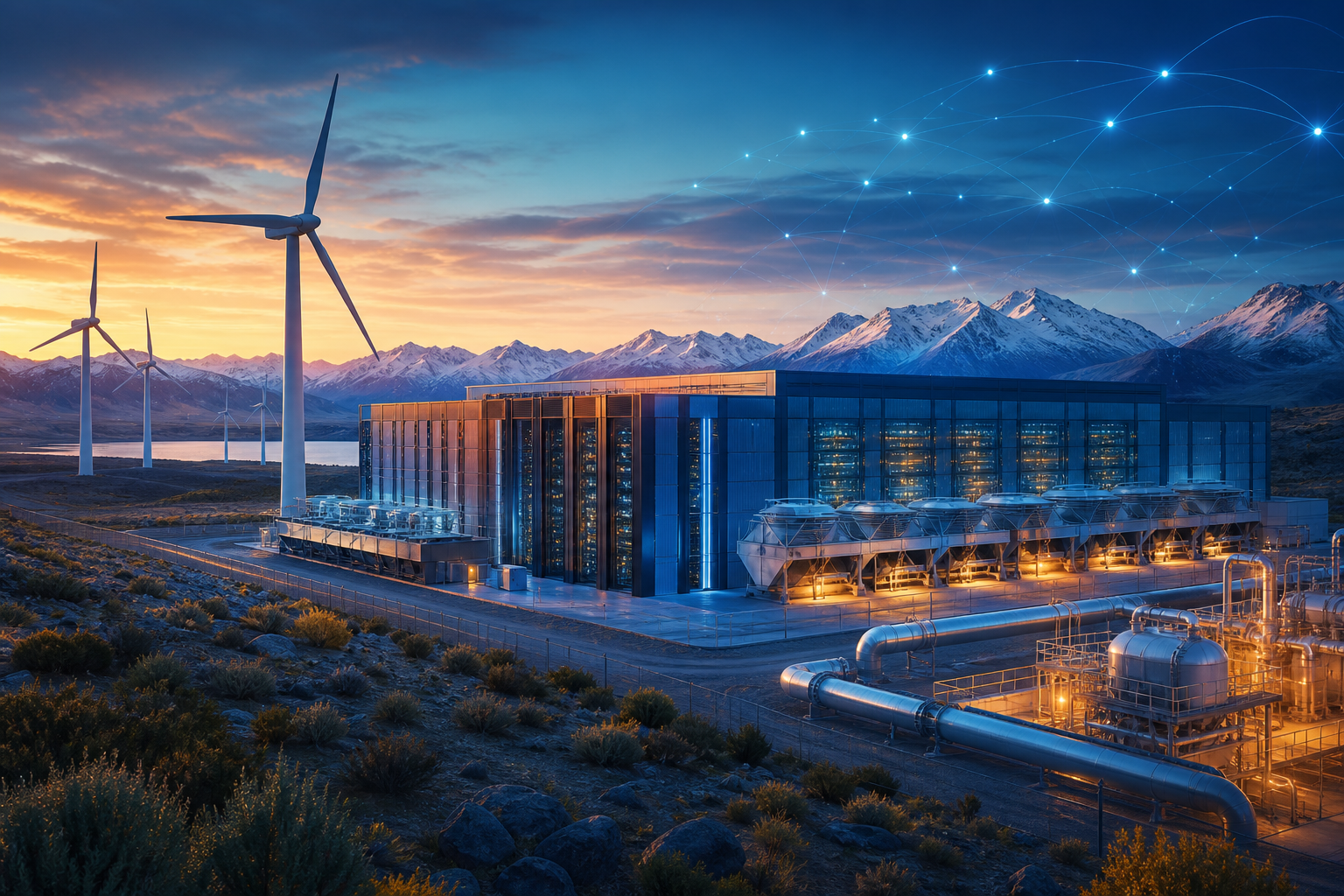
Artificial intelligence may appear to exist only on screens, but it depends on enormous physical facilities. In October 2025, OpenAI and Argentine company Sur Energy signed a letter of intent to explore a large data center project in Argentina. Known as Stargate Argentina, the project could eventually provide up to 500 megawatts of computing capacity and involve as much as $25 billion in investment. If completed, it would be one of the largest technology and energy projects in the country’s history.
人工知能は画面上にだけ存在するように見えるかもしれませんが、巨大な物理的施設に依存しています。2025年10月、OpenAIとアルゼンチンの会社Sur Energyは、アルゼンチンでの大規模データセンター計画を検討する覚書に署名しました。Stargate Argentinaとして知られるこの計画は、最終的に最大500メガワットの計算能力を提供し、最大250億ドルの投資を伴う可能性があります。完成すれば、同国史上最大級の技術・エネルギー計画の一つとなるでしょう。
Why might such a facility be built in Argentina? Advanced AI systems require thousands of powerful computer chips operating continuously. The buildings that contain them are extremely energy-intensive and also need cooling systems, secure communications, and large areas of land. Argentina has major natural gas reserves, strong winds in Patagonia, solar resources in the north, and a relatively cool climate in parts of the south. These features could help it supply the electricity and cooling that large data centers require.
なぜそのような施設がアルゼンチンに建てられる可能性があるのでしょうか。高度なAIシステムには、継続的に稼働する数千の高性能コンピュータチップが必要です。それらを収める建物は極めてエネルギー集約的であり、冷却システム、安全な通信、広い土地も必要です。アルゼンチンには豊富な天然ガス埋蔵量、パタゴニアの強い風、北部の太陽光資源、南部の一部の比較的涼しい気候があります。これらの特徴は、大規模データセンターが必要とする電力と冷却を供給する助けとなりえます。
This creates a new possibility for Argentina. Instead of simply exporting oil and gas, it could use some of its energy inside the country to produce computing services for the world. In economic terms, this could move Argentina further along the value chain. Selling raw energy brings export income, but hosting AI infrastructure could also attract engineers, cloud companies, research institutions, and other technology businesses. The same unit of energy might generate more economic activity if it supports advanced computing before its value leaves the country.
これはアルゼンチンに新しい可能性を生みます。単に石油とガスを輸出するのではなく、国内でエネルギーの一部を使って世界向けの計算サービスを生産できるかもしれません。経済的に言えば、これはアルゼンチンをバリューチェーンのさらに上流へ進ませる可能性があります。未加工のエネルギーを売ることは輸出収入をもたらしますが、AIインフラをホストすることは、エンジニア、クラウド企業、研究機関、その他の技術企業も引きつけうるのです。同じ単位のエネルギーが、価値が国を出る前に高度な計算を支えれば、より多くの経済活動を生み出すかもしれません。
However, a large announcement is not the same as a completed project. OpenAI and Sur Energy signed an agreement to explore the idea, not a final construction contract. Sur Energy would have to organize the project, find partners and financing, choose a location, and secure enough electricity. New generators, transmission lines, fiber connections, and other infrastructure may be necessary. A 500-megawatt facility would place significant demands on the power grid, so the project’s success would depend on much more than Argentina’s natural resources.
しかし、大きな発表は完成した計画と同じではありません。OpenAIとSur Energyは、最終的な建設契約ではなく、アイデアを検討する合意に署名しました。Sur Energyは、計画を組織し、パートナーと資金調達を見つけ、立地を選び、十分な電力を確保しなければなりません。新しい発電機、送電線、光ファイバー接続、その他のインフラが必要になるかもしれません。500メガワットの施設は電力網に大きな要求をかけるため、計画の成功はアルゼンチンの天然資源だけに依存しません。
The effect on employment is also uncertain. Building a data center can create many temporary construction jobs, but operating one may require a smaller, highly skilled workforce. Argentina will receive greater long-term benefits if local engineers, universities, and companies participate in the project. If most of the equipment, expertise, and profits come from abroad, the country could become mainly a supplier of land and energy rather than a true center of AI development.
雇用への影響も不確実です。データセンターの建設は多くの一時的な建設雇用を生みえますが、運営にはより少ない高度な技能を持つ労働力が必要になるかもしれません。地元のエンジニア、大学、企業が計画に参加すれば、アルゼンチンはより大きな長期的利益を受けます。設備、専門知識、利益の大部分が海外から来るなら、国は真のAI開発の中心というより、主に土地とエネルギーの供給者になるかもしれません。
Milei’s government is also trying to create a technology-friendly legal framework. In 2026, it proposed a new category of “automated company” in which AI systems could make some business decisions. Headlines sometimes described these as companies run entirely by AI. In fact, the proposal would still require a human administrator to supervise operations, and the company would remain responsible for damage caused by its algorithms. The proposal is bold, but it does not completely remove human control.
ミレイ政府はまた、技術に優しい法的枠組みを作ろうとしています。2026年、AIシステムが一部の事業判断を行える新しい「自動化企業」のカテゴリーを提案しました。見出しは時に、これらを完全にAIが運営する会社と述べました。実際には、提案は依然として人間の管理者による業務監督を要求し、会社はアルゴリズムが引き起こした損害に責任を負い続けます。提案は大胆ですが、人間の統制を完全に取り除くものではありません。
That distinction matters because innovation does not eliminate accountability. If an AI system makes a harmful decision, someone must still answer to customers, workers, courts, and regulators. Similar questions apply to data centers. Who will monitor their use of electricity and water? Will local communities have a voice in where they are built? Will public infrastructure be expanded for everyone, or mainly for private companies? A country can welcome new technology while still requiring clear answers to these questions.
その区別は重要です。イノベーションが説明責任を消すわけではないからです。AIシステムが有害な決定を下した場合、誰かが依然として顧客、労働者、裁判所、規制当局に答えなければなりません。データセンターにも同様の問いが当てはまります。誰が電力と水の使用を監視するのか。地域社会は建設場所について発言権を持つのか。公共インフラはすべての人のために拡張されるのか、それとも主に民間企業のためにか。国は新しい技術を歓迎しながらも、これらの問いへの明確な答えを依然として求められます。
Argentina therefore faces a choice larger than whether to approve one data center. Its energy, minerals, land, and skilled people give it a genuine opportunity to participate in the AI economy. But becoming the location of foreign infrastructure is not the same as building a national technology industry. The real measure of success will be what remains in Argentina: knowledge, skilled jobs, stronger institutions, useful infrastructure, and companies able to create technology of their own. Energy can open the door to an AI future, but it cannot decide who will benefit from that future.
したがってアルゼンチンは、一つのデータセンターを承認するかどうかより大きな選択に直面しています。エネルギー、鉱物、土地、熟練した人材が、AI経済に参加する本物の機会を与えています。しかし、外国のインフラの所在地になることは、国家の技術産業を築くことと同じではありません。成功の本当の尺度は、アルゼンチンに何が残るかです。知識、熟練した雇用、より強い制度、有用なインフラ、そして自らの技術を生み出せる企業です。エネルギーはAIの未来への扉を開けますが、その未来から誰が利益を得るかを決めることはできません。