
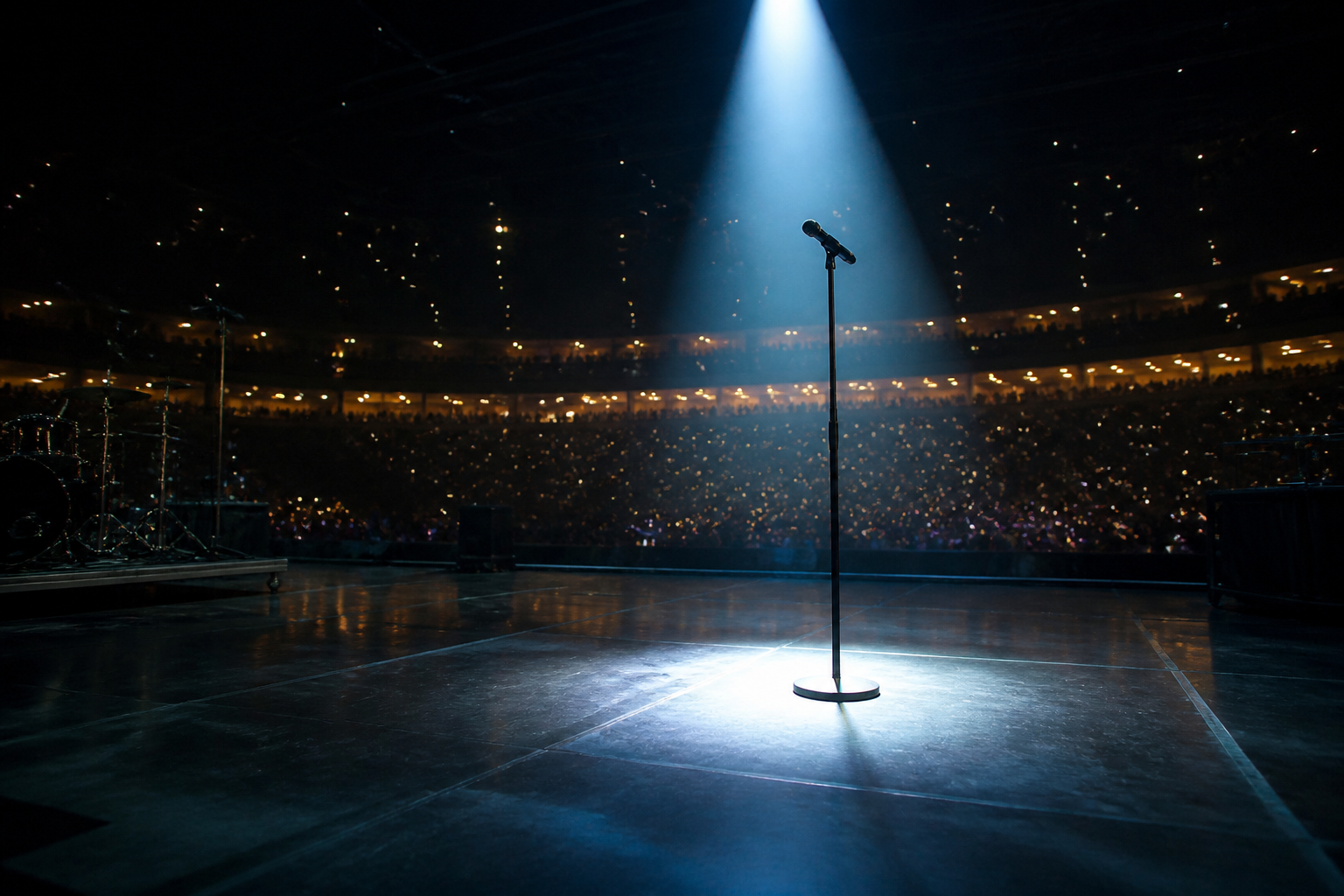
In early August 2026, Ariana Grande announced that she would step back from public life after finishing her tour. Her representative explained that continuous public attention and judgment had become difficult to escape. Grande also withdrew from a planned musical in London. She later said that the decision was not sudden: people sometimes need a break, and personal limits must be respected.
2026年8月上旬、アリアナ・グランデはツアーを終えた後、公の生活から一歩引くと発表しました。代理人は、途切れない公の注目と判断から逃れることが難しくなっていたと説明しました。グランデはロンドンで予定されていたミュージカルからも降りました。彼女は後に、その決定は突然ではなかったと言いました。人は時に休みが必要であり、個人の限界は尊重されなければならない、ということです。
The announcement followed months of online speculation about Grande’s health and appearance. Some people said that they were genuinely concerned, while others made cruel or highly personal comments about her body. This kind of body-shaming is often presented as a concern, but it can still cause harm. No one can understand another person’s health simply by looking at photographs or short videos.
発表は、グランデの健康と外見についての何カ月ものオンライン上の憶測の後に続きました。本気で心配していると言う人もいれば、彼女の体について残酷で極めて個人的なコメントをする人もいました。こうしたボディシェイミングはしばしば心配として示されますが、それでも害を与ええます。写真や短い動画を見るだけで、別の人の健康を理解できる人はいません。
The intensity of this attention may partly come from the way fans connect with celebrities. Through interviews, songs, and social media, people may feel that they know a performer personally. Psychologists sometimes describe this as a parasocial relationship—a one-sided emotional connection with someone who does not actually know the fan. Such relationships can offer comfort and inspiration, but they can also create a false sense of personal access.
この注目の強さは、ファンが有名人とつながる仕方から部分的に来ているかもしれません。インタビュー、歌、ソーシャルメディアを通じて、人は出演者を個人的に知っていると感じることがあります。心理学者は時にこれをパラソーシャル関係—実際にはファンを知らない人との一方的な感情的つながり—と述べます。そうした関係は慰めや刺激を与ええますが、個人的にアクセスできるという誤った感覚も生みえます。
That sense of closeness can make an important boundary difficult to see. A fan may care deeply about an artist without having a right to know everything about her body, health, or private relationships. When a person is discussed mainly as an appearance to be examined, this can become a form of objectification. The celebrity is treated less as a complete human being and more as something for the public to judge.
その近さの感覚は、重要な境界を見えにくくしえます。ファンは、アーティストの体、健康、私的な関係についてすべてを知る権利なしに、深く気にかけることがあります。人が主に調べられる外見として語られるとき、それは対象化の一形態になりえます。有名人は完全な人間としてより、公衆が判断するものとして扱われます。
Public discussion itself is not the problem. People are free to discuss and criticize Grande’s music, performances, and public actions. But that freedom does not make every comment acceptable. Criticism of her work is different from repeated attacks on her body, health, or private life. The difficult question is not whether people may speak, but where criticism ends and harassment begins.
公の議論そのものが問題ではありません。人はグランデの音楽、公演、公の行動について議論し批判する自由があります。しかしその自由は、すべてのコメントを受け入れ可能にはしません。作品への批判は、体、健康、私生活への繰り返される攻撃とは異なります。難しい問いは、人が話してよいかどうかではなく、批判がどこで終わり、嫌がらせがどこから始まるかです。
Gender also affects the way public figures are judged. Male performers certainly face criticism, but female celebrities are often examined more closely for their weight, age, clothing, relationships, and facial expressions. This double standard means that women may be expected to remain attractive, successful, open, and emotionally controlled at the same time. Whatever they do, they can be criticized for failing to meet one of these expectations.
ジェンダーもまた、公人の判断のされ方に影響します。男性出演者も確かに批判に直面しますが、女性の有名人はしばしば体重、年齢、服装、関係、表情についてより詳しく調べられます。この二重基準は、女性が魅力的で、成功し、オープンで、感情的に抑制されていることを同時に期待されうることを意味します。何をしても、これらの期待の一つを満たせないとして批判されえます。
The effects extend beyond one celebrity. Athletes, journalists, content creators, and ordinary social media users can also become targets of large waves of criticism. One hostile comment may seem small, but thousands of comments can affect a person’s mental health and willingness to appear in public. This may create a chilling effect, in which fear of attack discourages people from sharing ideas, doing creative work, or participating in public life.
影響は一人の有名人を超えて広がります。アスリート、ジャーナリスト、コンテンツ制作者、普通のソーシャルメディア利用者も、大きな批判の波の標的になりえます。一つの敵意あるコメントは小さく見えるかもしれませんが、何千ものコメントは人の精神的健康と公の場に出る意欲に影響しえます。これは萎縮効果を生み、攻撃への恐れが、考えを共有したり、創造的な仕事をしたり、公の生活に参加したりすることを人に思いとどまらせます。
This brings the responsibility of online platforms into view. Platforms must respond to threats, harassment, and unlawful content without silencing legitimate criticism or debate. If their rules are too weak, serious abuse may continue. If they remove too much, they may restrict lawful expression. The challenge is to protect people without making open discussion impossible.
これはオンライン・プラットフォームの責任を視野に入れます。プラットフォームは、正当な批判や議論を沈黙させることなく、脅迫、嫌がらせ、違法な内容に応えなければなりません。規則が弱すぎれば、深刻な虐待は続きえます。取り除きすぎれば、合法的な表現を制限するかもしれません。課題は、開かれた議論を不可能にせずに人を守ることです。