
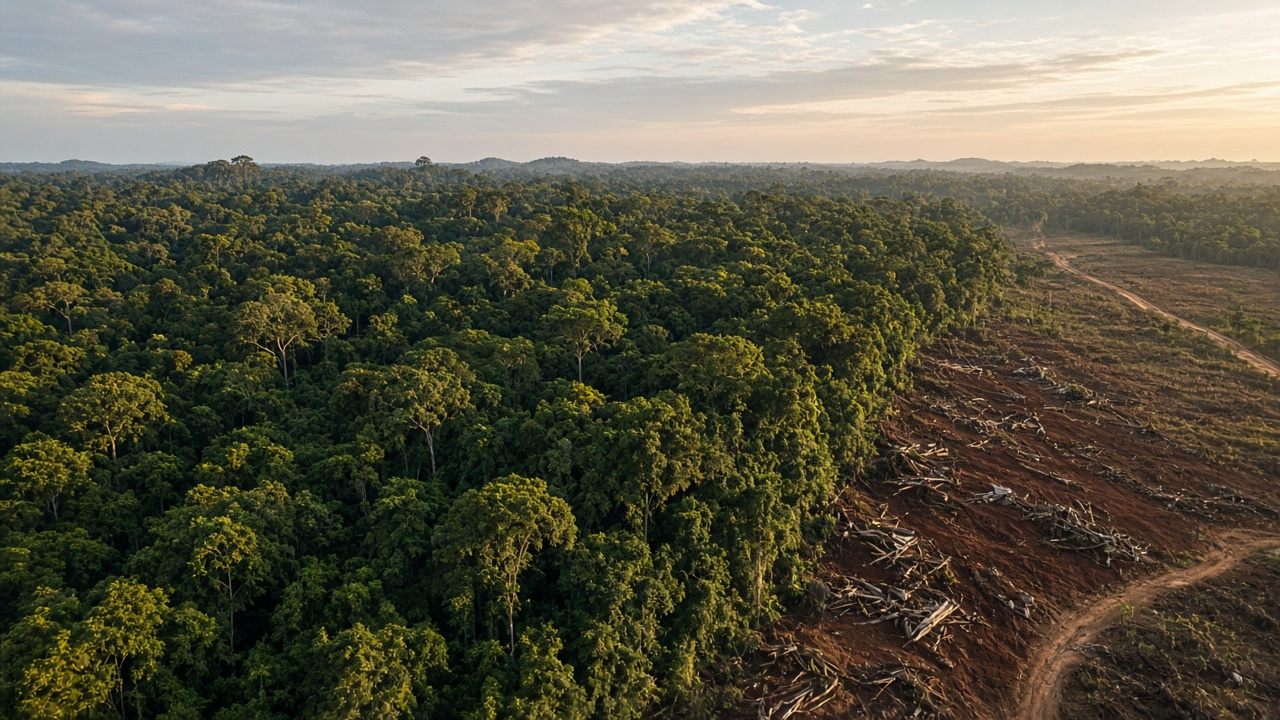
Brazil’s latest satellite figures show a sharp drop in forest loss in the Amazon. From August 2025 to July 2026, about 3,335 square kilometers of forest were cleared—41.8% less than in the previous year. This preliminary estimate is the lowest since Brazil began keeping annual records in 1988. Yet deforestation, the removal of forest to make way for other uses, has not stopped.
ブラジルの最新の衛星データは、アマゾンにおける森林損失の急激な減少を示しています。2025年8月から2026年7月までに伐採された森林は約3,335平方キロメートルで、前年より41.8%少なくなりました。この暫定推定値は、ブラジルが1988年に年間記録を始めて以来、最も低い水準です。しかし、ほかの用途のために森を切り開く森林破壊は、止まっていません。
Why does clearing continue? Forest land can become pasture for cattle ranching or fields for crops such as soybeans. Selling beef and soy brings income, while keeping trees standing may bring less immediate financial reward to those who control the land. Agriculture has been the largest driver of forest loss in Brazil’s primary rainforests over the past two decades. That economic incentive does not disappear when a president announces a new policy.
なぜ伐採は続くのでしょうか。森林の土地は、家畜の放牧のための牧草地や、大豆などの作物の畑になりえます。牛肉や大豆の販売は収入をもたらしますが、木を立ったままにしておくことは、土地を管理する人々にとって、すぐに得られる金銭的な見返りが少ないかもしれません。農業は、この20年間、ブラジルの原生熱帯雨林における森林損失の最大の要因でした。大統領が新しい政策を発表しても、その経済的な誘因は消えません。
Politics can, however, change what happens when someone clears land illegally. Amazon deforestation rose during former president Jair Bolsonaro’s term from 2019 to 2022. After taking office in 2023, President Luiz Inácio Lula da Silva revived a national plan to prevent it. The plan brings government agencies together to identify threatened areas, protect land and strengthen enforcement of environmental rules.
しかし政治は、誰かが違法に土地を切り開いたときに何が起こるかを変えることができます。アマゾンの森林破壊は、ジャイル・ボルソナロ前大統領の任期だった2019年から2022年にかけて増えました。2023年に就任した後、ルイス・イナシオ・ルーラ・ダ・シルバ大統領は、それを防ぐための国家計画を復活させました。この計画は、政府機関をまとめ、脅威にさらされている地域を特定し、土地を保護し、環境規則の執行を強化するものです。
The difference is practical. Satellite monitoring can reveal where new clearing is taking place, but an image cannot issue a fine or stop a machine. Officials must investigate and apply penalties when the law has been broken. Brazil’s environmental agency issued substantially more violation notices and fines in 2023–2025 than in 2020–2022. Researchers link the recent decline in forest loss partly to stronger policies and enforcement, while recognizing that weather and fires also affect the figures.
その違いは実務的なものです。衛星による監視は、新たな伐採がどこで起きているかを明らかにできますが、画像だけでは罰金を科したり、機械を止めたりすることはできません。法律が破られたときには、当局が捜査し、罰則を科さなければなりません。ブラジルの環境当局は、2020年から2022年よりも、2023年から2025年にかけて、大幅に多くの違反通告と罰金を出しました。研究者は、最近の森林損失の減少を、一部はより強い政策と執行に結びつけており、同時に天候や火災も数字に影響することを認めています。
The record low is therefore a reason to pay attention, not to declare the Amazon safe. Fires can damage forests without appearing in a measure of land cleared, and the latest annual figure ends in July, before the fires reported in October. Forest protection also has to address local livelihoods: people need workable ways to earn a living without expanding farms into standing forest.
したがって、この記録的な低さは、注目すべき理由であって、アマゾンが安全だと宣言する理由ではありません。火災は、切り開かれた土地の指標には現れなくても森林を損なうことがあり、最新の年間数字は、10月に報告された火災の前である7月で終わっています。森林保護は、地元の生計も扱わなければなりません。人々には、立っている森へ農場を広げずに生活の糧を得る、現実的な方法が必要なのです。
In the 2021 Glasgow Leaders’ Declaration, Brazil and more than 140 other countries pledged to work together to halt and reverse forest loss by 2030. Fulfilling that promise depends on what each government does at home. Brazil faces a presidential runoff on October 25 between Lula and Flávio Bolsonaro. The winner will decide whether to maintain the inspections and other measures associated with the recent decline in deforestation. This year’s record low shows what Brazil has achieved so far; the election will help determine whether the policies behind that progress continue.
2021年のグラスゴー指導者宣言で、ブラジルと140を超えるほかの国々は、2030年までに森林損失を止め、反転させるために協力すると約束しました。その約束を果たせるかどうかは、各国政府が国内で何をするかにかかっています。ブラジルは10月25日に、ルーラとフラビオ・ボルソナロの間で大統領選挙の決選投票を迎えます。勝者は、最近の森林破壊の減少に結びついている検査やその他の措置を維持するかどうかを決めることになります。今年の記録的な低さは、ブラジルがこれまでに達成したことを示しています。選挙は、その進展の背後にある政策が続くかどうかを決める助けになるでしょう。