
← News Topics

The World’s Forests: Politics, Loss, and Promises

Day 2: Is the World Still Losing Its Forests?

世界の森林:政治、喪失、そして約束 ― 第2日:世界は今も森林を失い続けているのか

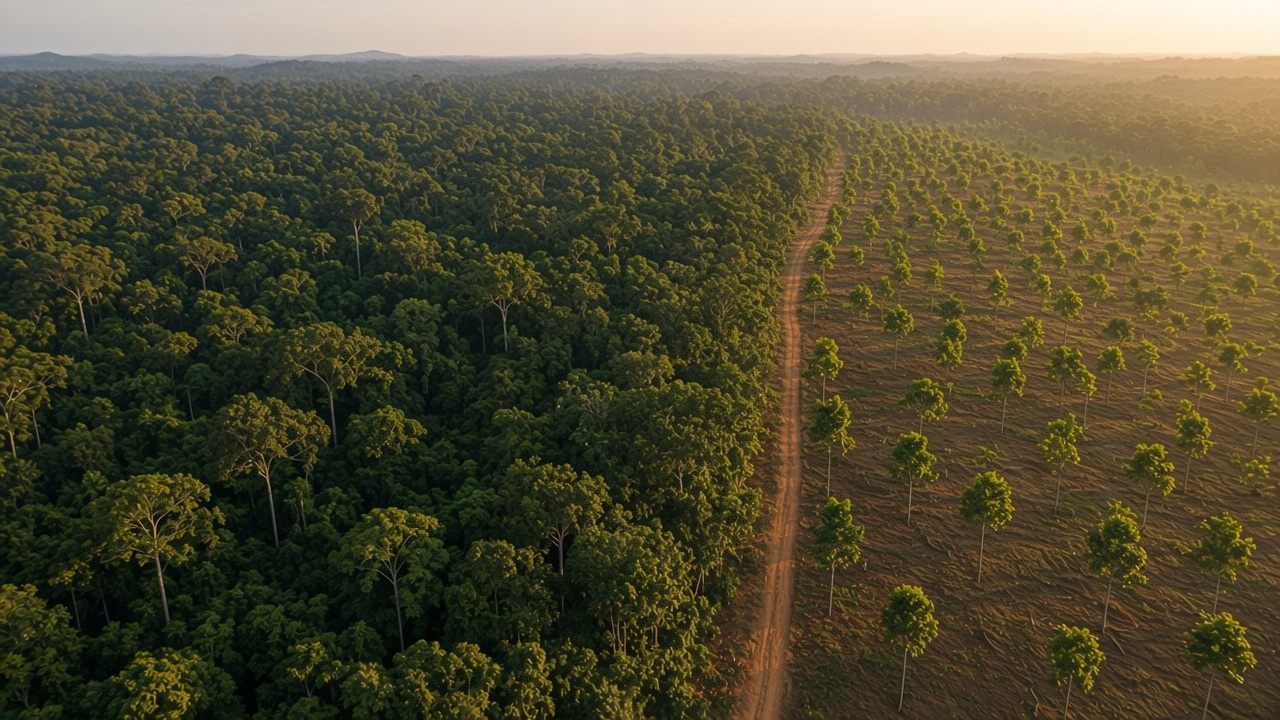
Aerial view of mature tropical rainforest beside rows of young plantation trees on former cleared land under late-afternoon light

The world is still losing forests, although the long-term rate of deforestation has slowed. According to the UN Food and Agriculture Organization (FAO), an average of 10.9 million hectares of forest were converted to other land uses each year from 2015 to 2025. That is down from 17.6 million hectares a year in the 1990s. Fewer forests are being cleared each year than before, but the area lost remains enormous.

世界は今も森林を失い続けています。ただし、長期的に見ると森林破壊の速度は遅くなっています。国連食糧農業機関(FAO)によると、2015年から2025年までに、平均で毎年1,090万ヘクタールの森林が、ほかの土地利用に転換されました。これは1990年代の年間1,760万ヘクタールから減っています。以前より毎年伐採される森林は少なくなりましたが、失われている面積は依然として膨大です。

There is another number that can make the picture look more encouraging. Over the same recent decade, forest expansion added an average of 6.78 million hectares a year as forests appeared on land that had not previously been forest. After accounting for both gains and losses, the world’s annual net loss of forest was about 4.12 million hectares. Yet a new plantation or young forest cannot immediately offset the loss of an old natural forest, with its wildlife and stored carbon.

状況をより明るいものに見せうる、別の数字もあります。同じ最近の10年間に、以前は森林でなかった土地に森が生まれる森林拡大によって、平均で毎年678万ヘクタールが加わりました。増加分と減少分の両方を考慮すると、世界の年間の森林の純損失は約412万ヘクタールでした。しかし、新しい植林地や若い森は、野生生物や蓄えられた炭素を持つ古い天然林の喪失を、すぐに埋め合わせることはできません。

Recent satellite data add a different view. The World Resources Institute reports that 4.3 million hectares of tropical primary forest—mature rainforest with relatively little direct human disturbance—were lost in 2025. That was 36% less than in 2024, a year marked by extreme fires. Even so, the 2025 figure was 46% higher than a decade earlier. A fall from an exceptionally bad year does not necessarily mean the longer-term problem is under control.

最近の衛星データは、別の見方を加えます。世界資源研究所によると、2025年には430万ヘクタールの熱帯原生林、つまり人間による直接の攪乱が比較的少ない成熟した熱帯雨林が失われました。これは、激しい火災が目立った2024年より36%少ない数字です。それでも、2025年の数字は10年前より46%高くなっています。例外的に悪い年からの減少は、必ずしも長期的な問題が抑えられていることを意味しません。

These reports measure different things. The FAO’s deforestation figure concerns forests changed to another land use and gives an average across a decade. Satellite-based tree cover loss records trees disappearing in a particular year; it can include damage from fire or logging even where trees may later regrow. The two figures also cover different areas: all forests worldwide in one case, tropical primary rainforests in the other. Their totals cannot be directly compared.

これらの報告は、異なるものを測っています。FAOの森林破壊の数字は、ほかの土地利用に変わった森林に関するもので、10年間の平均を示します。衛星に基づく樹木被覆の損失は、特定の年に木が消えたことを記録します。そこには、後で木が再び生えるかもしれない火災や伐採による被害も含まれえます。二つの数字がカバーする地域も異なります。一方は世界中のすべての森林、もう一方は熱帯の原生熱帯雨林です。その合計を直接比較することはできません。

The causes of loss also vary by place. Brazil’s tropical primary forest loss fell sharply in 2025, while Bolivia’s remained among the highest recorded there. In the Democratic Republic of the Congo, many families practice shifting cultivation, growing crops on a plot for a time before moving to another; gathering wood for fuel also adds pressure. Farther north, wildfires caused extensive tree cover loss in Canada in 2025. A single global figure cannot show these different pressures.

損失の原因も、場所によって異なります。ブラジルの熱帯原生林の損失は2025年に急減しましたが、ボリビアでは、そこでの記録の中でも高い水準に留まりました。コンゴ民主共和国では、多くの家族が焼畑耕作を行い、しばらく一つの区画で作物を育ててから別の区画へ移ります。燃料用の薪集めも圧力を加えます。さらに北では、2025年にカナダで山火事が広範囲の樹木被覆の損失を引き起こしました。一つの世界的な数字では、こうした異なる圧力を示すことはできません。

So the answer depends on what we mean by “losing forests.” The permanent conversion of forest to other uses has slowed over several decades, yet it continues on a vast scale. Loss of tropical primary rainforest remains high, and fires are an increasing threat to forests in many regions. Planting trees can add to the world’s forest area, but it does not make the loss of a mature rainforest disappear.

したがって、答えは「森林を失っている」とは何を意味するかによって変わります。森林がほかの用途へ恒久的に転換されることは、数十年にわたって減速してきましたが、依然として巨大な規模で続いています。熱帯の原生熱帯雨林の損失は高いままです。また火災は、多くの地域で森林への高まる脅威となっています。木を植えることは世界の森林面積を増やせますが、成熟した熱帯雨林の喪失を消すことにはなりません。

Vocabulary

  1. converted — changed from one form or use to another. Example: Part of the forest was converted into farmland.
  2. forest expansion — an increase in forest area when forest develops on land that was not previously forest. Example: Forest expansion helped reduce the country’s net forest loss.
  3. net loss — the amount lost after gains have been subtracted from losses. Example: The region lost more forest than it gained, resulting in a net loss.
  4. offset — to balance or reduce the effect of a loss or harmful action. Example: Planting new trees cannot immediately offset the loss of an ancient forest.
  5. primary forest — a natural forest that has developed over a long time with relatively little direct human disturbance. Example: Primary forests provide habitats for many species.
  6. tree cover loss — the disappearance of trees from an area, whether caused by human activity, fire or another disturbance. Example: A wildfire caused extensive tree cover loss in the region.
  7. regrow — to grow again after being cut, burned or damaged. Example: Some trees may regrow after a fire, but recovery can take many years.
  8. shifting cultivation — a form of farming in which people grow crops on one plot for a time, then move to another while the first plot is left to recover. Example: Shifting cultivation is one way some rural families produce food.
  9. wildfires — large, uncontrolled fires that spread through forests or other natural areas. Example: Hot and dry conditions made the wildfires difficult to control.

Comprehension Questions

  1. What does the FAO report show about the long-term rate of deforestation?
    1. It fell from an annual average of 17.6 million hectares in the 1990s to 10.9 million hectares in 2015–2025.
    2. It reached zero between 2015 and 2025.
    3. It increased from 10.9 million to 17.6 million hectares a year.
    4. It fell only in tropical primary forests.

    FAOの報告は、長期的な森林破壊の速度について何を示していますか?

  2. Why is net forest loss smaller than the total area deforested?
    1. Net loss excludes forests damaged by fires.
    2. Some existing forests are counted twice.
    3. Forest expansion adds new forest area while other forests are lost.
    4. Net loss counts only forests in Brazil.

    森林の純損失が、伐採された総面積より小さくなるのはなぜですか?

  3. What do the figures for tropical primary forest loss in 2025 show?
    1. Loss was higher than in 2024 and lower than a decade earlier.
    2. Loss was lower than in 2024 but higher than a decade earlier.
    3. No primary forest was lost in 2025.
    4. All forest loss in 2025 was caused by fire.

    2025年の熱帯原生林の損失の数字は何を示していますか?

  4. Why should the FAO and satellite-based figures not be directly compared?
    1. One concerns global land-use conversion over a decade, while the other measures annual tree cover loss in tropical primary rainforests.
    2. The FAO counts only wildfires, while satellites count only farming.
    3. Both reports measure exactly the same thing but use different units.
    4. Satellite data cannot detect the disappearance of trees.

    FAOの数字と衛星に基づく数字を直接比較すべきでないのはなぜですか?

  5. Which example does the article give of forest loss caused largely by fire rather than conversion to farmland?
    1. Forest expansion worldwide
    2. Shifting cultivation in the Democratic Republic of the Congo
    3. The decline in Brazil’s primary forest loss
    4. Tree cover loss in Canada in 2025

    記事は、農地への転換ではなく、主に火災による森林損失の例として何を挙げていますか?

Discussion Questions

  1. If you were reporting on global forests, how would you explain both the slowing rate of deforestation and the large area still being lost each year?

    世界の森林について報道するとしたら、森林破壊の減速と、今も毎年失われている大きな面積の両方を、どのように説明するでしょうか?

  2. What important differences might be hidden when a newly planted forest and an old natural forest are counted as the same area?

    新しく植えられた森と古い天然林が同じ面積として数えられるとき、どのような重要な違いが隠れてしまうでしょうか?

  3. Why might policies that address forest loss in the Democratic Republic of the Congo be different from those needed in Canada?

    コンゴ民主共和国の森林損失に対応する政策が、カナダで必要な政策と異なりうるのはなぜでしょうか?

  4. What further information would help you judge whether a fall in forest loss from one year to the next represents lasting progress?

    ある年から翌年への森林損失の減少が、持続する進展を意味するかどうかを判断するうえで、さらにどのような情報が役立つでしょうか?

  5. Besides net forest area, what should countries measure to understand whether their forests are becoming healthier or more vulnerable?

    森林の純面積以外に、自国の森がより健康になっているのか、それともより脆弱になっているのかを理解するために、国は何を測るべきでしょうか?

Speaking Practice

Why can two reports about forest loss appear to tell different stories?

森林損失についての二つの報告が、異なる話をしているように見えるのはなぜでしょうか?

Speak for about one minute. Include:

約1分間話してください。次の点を含めてください。

  • what the FAO’s long-term figures show

    FAOの長期的な数字が示していること

  • why net loss is smaller than total deforestation

    純損失が総森林破壊より小さくなる理由

  • what the 2025 tropical primary forest figures show

    2025年の熱帯原生林の数字が示していること

  • why the reports should not be directly compared

    それらの報告を直接比較すべきでない理由