
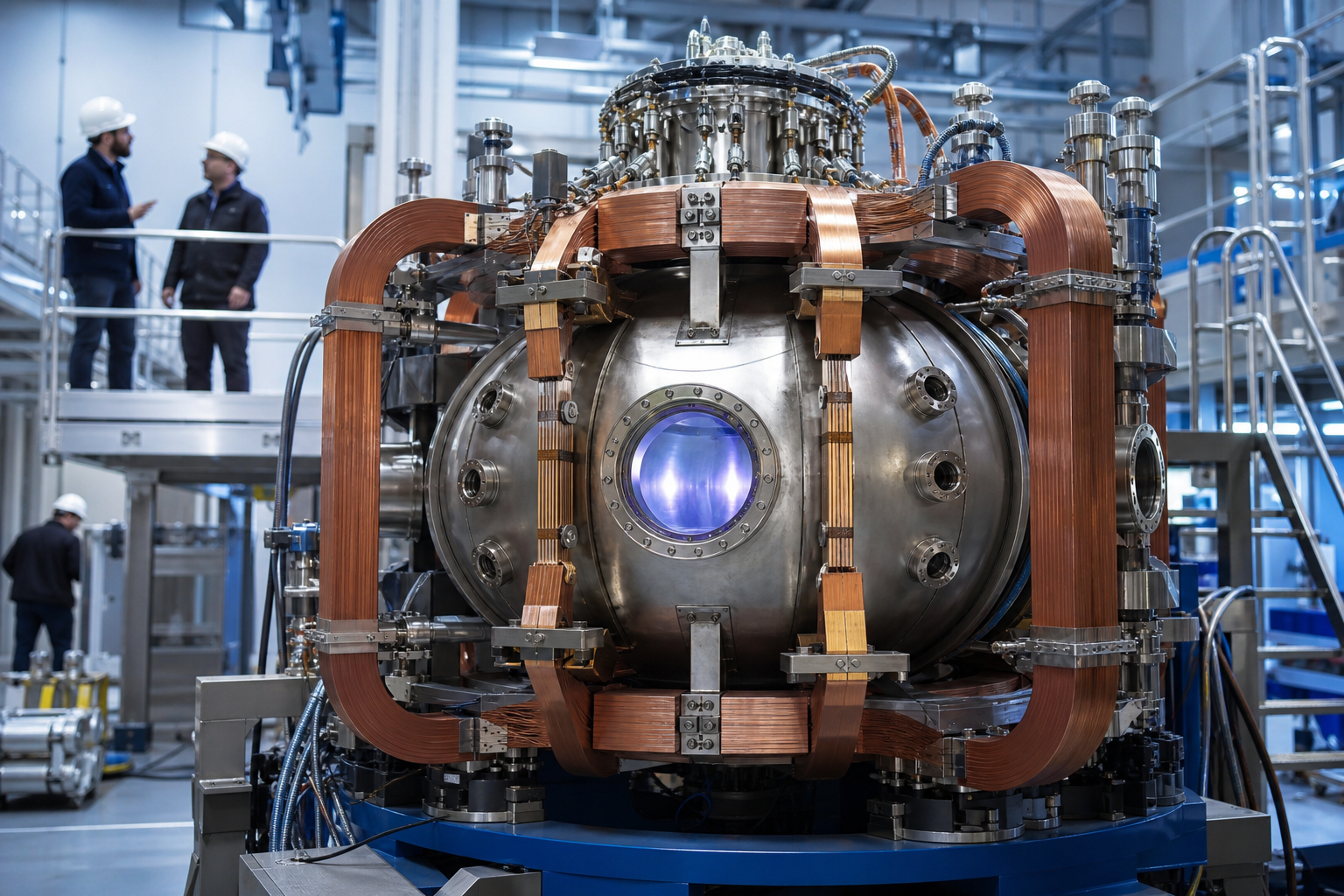
In Massachusetts, Commonwealth Fusion Systems, or CFS, is building a compact fusion machine called SPARC. The company says SPARC will be a precursor to ARC, a future power plant that it expects to produce 400 megawatts of net electricity. Its current projection is that ARC could begin supplying power in the early 2030s. Both machines use high-temperature superconducting magnets, which can create powerful magnetic fields in a smaller space. Meanwhile, ITER is not expected to begin its main experiments with fusion fuel until 2039. This difference raises an obvious question: Could private companies make ITER unnecessary before it is completed?
マサチューセッツ州で、コモンウェルス・フュージョン・システムズ、すなわちCFSは、SPARCと呼ばれるコンパクトな核融合装置を建設しています。同社は、SPARCがARCの前駆体になると述べており、ARCは正味電力400メガワットを生み出すと見込む将来の発電所です。現在の予測では、ARCは2030年代初頭に電力供給を始められるとしています。両装置は高温超伝導磁石を使い、より小さな空間で強力な磁場を作れます。一方、ITERは核融合燃料による主な実験を2039年まで始めないと見込まれています。この差は明らかな問いを投げかけます。民間企業が完成前にITERを不要にしうるのか?
Private fusion companies may be able to move faster for several reasons. A company usually has a smaller management structure, a more limited technical goal, and fewer governments involved in each decision. It can also use private investment and technologies that were not available when ITER was first designed. However, speed should not be confused with success. SPARC has not yet demonstrated net fusion energy, and ARC has not yet produced electricity. Company schedules and power targets are plans, not completed achievements.
民間核融合企業は、いくつかの理由でより速く動けるかもしれません。会社は通常、より小さな管理体制、より限定された技術目標、各決定に関与する政府の数が少ない、という特徴があります。ITERが最初に設計されたときには使えなかった民間投資や技術も使えます。しかし、速度を成功と混同すべきではありません。SPARCはまだ正味の核融合エネルギーを示しておらず、ARCはまだ電力を生み出していません。会社のスケジュールと電力目標は計画であり、完了した達成ではありません。
ITER also has a different purpose. It is designed to study burning plasma at reactor scale and to bring many difficult systems together in one machine. These include large magnets, a tritium fuel cycle, remote maintenance, heat control, and materials that must survive powerful neutron impacts. A smaller private machine may answer some important questions sooner, but it may not test every problem that a large commercial plant will face. ITER’s slow construction has also created engineering experience that could become valuable through knowledge transfer to other fusion projects.
ITERにはまた、異なる目的があります。原子炉規模で燃焼プラズマを研究し、多くの難しいシステムを一つの機械にまとめるよう設計されています。これには大型磁石、トリチウム燃料サイクル、遠隔保守、熱制御、強力な中性子衝撃に耐えなければならない材料が含まれます。より小さな民間装置は、いくつかの重要な問いに早く答えられるかもしれませんが、大型商業プラントが直面するすべての問題を試験するわけではないかもしれません。ITERの遅い建設はまた、他の核融合プロジェクトへの知識移転を通じて価値をもちうる工学経験を生み出しています。
This transfer has already begun. In November 2024, ITER launched its Private Sector Fusion Engagement project. It offers workshops, access to selected technical documents, consultations with ITER experts, and open-source simulation software. In 2025, CFS became the first private fusion company to join activities of an international research network connected with ITER. China’s ENN became the second in 2026. These companies have not become ITER members, and they do not have the same responsibilities as participating governments. However, their researchers can now work more closely with scientists from public research institutions.
この移転はすでに始まっています。2024年11月、ITERは民間部門核融合エンゲージメント・プロジェクトを開始しました。ワークショップ、選定された技術文書へのアクセス、ITER専門家との相談、オープンソースのシミュレーションソフトを提供します。2025年、CFSはITERとつながる国際研究ネットワークの活動に加わった最初の民間核融合企業になりました。中国のENNは2026年に二番目になりました。これらの企業はITERメンバーになったわけではなく、参加政府と同じ責任も負いません。しかしその研究者たちは今、公的研究機関の科学者とより密に働けます。
This suggests that public and private fusion may be complementary rather than direct competitors. ITER can provide decades of scientific knowledge, large-scale engineering experience, and an international research network. Private firms can bring new investment, faster decision-making, and technologies such as newer superconducting magnets. The relationship is therefore changing. ITER was created as cooperation among nations, but its original idea—humanity working together on a common energy challenge—may now be expanding to include companies as well as governments.
これは、公的核融合と民間核融合が直接の競争相手というより、補完的でありうることを示唆します。ITERは数十年の科学的知識、大規模な工学経験、国際研究ネットワークを提供できます。民間企業は新しい投資、より速い意思決定、より新しい超伝導磁石のような技術をもたらしえます。したがって関係は変わりつつあります。ITERは国家間の協力として創られましたが、その元の考え―人類が共通のエネルギー課題のためにともに働くこと―は今、政府だけでなく企業も含むよう広がりつつあるのかもしれません。
The United States has an especially difficult decision about the allocation of public money. In fiscal year 2024, Congress provided $240 million for the U.S. contribution to ITER. That was about 30 percent of the federal Fusion Energy Sciences budget. Supporters argue that the United States receives access to the results of a huge international experiment while paying about 9 percent of its total cost. Critics point to the opportunity cost: money spent on ITER cannot also be used for American laboratories, universities, or public-private fusion programs. Because Congress decides the funding each year, reduced U.S. support could seriously affect both the project and America’s position within it.
米国は、公金の配分について特に難しい決定を抱えています。2024会計年度、議会は米国のITER貢献に2億4,000万ドルを提供しました。それは連邦の核融合エネルギー科学予算の約30パーセントでした。支持者は、米国が総費用の約9パーセントを払いながら巨大な国際実験の成果へのアクセスを得ると主張します。批判者は機会費用を指摘します。ITERに使った金は、アメリカの研究所、大学、官民核融合プログラムにも使えません。議会が毎年資金を決めるため、米国支援の削減はプロジェクトと、その中でのアメリカの立場の両方に深刻に影響しえます。
There is also a question of fairness. Much of the knowledge used by fusion companies was developed with public money. If private firms use that knowledge to build profitable power plants, what public return should taxpayers receive? Possible answers include affordable access to energy technology, shared research results, fair licensing rules, or public ownership of certain inventions. At the same time, overly strict rules might discourage companies from investing. Good cooperation therefore requires accountability without making innovation unnecessarily difficult.
公正の問いもあります。核融合企業が使う知識の多くは公金で開発されました。民間企業がその知識を使って利益を生む発電所を造るなら、納税者はどんな公的リターンを受けるべきですか?ありうる答えには、エネルギー技術への手頃なアクセス、研究結果の共有、公正なライセンス規則、特定の発明の公有が含まれます。同時に、厳しすぎる規則は企業の投資を妨げるかもしれません。したがって良い協力には、イノベーションを不必要に難しくすることなく説明責任が求められます。
Private fusion has not yet replaced ITER. Instead, private companies are beginning to enter a research system that governments built over many decades. If they succeed quickly, ITER may appear less important as a direct path to electricity. Yet its knowledge may still help those companies avoid expensive mistakes. The deeper choice is not simply between public and private fusion. It is how to combine private speed with public responsibility and international cooperation. ITER began with the belief that even rival nations could build something for humanity together. The next question is whether companies can join that mission without weakening its shared purpose.
民間核融合はまだITERに取って代わっていません。代わりに、民間企業は政府が何十年もかけて築いた研究システムに入り始めています。彼らが速く成功すれば、ITERは電力への直接の道として重要性が低く見えるかもしれません。しかしその知識はなお、それらの企業が高価な失敗を避ける助けになりえます。より深い選択は、単に公的か民間かの核融合ではありません。民間の速さと公的責任、国際協力をどう組み合わせるかです。ITERは、対立する国々でさえ人類のために何かをともに築けるという信念から始まりました。次の問いは、企業がその共有された目的を弱めることなく、その使命に加われるかどうかです。