
← News Topics

When the Ground Gives Way

Day 1: Why Is the Ground Collapsing in Turkey?

地面が崩れるとき ― 第1日:トルコで地面が崩落しているのはなぜか

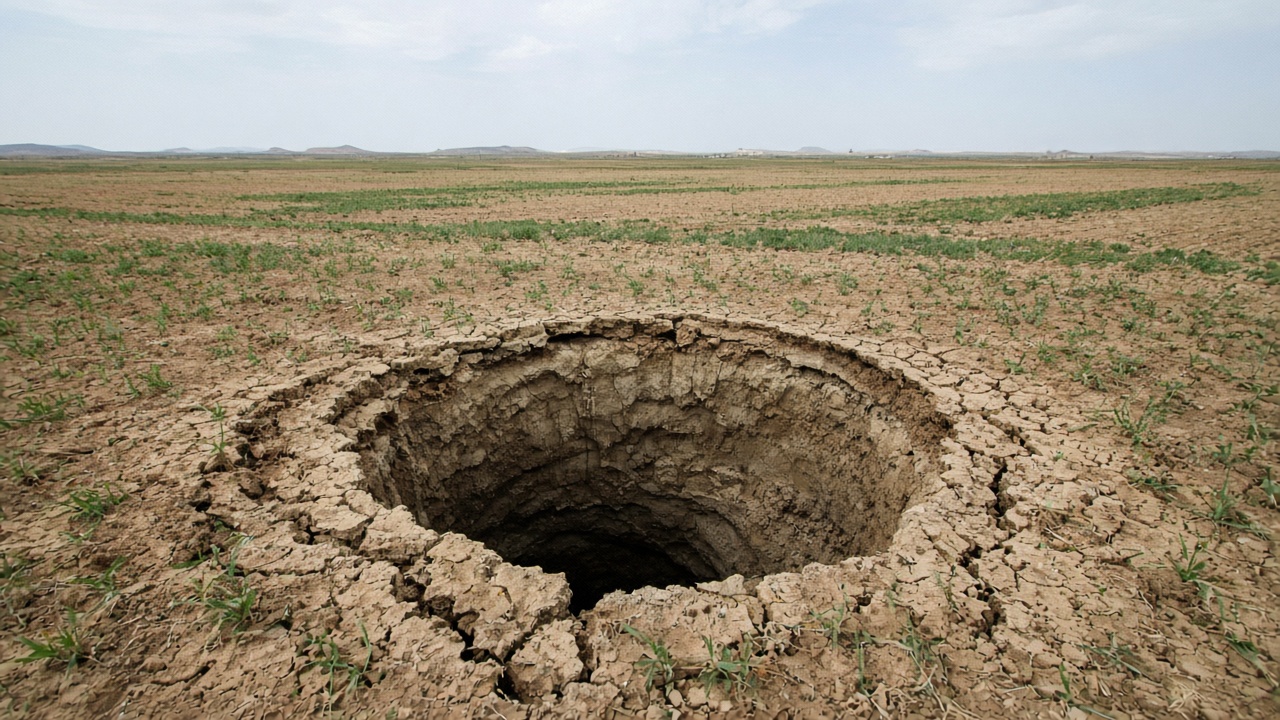
Large sinkhole in dry Turkish farmland suggesting groundwater collapse

One evening, farmer Fatih was eating with friends when they heard repeated sounds beneath the ground. Then soil and mud shot into the air, and part of his field suddenly collapsed. By morning, a huge sinkhole had opened. Fatih now has three such holes in his fields and becomes anxious whenever summer approaches.

ある夕方、農民のファティフは友人たちと食事をしていたとき、地面の下で繰り返される音を聞きました。すると土と泥が空中に吹き上がり、彼の畑の一部が突然崩落しました。朝までには、巨大なシンクホールが開いていました。ファティフは今、畑にそのような穴を三つ持っており、夏が近づくたびに不安になります。

Fatih lives in Konya, the agricultural heartland of Turkey. Its farms produce wheat, barley, corn, and millions of tons of sugar beet. However, the same fields are now covered with hundreds of dangerous holes. Turkey’s Disaster and Emergency Management Authority has identified 739 sinkholes in the Konya Closed Basin. Most are on farmland, but some have appeared near roads, homes, and villages.

ファティフは、トルコの農業の中心地であるコンヤに住んでいます。その農場は小麦、大麦、トウモロコシ、そして何百万トンものテンサイを生産しています。しかし、同じ畑は今、何百もの危険な穴で覆われています。トルコの災害緊急事態管理庁は、コンヤ閉鎖流域で739のシンクホールを確認しています。ほとんどは農地にありますが、一部は道路、家、村の近くに現れています。

Sinkholes are partly the result of the region’s geology. Water slowly dissolves certain kinds of rock beneath the surface, leaving an underground cavity. The soil above it may remain in place for years. Eventually, however, the cavity becomes too large to support the weight above, and the surface falls into it. This type of sudden event is known as a cover-collapse sinkhole.

シンクホールは、部分的にはその地域の地質の結果です。水は地表の下で特定の種類の岩をゆっくり溶かし、地下の空洞を残します。その上の土は何年もその場所にとどまることがあります。しかし最終的に、空洞は上の重さを支えられないほど大きくなり、表面がそこへ落ち込みます。この種の突然の出来事は、カバー崩壊型シンクホールとして知られています。

The recent increase cannot be explained by geology alone. Groundwater normally fills spaces below the surface and helps keep the ground stable. When large quantities of it are removed, the water level falls. Loose material then moves into the underground cavities, weakening the land above them. The sinkhole may appear in seconds, although the process that created it took years.

最近の増加は、地質だけでは説明できません。地下水は通常、地表の下の空間を満たし、地面を安定に保つ助けとなります。それが大量に取り除かれると、水位が下がります。すると緩い物質が地下の空洞に入り、その上の土地を弱めます。シンクホールは数秒で現れることがありますが、それを生み出した過程には何年もかかっています。

Konya receives relatively little rain, and its climate is becoming more arid. At the same time, farmers need large amounts of water to grow crops such as sugar beet and corn. As rivers, lakes, and dams provide less water, wells are drilled deeper to extract water from underground. Many of these wells are not officially licensed.

コンヤの雨は比較的少なく、気候はより乾燥しつつあります。同時に、農民はテンサイやトウモロコシなどの作物を育てるために大量の水を必要とします。川、湖、ダムが供給する水が減るにつれ、地下から水をくみ出すために井戸がより深く掘られます。これらの井戸の多くは公式に許可されていません。

The scale of the imbalance is striking. Research has estimated that people in the basin use about 6.5 billion cubic meters of water each year, although only around 4.4 billion cubic meters can be naturally replaced. In other words, demand exceeds the renewable supply by more than two billion cubic meters annually. The missing water is taken largely from underground reserves that accumulated over many years.

不均衡の規模は目を引きます。研究では、流域の人々は毎年約65億立方メートルの水を使うと推計されていますが、自然に補充できるのは約44億立方メートルにすぎません。言い換えれば、需要は再生可能供給を毎年20億立方メートル以上上回っています。不足分の水は主に、何年もかけて蓄積された地下の埋蔵から取られています。

The holes are therefore more than a local geological danger. They are a visible warning sign of a much larger water crisis hidden beneath the fields. Fences and risk maps may prevent some accidents, but they cannot restore the disappearing groundwater. Preventing further collapses will require Turkey to reconsider how water is used—and why its farmers continue growing crops that require so much of it.

したがってこれらの穴は、地元の地質的危険以上のものです。それらは、畑の下に隠されたはるか大きな水危機の目に見える警告サインです。フェンスやリスク地図は一部の事故を防ぐかもしれませんが、消えていく地下水を取り戻すことはできません。さらなる崩落を防ぐには、トルコが水の使い方を、そして農民がそれほど多くの水を必要とする作物を育て続ける理由を、考え直す必要があります。

Vocabulary

  1. collapse — to fall down suddenly because something can no longer support its own weight. Example: Part of the road may collapse after heavy rain weakens the ground beneath it.
  2. sinkhole — a large hole in the ground caused when the surface falls into an empty space below it. Example: The authorities closed the field after a sinkhole appeared near the road.
  3. agricultural heartland — a region that is especially important for farming and food production. Example: The drought damaged crops across the country’s agricultural heartland.
  4. geology — the physical structure of the earth in a particular area, especially its rocks and soil. Example: The geology of the region includes rock that can slowly dissolve in water.
  5. cavity — an empty space inside a solid object or below a surface. Example: Water had created a large cavity inside the rock.
  6. arid — extremely dry and receiving very little rain. Example: Only specially adapted plants can survive in this arid region.
  7. extract — to remove or obtain something from the place where it is found. Example: The company received permission to extract water from the underground reserve.
  8. exceed — to be greater than a particular amount, number, or limit. Example: The city’s demand for water now exceeds the available supply.
  9. warning sign — something that shows that a problem or danger may be developing. Example: Falling water levels are a warning sign of a future shortage.

Comprehension Questions

  1. What happened while Fatih was eating with his friends?
    1. A storm destroyed his crops.
    2. Part of his field suddenly collapsed.
    3. His irrigation system stopped working.
    4. The authorities ordered him to leave.

    ファティフが友人たちと食事をしていたとき、何が起きましたか?

  2. Why is Konya important to Turkey?
    1. It is the country’s largest tourist destination.
    2. It contains most of Turkey’s factories.
    3. It is a major center of agricultural production.
    4. It receives more rain than any other region.

    コンヤはトルコにとってなぜ重要ですか?

  3. How does an underground cavity contribute to a sinkhole?
    1. It fills the surface with rainwater.
    2. It increases the strength of the soil above it.
    3. It creates an unsupported space beneath the surface.
    4. It prevents rocks from dissolving.

    地下の空洞はシンクホールにどう寄与しますか?

  4. Why has the risk of sinkholes increased?
    1. Farmers have stopped using wells.
    2. Groundwater levels have fallen because of drought and water extraction.
    3. The region has received unusually heavy rainfall.
    4. Fewer crops are being grown in Konya.

    シンクホールのリスクが増えたのはなぜですか?

  5. What does the difference between 6.5 and 4.4 billion cubic meters show?
    1. The basin uses more water than nature can replace.
    2. Most groundwater is exported to other countries.
    3. Agricultural water use has already fallen sharply.
    4. The region has enough renewable water for the future.

    65億と44億立方メートルの差は何を示していますか?

Discussion Questions

  1. Which is more frightening: a visible sinkhole or an invisible decline in groundwater? Why?

    より恐ろしいのはどちらですか。目に見えるシンクホールですか、それとも目に見えない地下水の減少ですか。その理由は?

  2. Who should be responsible for monitoring dangerous land near farms and villages?

    農場や村の近くの危険な土地を監視する責任は誰にあるべきですか?

  3. Should governments limit the amount of groundwater that farmers can extract?

    政府は、農民がくみ出せる地下水の量を制限すべきですか?

  4. How might a water shortage in an agricultural region affect people living elsewhere?

    農業地域の水不足は、他の場所に住む人々にどう影響しえますか?

  5. What other environmental problems can remain hidden until serious damage appears?

    深刻な被害が現れるまで隠れたままでいられる、他の環境問題には何がありますか?

Speaking Practice

Speak for about one minute about why sinkholes are increasing in central Turkey.

トルコ中部でシンクホールが増えている理由について、約1分間話してください。

Include:

  • what happened on Fatih’s farm

    ファティフの農場で何が起きたか

  • how an underground cavity becomes a sinkhole

    地下の空洞がどうシンクホールになるか

  • why groundwater levels are falling

    地下水位が下がっている理由

  • what the sinkholes warn us about

    シンクホールが何を警告しているか