Saudi Arabia is trying to transform its economy on an extraordinary scale. Under Vision 2030, the country is investing in tourism, technology, entertainment, transport, and new cities as part of a broader strategy of economic diversification beyond oil. Among its best-known giga-projects is NEOM, a vast development in the northwest of the country. Saudi Arabia will also host the 2034 FIFA World Cup, bringing another wave of construction and infrastructure development. (Saudi Vision 2030)
サウジアラビアは、並外れた規模で経済を変えようとしています。ビジョン2030の下で、国は石油を超えた経済多様化というより広い戦略の一部として、観光、技術、娯楽、交通、新しい都市に投資しています。最もよく知られたギガプロジェクトの一つが、国の北西部の巨大開発NEOMです。サウジアラビアはまた2034年FIFAワールドカップを開催し、建設とインフラ開発のさらなる波をもたらします。(Saudi Vision 2030)
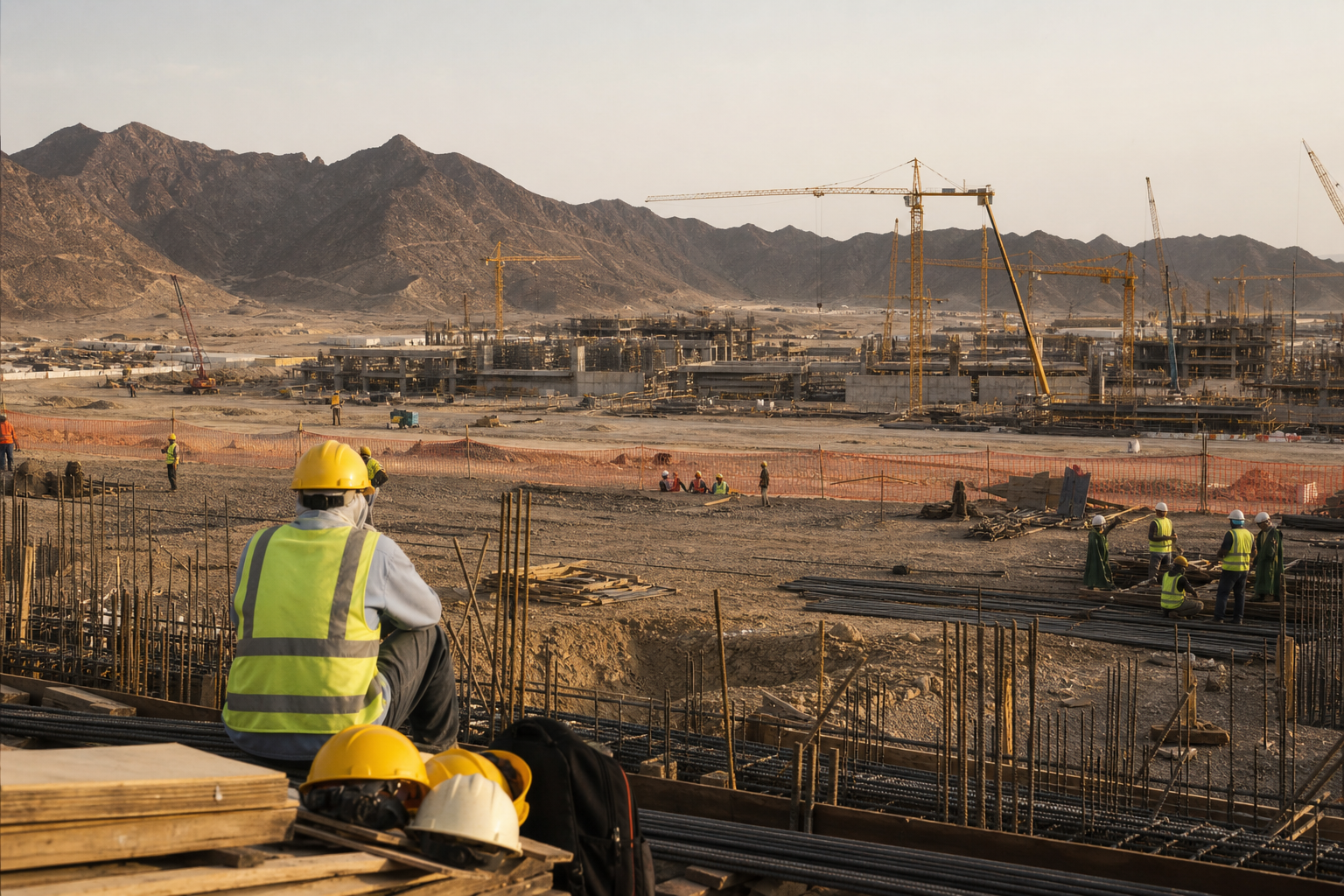
But futuristic cities, stadiums, hotels, roads, and airports do not build themselves. Saudi Arabia depends heavily on a large migrant workforce, including millions of people from South and Southeast Asia. Human Rights Watch reported in 2024 that the country hosted about 13.4 million migrant workers. These workers are employed across construction, hospitality, retail, healthcare, and many other industries—and large development projects are expected to continue creating demand for foreign labor. (Human Rights Watch)
しかし未来的な都市、スタジアム、ホテル、道路、空港は自らは建ちません。サウジアラビアは、南アジアと東南アジアからの何百万人を含む大きな移住労働力に大きく依存しています。ヒューマン・ライツ・ウォッチは2024年、国が約1,340万人の移住労働者を受け入れていたと報告しました。これらの労働者は建設、ホスピタリティ、小売、医療、その他多くの産業で雇用されており、大規模開発プロジェクトは外国人労働への需要を生み出し続けると見込まれます。(Human Rights Watch)
Saudi Arabia has introduced important labor reforms. Its Labor Reform Initiative, which took effect in 2021, made it easier for many private-sector migrant workers to change employers under specified conditions. It also created procedures allowing workers to obtain exit and re-entry visas without an employer’s approval and to leave the country after completing a contract without employer consent. The Saudi government says these measures are intended to make the labor market more flexible and strengthen the contractual relationship between workers and employers. (人材開発省)
サウジアラビアは重要な労働改革を導入してきました。2021年に施行された労働改革イニシアティブは、多くの民間部門の移住労働者が指定された条件の下で雇用主を変えやすくしました。また、雇用主の承認なしに出国・再入国ビザを取得し、契約完了後に雇用主の同意なしに出国できる手続きも作りました。サウジ政府は、これらの措置が労働市場をより柔軟にし、労働者と雇用主のあいだの契約関係を強化することを意図していると述べています。(人材開発省)
Whether these reforms amount to the complete end of kafala remains disputed. Saudi authorities have argued that the old sponsorship model has been replaced by a modernized labor-mobility framework. However, in April 2026, UN human-rights experts called on Saudi Arabia to dismantle kafala effectively “in both law and practice,” including by ensuring that workers can change jobs and leave the country freely. An ongoing ILO process has also brought competing claims about how far the reforms have changed conditions in practice. (国連人権高等弁務官事務所)
これらの改革がカファラの完全な終了になるかどうかは、なお争われています。サウジ当局は、古いスポンサーシップモデルが近代化された労働移動性の枠組みに置き換えられたと主張してきました。しかし2026年4月、国連人権専門家は、労働者が自由に転職し出国できることを確保することを含め、サウジアラビアにカファラを「法と実務の両方で」効果的に解体するよう求めました。進行中のILOプロセスもまた、改革が実務上の条件をどこまで変えたかについて対立する主張をもたらしています。(国連人権高等弁務官事務所)
The debate becomes especially important when looking at the workers building Saudi Arabia’s giga-projects. Human Rights Watch interviewed 142 current and former migrant workers in 2023 and 2024 and reported cases involving recruitment debt, delayed or reduced wages, jobs that differed from what workers had originally been promised, and dangerous working conditions. It also raised questions about accountability when labor-law violations occur. These findings do not mean that every migrant worker or every Saudi project involves abuse, but they show risks that can arise in a rapidly expanding construction economy. (Human Rights Watch)
議論は、サウジアラビアのギガプロジェクトを築く労働者を見るとき、特に重要になります。ヒューマン・ライツ・ウォッチは2023年と2024年に現職および元移住労働者142人にインタビューし、募集の借金、遅延または減額された賃金、もともと約束されたものと異なる仕事、危険な労働条件を含む事例を報告しました。また、労働法違反が起きたときの説明責任についても問いを提起しました。これらの所見は、すべての移住労働者やすべてのサウジのプロジェクトが虐待を伴うという意味ではありませんが、急速に拡大する建設経済で生じうるリスクを示しています。(Human Rights Watch)
Geography can add another layer to the problem. NEOM is being developed in a large area of northwestern Saudi Arabia, far from the country’s biggest urban centers. Human Rights Watch found that workers at remote projects may have less access to embassies, established migrant communities, and other sources of assistance. Construction projects can also involve long chains of contractors, labor-supply companies, and subcontractors. When a worker is unpaid or mistreated, identifying who is responsible can become difficult. Physical isolation, in other words, can strengthen forms of dependence that already exist in the employment relationship. (公共投資ファンド)
地理が問題にもう一つの層を加ええます。NEOMは、国の最大の都市中心から遠く離れたサウジアラビア北西部の広い地域で開発されています。ヒューマン・ライツ・ウォッチは、遠隔のプロジェクトの労働者が大使館、確立された移民コミュニティ、その他の支援源へのアクセスが少ないかもしれないと見出しました。建設プロジェクトはまた、請負業者、労働供給会社、下請け業者の長い連鎖を伴うことがあります。労働者が未払いや虐待を受けたとき、誰が責任を負うかを特定するのは難しくなりえます。言い換えれば、物理的孤立は、雇用関係にすでに存在する依存の形態を強めうるのです。(公共投資ファンド)
The 2034 World Cup makes this more than a question about NEOM. FIFA officially selected Saudi Arabia as host in December 2024 and has said the tournament could become a catalyst for positive social change. Rights groups and UN experts, however, argue that World Cup preparation should include stronger protection for the workers who will build and operate the necessary infrastructure. That places greater importance on due diligence—the responsibility of governments, project owners, international organizations, and companies to identify labor risks before abuses occur rather than responding only afterward. (Inside FIFA)
2034年ワールドカップは、これをNEOMだけの問い以上のものにします。FIFAは2024年12月にサウジアラビアを公式に開催国として選び、大会が前向きな社会変化の触媒になりうると述べています。しかし権利団体と国連専門家は、ワールドカップ準備には、必要なインフラを築き運営する労働者のためのより強い保護が含まれるべきだと主張しています。それはデューデリジェンス—虐待が起きてから対応するのではなく、起きる前に労働リスクを特定する、政府、プロジェクト所有者、国際機関、企業の責任—をより重要にします。(Inside FIFA)
Saudi Arabia’s transformation may create new industries, new cities, and enormous economic opportunities. The question is not whether development itself is good or bad. It is whether the people whose labor makes that development possible have meaningful freedom to leave a job, receive the wages they were promised, work safely, and obtain help when something goes wrong. A futuristic skyline can show what a country is capable of building. How it treats the people who build it may tell us just as much about the future it is creating.
サウジアラビアの変革は、新しい産業、新しい都市、莫大な経済機会を生み出すかもしれません。問いは、開発そのものが良いか悪いかではありません。その開発を可能にする労働を提供する人々が、仕事を離れ、約束された賃金を受け取り、安全に働き、何かがうまくいかないときに助けを得る意味のある自由を持つかどうかです。未来的なスカイラインは、国が何を築けるかを示せます。それを築く人々をどう扱うかは、国が作り出している未来について、同じくらい多くを語るかもしれません。