
← News Topics

How Does Innovation Happen?

Day 1: Is “Zero to One” the Whole Story?

イノベーションはどのように起こるのか ― 第1日:「ゼロから一」は話のすべてなのか

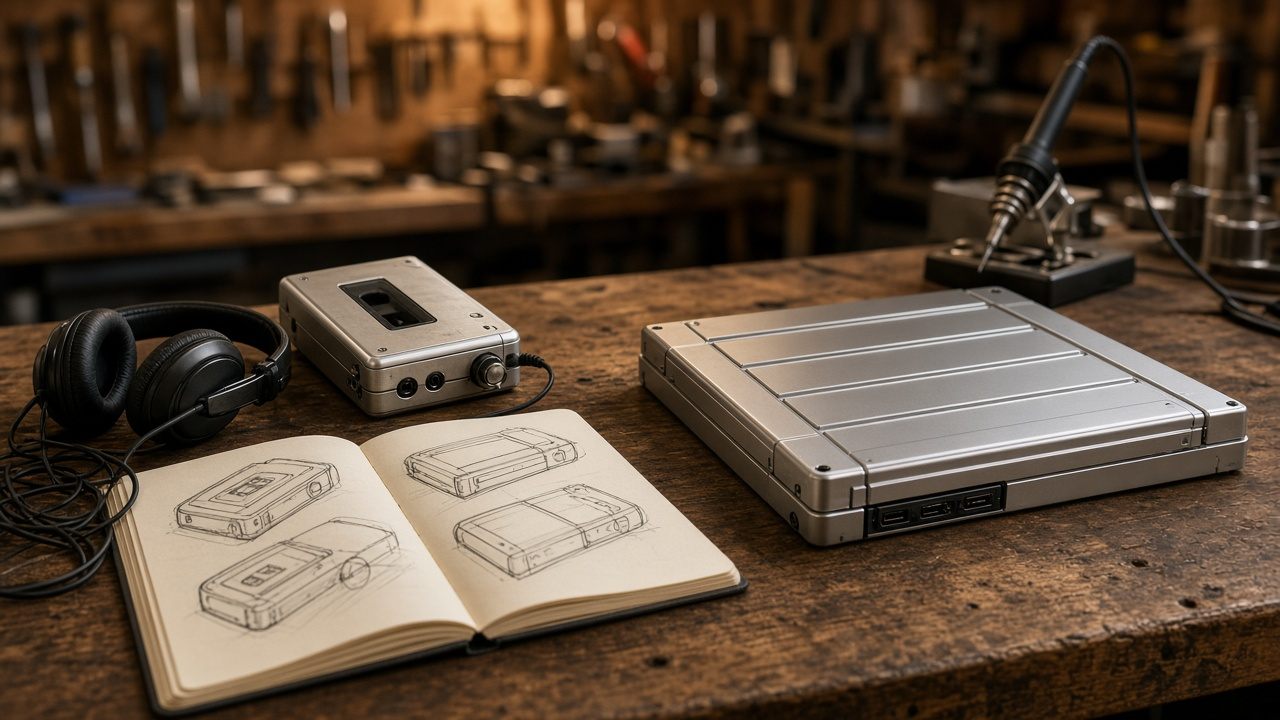
A portable cassette player with headphones beside an EV battery module and sketch notebook on a workshop bench

People sometimes say that one country is good at creating something from nothing, while another is better at improving an idea and spreading it. It is a catchy way to describe innovation. But where does “zero” begin? A product can be new in one sense and built from older ideas in another.

ある国は無から何かを生み出すのが得意で、別の国はアイデアを改良し広めるのが得意だ、と人々はときどき言います。それはイノベーションを説明する、耳に残る言い方です。しかし、「ゼロ」はどこから始まるのでしょうか。ある製品は、ある意味では新しく、別の意味では古いアイデアの上に成り立っていることがあります。

Consider Sony’s Walkman. Sony did not invent cassette tapes or portable tape recorders. Its engineers modified an existing recorder so that people could listen to stereo music through headphones while walking. That early prototype became the Walkman in 1979. Sony then had to design, produce and commercialize a product that offered a new way to enjoy music. Was that improving an old device or creating something new? Both descriptions capture part of the story.

ソニーのウォークマンを考えてみましょう。ソニーはカセットテープも、携帯型テープレコーダーも発明していません。その技術者たちは、既存のレコーダーを改良し、人々が歩きながらヘッドホンでステレオ音楽を聴けるようにしました。その初期の試作品が、1979年にウォークマンになりました。その後ソニーは、音楽を楽しむ新しい方法を提供する製品を設計し、生産し、商品化しなければなりませんでした。それは古い機器の改良だったのでしょうか、それとも何か新しいものの創造だったのでしょうか。どちらの説明も、話の一部を捉えています。

China’s electric-vehicle batteries show a different path. Chinese companies did not invent the electric car or the basic chemistry of lithium iron phosphate batteries. But years of work helped refine those batteries and make them practical for more cars. Companies also learned to scale up production, supported by manufacturing experience and closely connected supply chains. Lower costs helped the batteries reach more buyers. That achievement involved more than simply making extra copies.

中国の電気自動車用バッテリーは、別の道筋を示しています。中国企業は電気自動車も、リン酸鉄リチウム電池の基本的な化学も発明していません。しかし、何年にもわたる取り組みが、それらのバッテリーを改良し、より多くの車にとって実用的なものにする助けとなりました。企業はまた、製造経験と密接につながったサプライチェーンに支えられて、生産を拡大する方法も学びました。コストの低下は、バッテリーがより多くの買い手に届く助けになりました。その成果には、単に余分なコピーを作ること以上のものが含まれていました。

We often notice a breakthrough in a laboratory because it has a clear moment and a name attached to it. The work that follows is harder to see: testing a product, solving failures, changing its design and finding ways to make it reliably. Many incremental improvements can add up to a significant change. Sometimes a new method is invented during that process.

私たちはしばしば、実験室での画期的な成果に気づきます。それは明確な瞬間があり、名前が付いているからです。その後に続く仕事は、見えにくくなります。製品を試し、失敗を解決し、設計を変え、それを確実に作る方法を見つけることです。多くの漸進的な改善が積み重なり、大きな変化になることがあります。その過程で、新しい方法が発明されることもあります。

This does not mean that every claim of innovation is equally strong. Intellectual property rights matter, and taking someone else’s work without permission should not be excused as improvement. But calling all work based on earlier ideas “copying” would leave little room for invention. The important distinction is what was borrowed, what was changed and who contributed the new work.

これは、イノベーションの主張がすべて同じように強いという意味ではありません。知的財産権は重要です。許可なく他人の成果を取ることは、改良として許されるべきではありません。しかし、以前のアイデアに基づく仕事をすべて「コピー」と呼べば、発明の余地はほとんど残らなくなります。重要な区別は、何が借りられ、何が変えられ、誰が新しい仕事を加えたかです。

Countries and companies may develop strengths in particular fields, shaped by their markets, people and resources. Those strengths can change. The same team may create an idea, improve it and find a way to bring it to millions of people. Where we start counting often determines whom we call the inventor.

国や企業は、市場や人々、資源によって形づくられ、特定の分野で強みを育てることがあります。その強みは変わることもあります。同じチームが、アイデアを生み出し、それを改良し、何百万人もの人々に届ける方法を見つけることもあります。どこから数え始めるかが、しばしば誰を発明者と呼ぶかを決めるのです。
Vocabulary

  1. catchy — easy to remember because it sounds simple or appealing. Example: “Zero to one” is a catchy phrase, but it does not tell the whole story.
  2. prototype — an early model of a product used to develop and test an idea. Example: The engineers tested a prototype before designing the final player.
  3. commercialize — to develop an idea or product so that it can be sold. Example: A company may spend years trying to commercialize a new battery.
  4. refine — to improve something through careful changes. Example: Engineers continued to refine the design after the first tests.
  5. scale up — to increase production or activity to a much larger level. Example: The company needed new factories to scale up production.
  6. supply chain — the network of people and businesses involved in making and delivering a product. Example: A reliable supply chain helped the manufacturer produce more batteries.
  7. breakthrough — an important discovery or development that makes major progress possible. Example: The discovery was a breakthrough, but it was not yet a product.
  8. incremental — happening through a series of small changes. Example: Incremental improvements made the battery cheaper and more reliable.
  9. intellectual property — legal rights connected to creations such as inventions, designs and original works. Example: Companies must respect intellectual property when building on another firm’s technology.

Comprehension Questions

  1. Why does the article question the phrase “zero to one”?
    1. Every invention starts from exactly the same point.
    2. It is difficult to decide where the starting point of an invention lies.
    3. Only a laboratory discovery can count as an invention.
    4. The phrase applies only to electronic products.

    記事が「ゼロから一」という表現に疑問を投げかけるのはなぜですか?

  2. What does the Walkman example show?
    1. Sony invented the cassette tape.
    2. Sony sold a portable recorder without changing it.
    3. Existing technology was developed into a product with a new use.
    4. The product became popular before anyone made a prototype.

    ウォークマンの例は何を示していますか?

  3. According to the article, what helped Chinese companies expand the use of EV batteries?
    1. Refinement, larger-scale production and connected supply chains.
    2. The invention of the first electric car.
    3. A decision to stop improving battery designs.
    4. The disappearance of all competing technologies.

    記事によると、中国企業がEVバッテリーの利用を広げる助けになったのは何ですか?

  4. Why might work after a laboratory breakthrough be overlooked?
    1. It never involves technical problems.
    2. It happens only after a product has stopped selling.
    3. It is less visible than a named discovery, although it may require many improvements.
    4. It is always done by the original inventor alone.

    実験室での画期的な成果の後の仕事が見落とされることがあるのはなぜですか?

  5. What distinction does the article say we should examine?
    1. Whether a product was made in a large or small country.
    2. Whether its first prototype was expensive.
    3. What was borrowed, what changed and who contributed new work.
    4. Whether all improvements can be called original inventions.

    記事は、どのような区別を調べるべきだと言っていますか?

Discussion Questions

  1. In the Walkman example, which changes seem most important to you: the device itself, the way people used it, or the ability to bring it to market? Why?

    ウォークマンの例では、機器そのもの、人々の使い方、市場に出す力のうち、どれが最も重要に見えますか?それはなぜですか?

  2. At what point might a series of small improvements become a significant innovation?

    一連の小さな改善は、どの時点で重要なイノベーションになりうるでしょうか?

  3. How can we recognize valuable work built on an earlier invention while respecting the original creator’s rights?

    元の創作者の権利を尊重しながら、以前の発明の上に築かれた価値ある仕事を、どのように認められますか?

  4. What kinds of discoveries or improvements become invisible when we judge a country only by famous “firsts”?

    有名な「最初」だけで国を判断すると、どのような発見や改善が見えなくなるでしょうか?

  5. What information would you need before describing a company as an inventor, an innovator or a copier?

    ある会社を発明者、革新者、またはコピーする者と呼ぶ前に、どのような情報が必要でしょうか?

Speaking Practice

Someone says, “One country invents things; another country only makes them better.” Respond in about one minute. Use the Walkman or EV battery example, and explain why the answer depends partly on where the story begins.

誰かがこう言います。「ある国はものを発明し、別の国はそれを良くするだけだ。」約1分間で答えてください。ウォークマンまたはEVバッテリーの例を使い、答えが部分的には話がどこから始まるかによる理由を説明してください。