
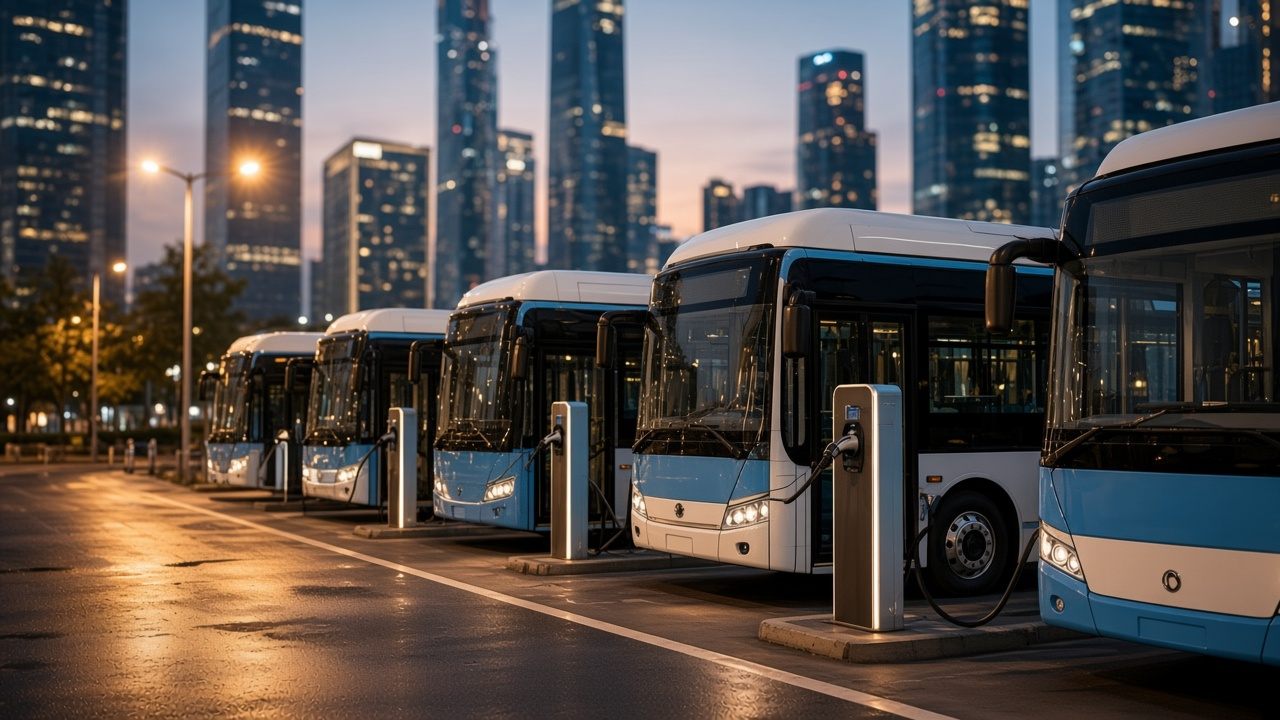
In 2017, Shenzhen, China, completed the conversion of its entire public bus fleet—about 16,000 vehicles—to electric power. The city had not invented the electric bus. Its achievement was making electric buses the normal way to provide bus service across a large city. How was it able to make that change so quickly?
2017年、中国の深圳は、約1万6,000台の公共バスの車両全体を、電気駆動へ転換し終えました。その都市は電気バスを発明したわけではありません。その成果は、大都市全体でバスサービスを提供する通常の方法を、電気バスにすることにありました。なぜ、その変化をこれほど速く行えたのでしょうか?
Buying the buses was only one part of the job. They cost more upfront than diesel buses, and operators needed charging infrastructure in the right places. Charging also had to fit around daily routes: a bus cannot carry passengers while it is plugged in. Replacing the fleet meant changing how the whole service worked.
バスを買うことは、仕事の一部にすぎませんでした。電気バスはディーゼルバスより初期費用が高く、運営者は適切な場所に充電インフラを必要としました。充電は、日々の運行にも合わせなければなりません。バスは充電中に乗客を運べないからです。車両を置き換えることは、サービス全体の働き方を変えることを意味しました。
Shenzhen treated those problems as one project. National and local subsidies helped pay for vehicles. The city supported charging facilities and made land-use approvals for them faster. Its three main bus companies worked with manufacturers, charging providers, and financial firms; leasing helped spread some of the initial cost. A government target became practical because several organizations could act on it together.
深圳は、それらの問題を一つの事業として扱いました。国と地方の補助金が、車両の費用を賄う助けになりました。市は充電施設を支援し、そのための土地利用の許可をより早くしました。主要な3つのバス会社は、製造業者、充電事業者、金融機関と協力し、リースが初期費用の一部を分散する助けになりました。政府の目標は、複数の組織がともに動けるようになったことで、実行可能なものになりました。
That speed came at a price. A World Bank study of Shenzhen Bus Group estimated that, without subsidies, an electric bus’s lifetime cost would have been higher than a diesel bus’s. With subsidies, it was lower for the operator. The expense had not vanished: part of it had moved to the public budget. Shenzhen’s government chose to pay for a faster transition.
その速さには代償が伴いました。世界銀行による深圳バスグループの研究は、補助金がなければ、電気バスの生涯コストはディーゼルバスより高くなっていただろうと推計しています。補助金があれば、運営者にとってはより低くなりました。費用がなくなったわけではありません。その一部が公的予算へ移ったのです。深圳市政府は、より速い移行のために支払うことを選びました。
Japan supports electric buses too, but making a similar nationwide or citywide switch is difficult under its present conditions. In a government survey, nearly three-quarters of Japanese bus operators ran at a loss in fiscal 2023. Vehicle costs and charging facilities remain obstacles. In 2025, even Tokyo’s city-run bus service began by testing two electric buses in a pilot project. For an operator already struggling to keep its routes running, a subsidy for buying electric buses is not enough. It also needs charging facilities and a way to cover the cost of changing its daily operations.
日本も電気バスを支援していますが、現在の条件のもとでは、同様の全国規模や都市規模の転換は難しいです。政府の調査では、2023年度に日本のバス事業者のほぼ4分の3が赤字でした。車両費用と充電施設は、依然として障害です。2025年には、東京都が運営するバスでさえ、パイロット事業で2台の電気バスを試験することから始めました。すでに路線の運行維持に苦しんでいる事業者にとって、電気バス購入の補助金だけでは十分ではありません。充電施設と、日々の運行を変えるコストを賄う方法も必要なのです。
So, can a government plan innovation? Shenzhen shows that it can plan the spread of a technology by coordinating operators, equipment, land, and money—and by accepting a substantial share of the cost. Japan’s slower approach brings that choice into view. Setting a target is straightforward; deciding who will pay for the entire transition, and bringing everyone needed to carry it out together, is the difficult part.
では、政府はイノベーションを計画できるのでしょうか。深圳は、運営者、設備、土地、資金を調整し、コストのかなりの部分を引き受けることで、技術の普及を計画できることを示しています。日本のより遅い進め方は、その選択をはっきりさせます。目標を設定することは簡単です。移行全体の費用を誰が払うかを決め、それを実行するために必要な全員をまとめることこそが、難しい部分なのです。