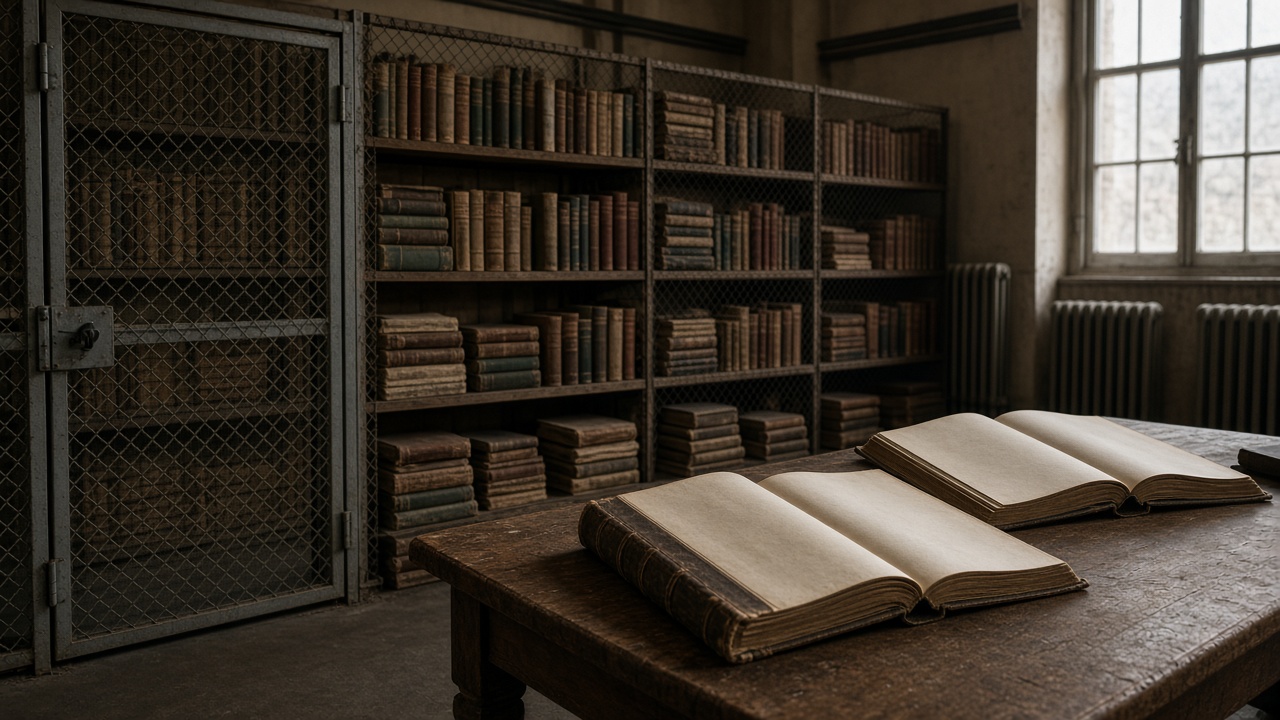
In November 2026, Ireland announced plans to make around 12,000 books once banned by the state available to the public. The books, kept for decades in a restricted room at the Department of Justice, will be transferred to the National Archives. Among them are works by internationally celebrated authors, including Edna O’Brien and Brendan Behan. Even more revealing are the official records explaining why individual books were prohibited. Ireland introduced strict censorship laws in 1929, just seven years after the Irish Free State was established. Why did a newly established country consider so many books too dangerous for its citizens to read?
2026年11月、アイルランドは、かつて国家によって禁止された約1万2,000冊の本を一般に公開する計画を発表しました。何十年ものあいだ司法省の制限された部屋に保管されてきたそれらの本は、国立公文書館へ移されます。そのなかには、エドナ・オブライアンやブレンダン・ビーハンなど、国際的に称賛された作家の作品もあります。さらに示唆に富むのは、個々の本がなぜ禁止されたかを説明する公式記録です。アイルランドは、アイルランド自由国が成立してからわずか7年後の1929年に、厳しい検閲法を導入しました。なぜ新しく成立した国は、これほど多くの本を市民が読むには危険すぎるとみなしたのでしょうか。
To understand the answer, we must return to 1922, when the Irish Free State was established after most of Ireland separated from the United Kingdom, following a long struggle against British rule. The new country was trying to establish its own national identity, and questions of religion, family life, and public morality played a central role. The Catholic Church exercised considerable influence over Irish society, while many political and religious leaders believed the state should protect citizens, particularly young people, from supposedly harmful ideas. Books and magazines arriving from abroad were sometimes seen as threats to traditional values. Yet censorship was not simply imposed by the Church. Various civic and educational organizations also demanded tighter controls, reflecting a wider belief that the government had a responsibility to regulate what people could read.
答えを理解するには、アイルランドの大部分がイギリス支配に対する長い闘争のあと、連合王国から分離してアイルランド自由国が成立した1922年に戻らなければなりません。新しい国は自らの国民アイデンティティを確立しようとしており、宗教、家族生活、公的道徳の問題が中心的な役割を果たしました。カトリック教会はアイルランド社会にかなりの影響力を振るい、多くの政治・宗教指導者は、国家が市民、とくに若者を、有害とされる考えから守るべきだと考えていました。海外から届く本や雑誌は、ときに伝統的価値への脅威と見なされました。しかし検閲は、単に教会によって押しつけられたものではありませんでした。さまざまな市民・教育団体もより厳しい規制を求め、政府が人々の読むものを規制する責任があるという、より広い信念を反映していました。
In 1926, the government established a body with a remarkable name: the Committee on Evil Literature. Its five members included three laypeople and two clergymen, one Catholic and one Protestant. The committee recommended stronger restrictions, leading to the Censorship of Publications Act of 1929. Under the new system, a government-appointed board could prohibit the sale and distribution of books it considered indecent or obscene. These terms covered material thought to violate accepted sexual or moral standards. Importantly, the law did not simply make reading a banned book a crime; it restricted the book’s availability through ordinary commercial channels. The state had effectively given a small group of officials the power to decide which publications the public could legally buy.
1926年、政府は驚くべき名前の機関を設立しました。悪書委員会です。5人の委員には、3人の一般人と、カトリックとプロテスタントの聖職者各1人が含まれていました。委員会はより強い制限を勧告し、1929年の出版物検閲法につながりました。新しい制度のもとでは、政府が任命した委員会が、わいせつまたは卑わいとみなす本の販売と流通を禁止できました。これらの用語は、受け入れられた性的または道徳的基準に反すると考えられた内容を対象としました。重要なのは、法律が禁止本を読むこと自体を単に犯罪にしたのではなく、通常の商業ルートを通じた本の入手可能性を制限したことです。国家は事実上、世論が合法的に買える出版物を決める権限を、少数の当局者に与えていたのです。
The consequences extended far beyond sexually explicit publications. In 1960, Edna O’Brien’s novel The Country Girls, which explored the lives, relationships, and growing independence of young Irish women, was banned in her homeland. Brendan Behan’s Borstal Boy, based on his experiences in a British juvenile detention institution, was also prohibited. Other books faced restrictions because they discussed contraception, divorce, adultery, or homosexuality. Some of these works later became recognized as important contributions to literature. The contrast is striking: books that challenged social conventions were often treated as moral threats rather than opportunities to examine society. For writers, a ban could mean losing access to their own domestic market simply because their work questioned accepted values.
その結果は、性的に露骨な出版物をはるかに超えて広がりました。1960年、若いアイルランド女性の生活、関係、高まる自立を探ったエドナ・オブライアンの小説『カントリー・ガールズ』は、故郷で禁止されました。ブレンダン・ビーハンの『ボースタル・ボーイ』も、イギリスの少年収容施設での経験に基づく作品として禁じられました。ほかの本は、避妊、離婚、不倫、または同性愛を扱ったために制限に直面しました。これらの作品の一部は、のちに文学への重要な貢献として認められるようになりました。対比は際立っています。社会の慣習に挑んだ本は、社会を吟味する機会ではなく、しばしば道徳的脅威として扱われたのです。作家にとって、禁止は、作品が受け入れられた価値に疑問を呈したというだけで、自国市場へのアクセスを失うことを意味しえました。
Ireland gradually changed. As society became more secular, the authority of religious institutions weakened, attitudes toward sexuality and personal freedom shifted, and the censorship system came under increasing criticism. A major reform in 1967 limited bans on books to twelve years unless they were renewed, allowing thousands of previously prohibited works to return to circulation. Nevertheless, the censorship board continued to exist, and a book was banned as recently as 2016. In 2023, the government announced plans to repeal the old censorship legislation, arguing that it no longer reflected modern Irish society. A system once justified in the name of public morality had become increasingly difficult to defend in a country where people could freely access information online.
アイルランドは徐々に変わりました。社会がより世俗的になるにつれ、宗教機関の権威は弱まり、性や個人の自由への態度は移り、検閲制度への批判は高まりました。1967年の大きな改革は、更新されない限り本の禁止を12年に限り、以前禁止された何千もの作品が流通に戻ることを可能にしました。それでも検閲委員会は存在し続け、2016年にも本が禁止されました。2023年、政府は古い検閲法を廃止する計画を発表し、それがもはや現代のアイルランド社会を反映していないと主張しました。かつて公的道徳の名のもとに正当化された制度は、人々がオンラインで自由に情報にアクセスできる国では、ますます擁護しにくくなっていたのです。
The newly announced transfer will preserve more than the books themselves. Alongside the collection are ledgers recording the reasons behind individual censorship decisions. These documents, many of which are fragile, will offer historians an unusual opportunity to examine the thinking of officials who decided what the public should be allowed to read. The books may tell us what Irish writers wanted to say about their society. The records of their prohibition may tell us something equally important: what those in authority were unwilling to let society discuss. Nearly a century later, the most revealing part of Ireland’s banned-book collection may not be the books that were silenced, but the explanations for silencing them.
新たに発表された移管は、本そのもの以上を保存します。コレクションと並んで、個々の検閲決定の理由を記した台帳があります。これらの文書の多くは壊れやすく、歴史家に、世論が何を読んでよいかを決めた当局者の考えを調べる珍しい機会を与えるでしょう。本は、アイルランドの作家が自社会について何を言いたかったかを教えてくれるかもしれません。禁止の記録は、同じくらい重要な何かを教えてくれるかもしれません。権力者が社会に議論させたくなかったことは何か、ということです。ほぼ1世紀後、アイルランドの禁止本コレクションで最も示唆に富む部分は、沈黙させられた本ではなく、それらを沈黙させた説明なのかもしれません。