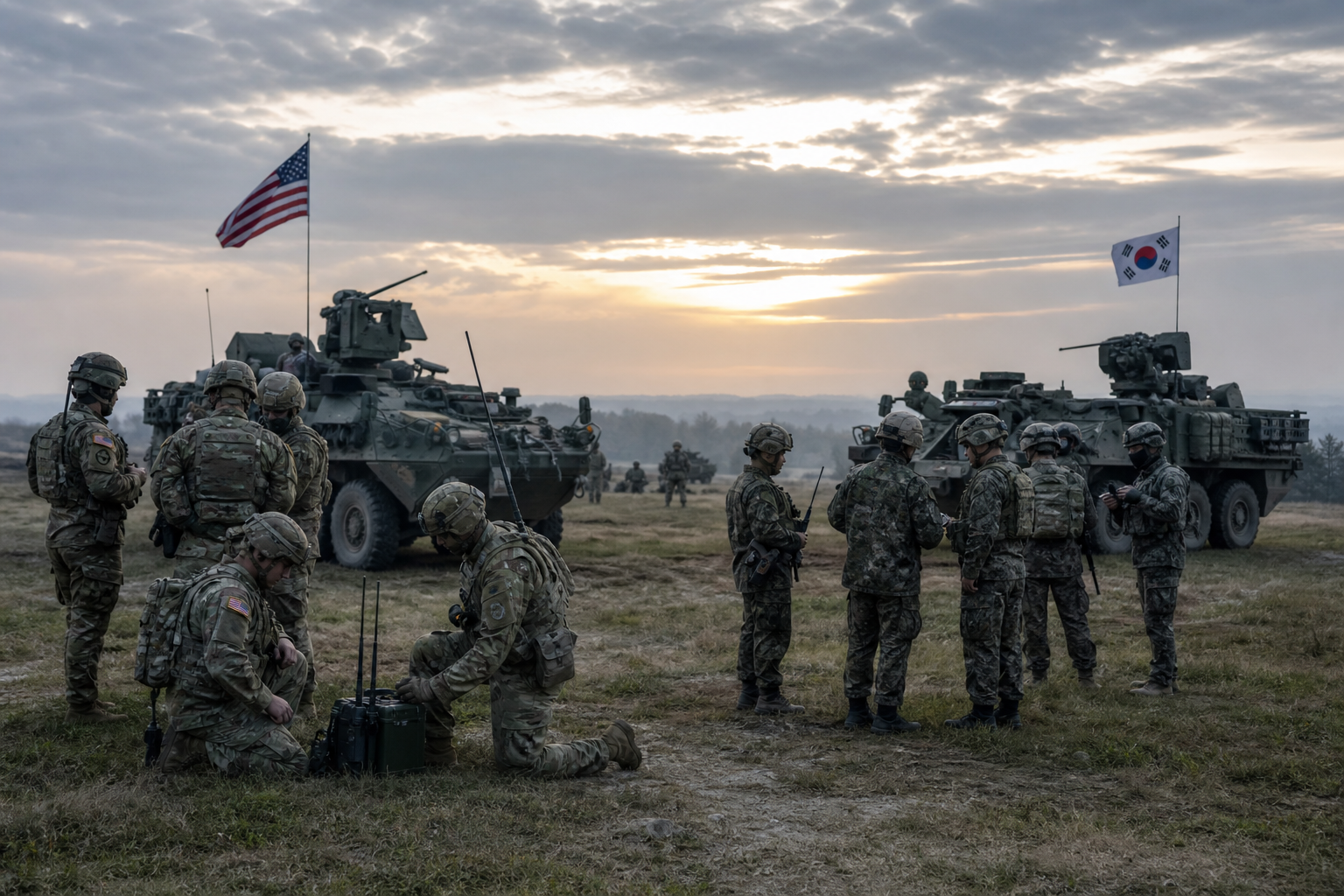
On August 16, 2026, U.S. President Donald Trump ordered the Pentagon to scale back its role in annual joint military exercises with South Korea. The eleven-day Ulchi Freedom Shield drills had been scheduled to begin the following day with about 18,000 South Korean troops. Trump argued that the exercises were expensive and sent an unnecessarily hostile message to North Korea. He also referred to his good personal relationship with North Korean leader Kim Jong Un. However, the exercises began as planned, and it was not immediately clear how much the American role would change.
2026年8月16日、米国のドナルド・トランプ大統領は、韓国との年次合同軍事演習における役割を縮小するよう国防総省に命じました。11日間の乙支フリーダムシールド演習は、翌日、約18,000人の韓国軍とともに始まる予定でした。トランプ氏は、演習は費用がかかり、北朝鮮に不必要に敵対的なメッセージを送ると主張しました。北朝鮮の指導者金正恩氏との良好な個人的関係にも言及しました。しかし演習は予定どおり始まり、米国の役割がどれだけ変わるかはすぐには明らかではありませんでした。
For the U.S. and South Korean militaries, these exercises are not simply practice. The two forces must be able to communicate and act together during a crisis. The 2026 drills include responses to drones, cyberattacks, and interference with GPS signals. Supporters say regular training maintains military readiness and strengthens deterrence. Deterrence means convincing an opponent not to attack by showing that an effective response is possible. From this perspective, reducing the exercises could make the alliance appear less prepared.
米韓両軍にとって、これらの演習は単なる練習ではありません。二つの部隊は危機の際に通信し、ともに行動できなければなりません。2026年の演習には、ドローン、サイバー攻撃、GPS信号への妨害への対応が含まれます。支持者は、定期的な訓練が軍事的即応性を維持し、抑止を強めると言います。抑止とは、効果的な対応が可能であることを示すことで、相手に攻撃しないよう納得させることです。この視点からすれば、演習を減らすことは同盟が準備不足に見える原因になりえます。
North Korea sees the same activity very differently. Its government describes the exercises as a rehearsal for invasion and a dangerous provocation. It often responds with missile tests, military warnings, or additional weapons development. This creates a classic security dilemma: one country takes defensive action, but another country interprets it as preparation for an attack. The second country then increases its own military power, making the first country feel even less safe. Both sides may say they are defending themselves while making the situation more dangerous.
北朝鮮は同じ活動をまったく違って見ます。その政府は演習を侵攻の予行演習であり危険な挑発だと述べます。しばしばミサイル実験、軍事的警告、または追加の兵器開発で応じます。これは古典的な安全保障のジレンマを生みます。一国が防衛行動を取るが、別の国はそれを攻撃の準備だと解釈する。二番目の国はそれから自らの軍事力を増やし、最初の国はさらに安全でないと感じます。双方が自らを守っていると言いながら、状況をより危険にしているかもしれません。
Trump made a similar decision after meeting Kim in Singapore in 2018. He became the first sitting American president to meet a North Korean leader and later briefly crossed into North Korean territory. Some large exercises were suspended to create space for negotiations. The meetings reduced immediate tension and produced powerful images, but they did not lead North Korea to dismantle its nuclear weapons program. This history does not prove that diplomacy was useless. It does suggest that friendly meetings and symbolic gestures are unlikely to create lasting change without reciprocal and verifiable steps.
トランプ氏は2018年にシンガポールで金氏と会談した後、似た決定をしました。現職の米国大統領として初めて北朝鮮の指導者と会い、後に短時間北朝鮮領内に入りました。交渉の余地を作るため、いくつかの大規模演習は中止されました。会談は当面の緊張を下げ、強い印象を生みましたが、北朝鮮に核兵器計画を解体させることにはつながりませんでした。この歴史は外交が無意味だったことを証明しません。友好的な会談と象徴的なジェスチャーは、相互的で検証可能な措置なしには、持続する変化を生みそうにないことを示唆します。
The situation is now more complicated than it was in 2018. North Korea has continued developing nuclear weapons and missiles. It has also sent soldiers and weapons to support Russia’s war against Ukraine. South Korean intelligence and military experts say that North Korean forces have gained real battlefield experience, including experience with drones and other forms of modern warfare. Russia may also be providing technical assistance to North Korea. Therefore, critics argue that this is a particularly risky time to reduce training.
状況は今、2018年より複雑です。北朝鮮は核兵器とミサイルの開発を続けています。ロシアの対ウクライナ戦争を支えるために兵士と兵器も送っています。韓国の情報機関と軍事専門家は、北朝鮮軍がドローンや他の現代戦の形を含め、実際の戦場経験を得たと述べます。ロシアは北朝鮮に技術援助も提供しているかもしれません。したがって批判者は、訓練を減らすのは特に危険な時期だと主張します。
Trump, however, has long viewed alliances partly as financial arrangements. He has repeatedly argued that the United States spends too much defending wealthy allies and receives too little in return. South Korea hosts about 28,500 American troops and contributes to the cost of their presence. Nevertheless, disagreements over burden-sharing continue. For Washington, the question is how much America should pay. For Seoul, the American presence is not simply a service that can be purchased. It is a long-term security commitment and a sign that the United States would respond during a crisis.
しかしトランプ氏は長く、同盟を部分的に財政上の取り決めとして見てきました。米国は裕福な同盟国を守るために使いすぎ、見返りが少なすぎると繰り返し主張してきました。韓国は約28,500人の米軍を受け入れ、その駐留費用にも貢献しています。それでも負担分担をめぐる意見の相違は続きます。ワシントンにとって問いは、アメリカがいくら払うべきかです。ソウルにとって、米国の駐留は単に買えるサービスではありません。長期の安全保障上の約束であり、危機の際に米国が応じるという印です。
South Korea therefore faces a difficult choice. Its government wants to prevent war and may support renewed dialogue with Pyongyang. It also wants greater control over its own defense. At the same time, Seoul may worry that Trump could make an agreement with Kim without fully protecting South Korean interests. Changes in U.S. exercises or troop numbers also create strategic uncertainty for Japan, which depends on the same regional security system. A decision presented as a way to reduce tension could therefore increase anxiety among America’s allies.
したがって韓国は難しい選択に直面します。その政府は戦争を防ぎたいと考え、平壌との対話再開を支持するかもしれません。自らの防衛に対するより大きな統制も望んでいます。同時にソウルは、トランプ氏が韓国の利益を十分に守らずに金氏と合意するのではないかと心配するかもしれません。米国の演習や兵力数の変化は、同じ地域安全保障システムに依存する日本にも戦略的不確実性を生みます。緊張を減らす方法として示された決定は、したがってアメリカの同盟国のあいだの不安を増やしえます。
Military exercises can be both a promise and a threat. To an ally, they promise that countries will stand together. To an opponent, they may look like preparation for war. Reducing them could support diplomacy if North Korea responds with meaningful and verifiable measures. Reducing them without such a response could weaken deterrence while giving Pyongyang little reason to change. The deeper question is not simply whether the exercises are too large or expensive. It is whether an alliance should be managed through personal relationships and short-term deals—or through consultation, shared responsibilities, and long-term trust.
軍事演習は約束でもあり脅威でもありえます。同盟国にとっては、国々がともに立つという約束です。相手にとっては、戦争の準備に見えるかもしれません。北朝鮮が意味があり検証可能な措置で応じるなら、演習を減らすことは外交を支ええます。そのような応答なしに減らすことは、平壌に変える理由をほとんど与えずに抑止を弱めえます。より深い問いは、単に演習が大きすぎるか高すぎるかではありません。同盟は個人的関係と短期の取引で管理されるべきか、それとも協議、共有された責任、長期の信頼を通じて管理されるべきか、ということです。