An AI app can transform a selfie into an anime-style picture in seconds. For many users, the result is playful and exciting. For manga creators, however, it can be unsettling. A visual style that once took years to develop can now be imitated almost immediately. This has led to a simple but difficult question: Is AI helping manga, or is it weakening the people who create it?
AIアプリは、自撮り写真を数秒でアニメ風の絵に変えられます。多くの利用者にとって、結果は遊び心があり刺激的です。しかし漫画家にとっては、落ち着かないものになりえます。かつて何年もかけて育てた視覚的スタイルが、今ではほとんどすぐに模倣されえます。これは単純だが難しい問いにつながりました。AIはマンガを助けているのか、それとも創る人を弱めているのか?
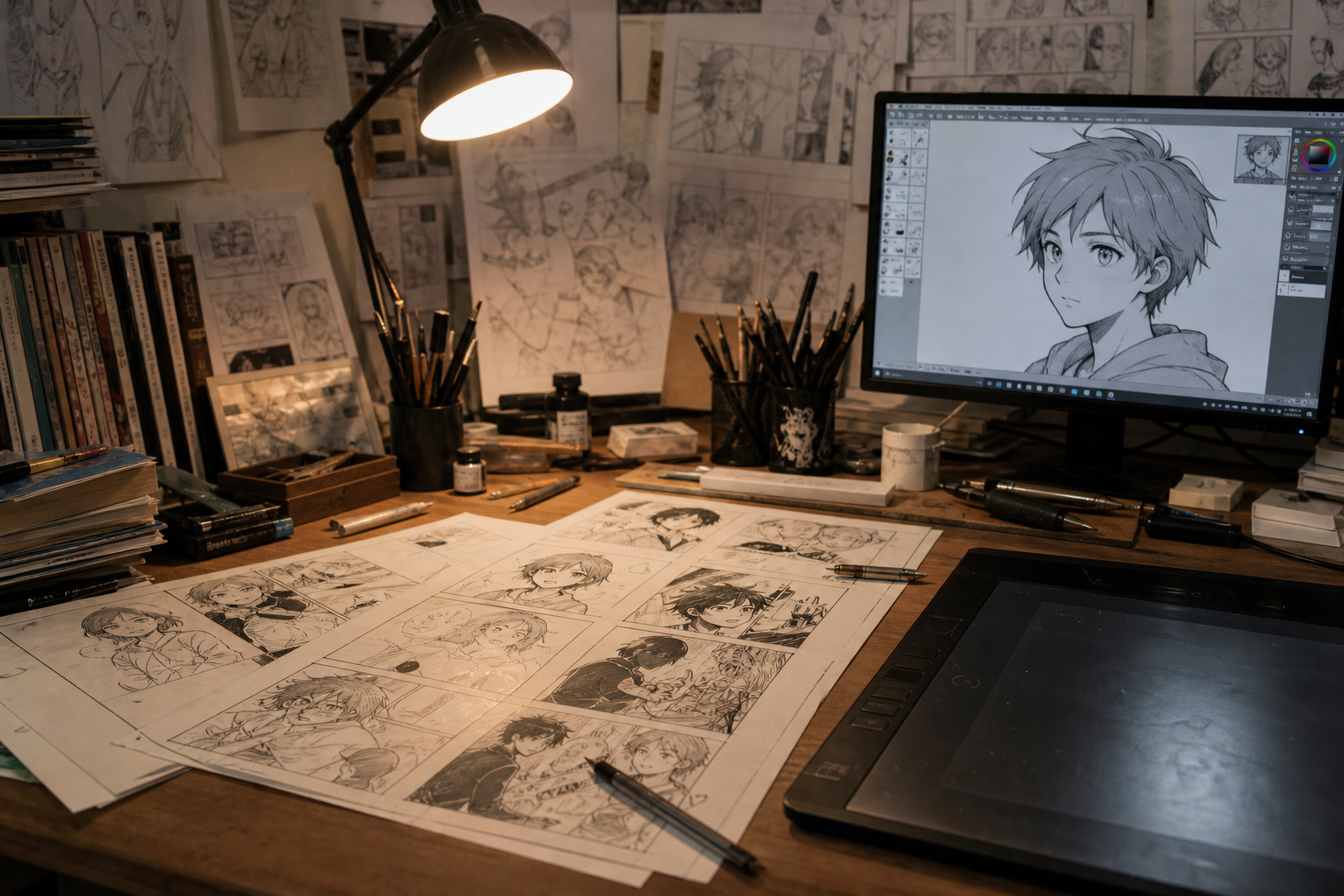
Manga is not only a drawing style. The craft includes storytelling, character design, the placement of pictures on a page, and the timing of each scene. Some creators worry that published manga may be used to train AI systems without their permission. Their concern is not only that a machine may produce similar images. They also feel that their work is being treated as free material for someone else’s business.
マンガは描画スタイルだけではありません。その技には物語、キャラクターデザイン、ページ上の絵の配置、各場面の間合いが含まれます。一部の創作者は、刊行されたマンガが許可なくAIシステムを訓練するために使われるのではないかと心配します。懸念は、機械が似た画像を生み出すことだけではありません。自分の仕事が、誰か別の人の事業のための無料の材料として扱われているとも感じます。
In 2025, Japan’s Content Overseas Distribution Association, or CODA, asked OpenAI not to use its members’ content for machine learning without permission. The group acted after seeing Sora 2 outputs that appeared to resemble well-known Japanese characters and animation. OpenAI ended Sora 2 as a product in March 2026, but CODA said similar issues remained with other services. The organization continues to call for greater transparency about the material used to develop AI systems. (CODA’s 2025 request) (CODA’s 2026 update)
2025年、日本のコンテンツ海外流通促進機構、すなわちCODAは、メンバーのコンテンツを許可なく機械学習に使わないようOpenAIに求めました。同団体は、よく知られた日本のキャラクターやアニメーションに似て見えるSora 2の出力を見た後に行動しました。OpenAIは2026年3月にSora 2を製品として終了しましたが、CODAは類似の問題が他のサービスに残ると述べました。同団体は、AIシステムの開発に使われた材料についてのより大きな透明性を求め続けています。(CODAの2025年の要望)(CODAの2026年の続報)
Still, opposition to unauthorized AI training is not the same as opposition to every use of AI. Some manga artists use it to assist with backgrounds, early designs, coloring, or translation. These tasks can take many hours. If AI saves time on routine work, an artist may have more time to improve the story and characters. In this role, AI is closer to an assistant than a replacement.
それでも、無断のAI訓練への反対は、AIのあらゆる使用への反対と同じではありません。一部の漫画家は、背景、初期デザイン、着色、翻訳を助けるためにそれを使います。これらの作業は何時間もかかることがあります。AIが日常的な仕事の時間を節約すれば、アーティストは物語とキャラクターを改善する時間をより多く持てるかもしれません。この役割では、AIは代替より助手に近いものです。
The same technology may even help protect manga. Piracy has long been a serious problem for Japanese publishers. Finding illegal copies online traditionally requires a great deal of human labor. AI systems can compare images, search large numbers of websites, and identify suspicious content more quickly. A technology that creates new risks for manga may therefore also help defend it.
同じ技術はマンガを守る助けにもなりえます。海賊版は長く日本の出版社にとって深刻な問題でした。違法コピーをオンラインで見つけるには、伝統的に大量の人手が必要です。AIシステムは画像を比べ、多数のウェブサイトを検索し、疑わしい内容をより速く特定できます。マンガに新しいリスクを生む技術は、したがってそれを守る助けにもなりえます。
However, every hour saved by AI may represent work that was once done by a person. Manga assistants often begin their careers by drawing backgrounds, adding details, and completing other basic tasks. These jobs allow beginners to learn from experienced creators. If AI takes over too much entry-level work, the industry may save money today but find it harder to develop skilled artists for the future.
しかし、AIが節約するすべての時間は、かつて人が行っていた仕事を表しているかもしれません。漫画助手はしばしば、背景を描き、細部を加え、他の基本的な作業を完成させることでキャリアを始めます。これらの仕事は初心者が経験ある創作者から学ぶことを可能にします。AIが初心者向けの仕事を取りすぎれば、産業は今日金を節約しても、将来の熟練したアーティストを育てるのが難しくなるかもしれません。
This leads to another question: What are readers really paying for? Some people may choose the cheapest and fastest product, whether it was created by a person or a machine. Others may value a manga more because they know that one artist wrote and drew it. Like handmade shoes or coffee prepared by a skilled barista, human-created manga may become something readers are willing to pay more for.
これは別の問いにつながります。読者は本当に何に対して払っているのか?人は、人か機械かどちらが創ったかにかかわらず、最も安く速い製品を選ぶかもしれません。他の人は、一人のアーティストが書き描いたと知っているために、マンガをより価値あるものと見るかもしれません。手作りの靴や熟練したバリスタが淹れたコーヒーのように、人が創ったマンガは、読者がより多く払う意思のあるものになりえます。
The future of manga may therefore depend less on choosing between humans and machines and more on deciding how AI should be used. Clear rules about permission, payment, credit, and labeling could allow useful technology to develop while protecting creators. The most important question may not be, “Can AI make manga?” It may be, “Can AI help the manga industry without taking away people’s ability to build a creative life?”
したがってマンガの未来は、人間と機械のあいだで選ぶことより、AIがどう使われるべきかを決めることに依存するかもしれません。許可、支払い、クレジット、表示についての明確な規則は、創作者を守りながら有用な技術が発展することを許しえます。最も重要な問いは「AIはマンガを作れるか」ではないかもしれません。「AIは、人が創造的な生活を築く能力を奪わずに、マンガ産業を助けられるか」かもしれません。