
← News Topics

Can a Cancer Vaccine Be Made for Just One Person?

一人のためだけの「がんワクチン」は作れるのか

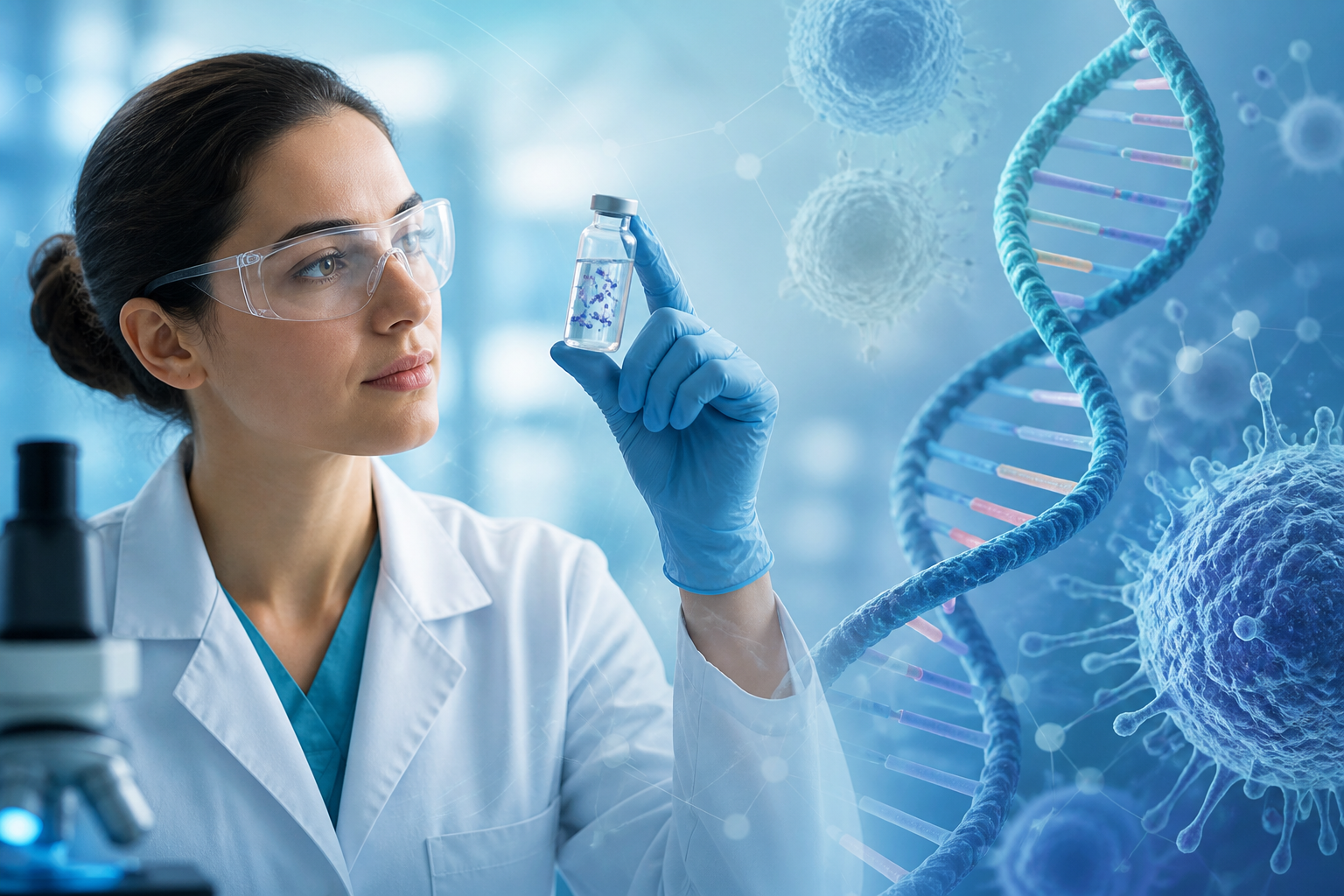
Scientist holding a vaccine vial beside a DNA helix suggesting personalized cancer research

Melanoma is a dangerous form of skin cancer that can return even after a tumor has been removed. Moderna and Merck are studying a personalized mRNA treatment designed for patients at high risk of this happening. Results from a phase 2b study were promising, and a larger phase 3 trial is now underway. However, the treatment is still experimental.

メラノーマは、腫瘍が取り除かれた後でも再発しうる危険な皮膚がんです。モデルナとメルクは、この再発リスクが高い患者向けに設計された個別化mRNA治療を研究しています。第2b相試験の結果は有望で、より大規模な第3相試験が現在進行中です。しかし、この治療はまだ実験段階です。

Unlike vaccines that prevent infections, this is a treatment vaccine for people who have already had cancer. After surgery, each patient receives a vaccine created from information found in their own tumor. It is used together with pembrolizumab, an existing cancer medicine sold under the name Keytruda. The aim is to lower the risk of recurrence.

感染症を予防するワクチンとは異なり、これはすでにがんを経験した人のための治療用ワクチンです。手術の後、各患者は自分の腫瘍から得られた情報をもとに作られたワクチンを受けます。キイトルーダという名で販売されている既存のがん治療薬ペムブロリズマブと併用されます。目的は再発リスクを下げることです。

To make the vaccine, scientists first sequence genetic material from the patient’s tumor. They look for mutations that distinguish the cancer cells from healthy cells. They then tailor an mRNA vaccine to carry instructions connected to selected mutations. This means that two patients with the same type of cancer may receive different vaccines.

ワクチンを作るため、科学者はまず患者の腫瘍から遺伝物質の配列を決定します。がん細胞を健康な細胞と区別する変異を探し、選ばれた変異に関連する指示を運ぶようmRNAワクチンを調整します。つまり、同じ種類のがんの二人の患者が、異なるワクチンを受けることがあるのです。

The vaccine is designed to help the immune system recognize the cancer more clearly. Pembrolizumab supports this process by removing some of the natural “brakes” that can stop immune cells from attacking cancer. The two treatments therefore have different but connected roles: one helps identify the target, while the other helps the body respond.

このワクチンは、免疫系ががんをより明確に認識するのを助けるよう設計されています。ペムブロリズマブは、免疫細胞ががんを攻撃するのを止める自然の「ブレーキ」の一部を外すことで、この過程を支えます。したがって二つの治療は異なるがつながった役割を持ちます。一方は標的の特定を助け、もう一方は体の反応を助けるのです。

In the phase 2b study, 157 patients received either the personalized vaccine and pembrolizumab or pembrolizumab alone. Researchers reported that the combination reduced the risk of the cancer returning or the patient dying by 49%. However, a result from a relatively small study must be tested in a much larger group. Researchers compare the two groups to see whether the treatment reduces the risk of the cancer returning or the patient dying. (Merck’s phase 2b results)

第2b相試験では、157人の患者が個別化ワクチンとペムブロリズマブ、またはペムブロリズマブ単独のいずれかを受けました。研究者は、併用ががんの再発または患者の死亡のリスクを49%減らしたと報告しました。しかし、比較的小規模な研究の結果は、はるかに大きな集団で検証されなければなりません。研究者は二つの群を比較し、治療ががんの再発または患者の死亡のリスクを減らすかどうかを見ます。(メルクの第2b相結果

That is the purpose of the phase 3 trial. It involves far more patients and is designed to provide stronger evidence about effectiveness and safety. A successful early study does not guarantee a successful phase 3 result, and even a positive phase 3 trial does not automatically produce regulatory approval. Health authorities must examine the full evidence before the treatment can be widely sold. The official trial record currently lists no phase 3 results. (ClinicalTrials.gov study record)

それが第3相試験の目的です。はるかに多くの患者が参加し、有効性と安全性についてのより強い証拠を提供するよう設計されています。成功した初期研究が第3相の成功を保証するわけではなく、たとえ第3相が良好でも自動的に規制当局の承認が得られるわけではありません。広く販売される前に、保健当局は完全な証拠を審査しなければなりません。公式の試験記録には、現時点で第3相の結果は掲載されていません。(ClinicalTrials.govの試験記録

Investors do not always wait for that process to end. Share prices reflect expectations about future profits, so encouraging trial news can quickly increase a company’s value. But the market can also become too optimistic. A promising scientific result, a successful medicine, and a profitable product are three related but different things.

投資家は必ずしもその過程の終わりを待ちません。株価は将来の利益への期待を反映するため、励みになる試験ニュースは会社の価値をすぐに上げることがあります。しかし市場は過度に楽観的にもなりえます。有望な科学的結果、成功した薬、そして利益を生む製品は、関連しているが異なる三つのものです。

The personalized design also begs the question: can a separate vaccine be produced quickly and affordably for every patient who needs one? The technology could open a new chapter in cancer treatment, but manufacturing costs and access will matter too. A medical breakthrough has its greatest value when it can improve the lives of more than a small number of patients.

個別化された設計はまた、重要な問いを投げかけます。必要なすべての患者のために、別々のワクチンを迅速かつ手頃な費用で作れるのか、ということです。この技術はがん治療の新しい章を開くかもしれませんが、製造コストとアクセスも重要になります。医学的な突破口は、少数の患者だけでなく、より多くの人の生活を改善できるときに最も大きな価値を持ちます。

Vocabulary

  1. melanoma — a serious type of skin cancer that begins in cells that produce skin color. Example: The doctor examined the unusual mark to check for melanoma.
  2. personalized — designed to meet the particular needs or characteristics of one person. Example: The hospital is developing personalized treatment plans for its patients.
  3. recurrence — the return of an illness after it appeared to have disappeared. Example: Regular examinations can help doctors detect a recurrence early.
  4. sequence — to determine the exact order of the parts of genetic material. Example: Scientists sequenced the virus to understand how it was changing.
  5. mutation — a change in the genetic material of a cell or organism. Example: A particular mutation may increase a person’s risk of developing a disease.
  6. tailor — to make or change something for a particular purpose or person. Example: The program can be tailored to the needs of each student.
  7. immune system — the body’s network of cells and organs that protects it from disease. Example: Sleep and nutrition can affect how well the immune system works.
  8. regulatory approval — official permission from a government authority to sell or use a product. Example: The new medicine cannot be marketed until it receives regulatory approval.
  9. beg the question — to make an important question necessary to ask. Example: The rapid growth of facial recognition technology begs the question of how privacy should be protected.

Comprehension Questions

  1. How is the treatment described in the article different from a traditional preventive vaccine?
    1. It protects all people from skin cancer.
    2. It is given to patients who have already had cancer.
    3. It can be bought without a prescription.
    4. It replaces the need for surgery.

    記事で述べられている治療は、伝統的な予防ワクチンとどう違いますか?

  2. Why must scientists examine each patient’s tumor?
    1. To find mutations that can be used to design the vaccine.
    2. To decide how much the patient should pay.
    3. To determine whether the patient has received other vaccines.
    4. To find out where the patient developed cancer.

    科学者はなぜ各患者の腫瘍を調べなければならないのですか?

  3. What did the phase 2b study compare?
    1. Surgery with no treatment at all.
    2. Two different preventive vaccines.
    3. The personalized vaccine plus pembrolizumab with pembrolizumab alone.
    4. Moderna’s vaccine with a Merck vaccine.

    第2b相試験は何を比較しましたか?

  4. Why is a phase 3 trial still necessary?
    1. The researchers have not identified melanoma.
    2. The phase 2b study did not include any patients.
    3. Pembrolizumab has never been used before.
    4. A larger study is needed to provide stronger evidence.

    なぜ第3相試験がなお必要なのですか?

  5. What broader problem does the final paragraph raise?
    1. Whether patients should be allowed to see their genetic information.
    2. Whether personalized vaccines can be produced affordably and made widely available.
    3. Whether all cancer research should be stopped.
    4. Whether investors should choose patients for clinical trials.

    最終段落は、どのようなより広い問題を提起していますか?

Discussion Questions

  1. Do you think “cancer vaccine” is a helpful name for this treatment, or could it confuse people?

    「がんワクチン」という名称は、この治療に役立つ名前だと思いますか、それとも人々を混乱させる可能性がありますか?

  2. Should public health systems pay more for a medicine that must be individually made for each patient?

    公的医療制度は、患者一人ひとりのために個別に作らなければならない薬により多く支払うべきですか?

  3. Is it reasonable for a company’s share price to rise before its treatment receives regulatory approval?

    治療が規制当局の承認を受ける前に会社の株価が上がるのは妥当ですか?

  4. What information should news reports include when describing promising clinical trial results?

    有望な臨床試験の結果を伝えるとき、報道はどんな情報を含めるべきですか?

  5. Which is more important: developing a scientific breakthrough or making it affordable and widely available?

    どちらがより重要ですか。科学的突破口を開発することか、それを手頃な価格にし広く利用できるようにすることか。

Speaking Practice

Should personalized cancer treatments become a major part of future medicine?

Speak for about one minute.

個別化がん治療は、将来の医療の大きな部分になるべきですか?約1分間話してください。

Include:

  • how a personalized treatment differs from a standard medicine

    個別化治療が標準的な薬とどう違うか

  • one possible benefit

    ありうる利点一つ

  • one scientific or financial risk

    科学的または財政的なリスク一つ

  • whether governments should help make it affordable

    政府は手頃な価格にする助けをすべきか