
← News Topics

Turning Waste into Wealth

Day 1 — How Can Garbage Become a Source of Energy?

廃棄物を富に変える ― メタンの科学と経済 ― 第1日:ごみはどうエネルギー源になりうるか

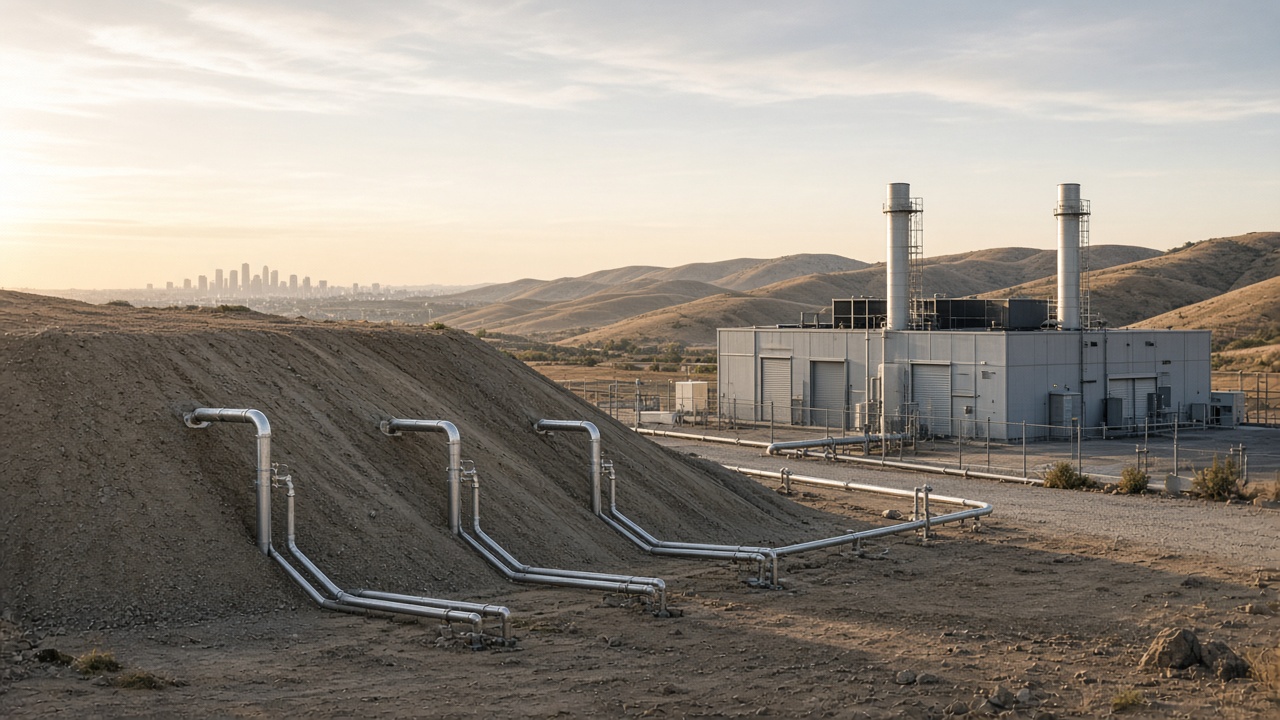
Landfill gas collection pipes on a capped waste mound connected to a generator building under late-afternoon light

About an hour’s drive from Santiago, the capital of Chile, lies a huge landfill called Santa Marta. According to a BBC report on November 23, 2026, more than 22 million tonnes of waste have accumulated at the site. Much of it consists of ordinary household garbage, including food scraps and fruit peel. Yet Santa Marta is not simply a place where unwanted materials are buried. It also produces electricity and sells it to Chile’s national power grid. What was once considered nothing more than a disposal problem has become a business opportunity.

チリの首都サンティアゴから車で約1時間のところに、サンタ・マルタと呼ばれる巨大な埋立地があります。2026年11月23日のBBC報道によると、現場には2,200万トン超の廃棄物が蓄積しています。その多くは食品くずや果物の皮を含む普通の家庭ごみです。しかしサンタ・マルタは、不要物を埋めるだけの場所ではありません。発電も行い、チリの全国電力網に売電しています。かつては単なる処理問題と見なされていたものが、ビジネスチャンスになったのです。

To understand how this works, we need to look at what happens beneath the surface of a landfill. When organic waste is buried, microorganisms that use oxygen begin to break down the waste. As they consume the available oxygen, conditions become favorable for other types of microorganisms that can function without oxygen. Their activity eventually produces a mixture of gases known as biogas, roughly half of which is methane. Unless it is captured, much of this methane can escape into the atmosphere, sometimes continuing to do so for decades after the waste was buried.

これがどう機能するかを理解するには、埋立地の地表の下で何が起きるかを見る必要があります。有機廃棄物が埋められると、酸素を使う微生物が廃棄物を分解し始めます。利用できる酸素を消費すると、酸素なしで機能できる別の種類の微生物に有利な条件になります。その活動は最終的にバイオガスと呼ばれる混合ガスを生み、そのおよそ半分がメタンです。捕捉されなければ、このメタンの多くは大気中に逃げ出し、廃棄物が埋められてから何十年も続くことがあります。

Methane is a particularly potent greenhouse gas. Over a twenty-year period, a tonne of methane has approximately eighty times the warming effect of a tonne of carbon dioxide. However, methane remains in the atmosphere for only about a decade, whereas some of the carbon dioxide released today can remain for centuries. This difference is significant. While reducing carbon dioxide emissions is essential for long-term climate stability, cutting methane emissions can help slow global warming more quickly.

メタンはとくに強力な温室効果ガスです。20年間で見ると、メタン1トンは二酸化炭素1トンのおよそ80倍の温暖化効果があります。しかしメタンが大気中にとどまるのは約10年にすぎず、一方で今日放出された二酸化炭素の一部は何世紀も残りえます。この違いは重要です。二酸化炭素排出の削減は長期の気候安定に不可欠ですが、メタン排出を減らすことは地球温暖化をより早く鈍化させる助けになります。

Fortunately, methane is also highly combustible. In fact, it is the main component of the natural gas used in many homes. When methane is burned, it is converted into carbon dioxide and water. This may seem counterproductive, since carbon dioxide also contributes to global warming. However, releasing the original methane into the atmosphere would cause far more warming. At Santa Marta, pipes collect biogas from beneath the landfill. After impurities are removed, the gas is used as fuel in engines that drive electricity generators. The electricity is then fed into Chile’s national power grid.

幸い、メタンはまた非常に燃えやすいです。実際、多くの家庭で使われる天然ガスの主成分です。メタンを燃やすと、二酸化炭素と水に変わります。二酸化炭素も地球温暖化に寄与するため、これは逆効果に見えるかもしれません。しかし、もともとのメタンを大気中に放出する方が、はるかに大きな温暖化を引き起こします。サンタ・マルタでは、埋立地の下からパイプがバイオガスを集めます。不純物が取り除かれたあと、ガスは発電機を動かすエンジンの燃料として使われます。電力はその後、チリの全国電力網に供給されます。

However, generating electricity is not the only way to make money from methane. Santa Marta began capturing and burning biogas in 2007, six years before it started producing electricity. Even then, it was earning money through carbon credits. A carbon credit is a tradable unit representing a verified reduction in greenhouse gas emissions, equivalent to one tonne of carbon dioxide. By capturing and burning methane that would otherwise escape into the atmosphere, a landfill operator can qualify for such credits. Other companies can purchase them to compensate for some of their own emissions under applicable schemes. In this way, carbon markets put a price on the environmental benefits of reducing emissions. Santa Marta therefore has three sources of revenue: waste disposal fees, electricity sales, and carbon credits.

しかし、発電はメタンから稼ぐ唯一の方法ではありません。サンタ・マルタは2007年にバイオガスの捕捉と燃焼を始め、発電開始の6年前でした。その時点でも、カーボンクレジットを通じて収入を得ていました。カーボンクレジットは、検証された温室効果ガス削減を表す取引可能な単位で、二酸化炭素1トンに相当します。そうでなければ大気中に逃げるメタンを捕捉して燃やすことで、埋立地運営者はそのようなクレジットの資格を得られます。他の企業は、適用される制度のもとで自社の排出の一部を相殺するために購入できます。こうして炭素市場は、排出削減の環境便益に値段をつけます。したがってサンタ・マルタには三つの収入源があります。廃棄物処理料金、電力販売、カーボンクレジットです。

Chile offers particularly promising opportunities for this kind of business. Worldwide, the waste sector accounts for around 20 percent of human-caused methane emissions, while in Chile it accounts for nearly half. One reason is the way Chile deals with its garbage. Approximately 58 percent of its municipal waste is organic, and most of that waste still ends up in landfills rather than being turned into useful products such as compost. At the same time, activities such as oil and gas production account for a relatively small share of Chile’s methane emissions. Improving waste management could therefore make a substantial difference to the country’s climate efforts. The growing carbon credit market may provide the financial incentive needed to attract investment and tap into what has so far been a largely underused resource.

チリはこの種のビジネスに、とくに有望な機会を提供します。世界では廃棄物部門が人為起源メタン排出の約20%を占めますが、チリではほぼ半分を占めます。理由の一つは、チリのごみの扱い方です。都市ごみのおよそ58%が有機物で、その多くは堆肥のような有用製品になるのではなく、なお埋立地に行き着きます。同時に、石油・ガス生産などの活動はチリのメタン排出の比較的小さな割合です。したがって廃棄物管理の改善は、国の気候対策に大きな違いをもたらしえます。成長するカーボンクレジット市場は、投資を引きつけ、これまでほとんど活用されてこなかった資源を活用するのに必要な金銭的動機を提供するかもしれません。
Vocabulary

  1. landfill — A site where waste is disposed of by burying it in the ground. Example: The city is introducing new recycling programs to reduce the amount of waste sent to landfills.
  2. break down — To separate or change a substance into smaller or simpler parts. Example: Certain microorganisms can break down harmful chemicals in contaminated soil.
  3. potent — Having a very strong effect or influence. Example: Even a small amount of this chemical can have a potent effect on the human body.
  4. combustible — Capable of catching fire and burning. Example: Combustible materials must be stored away from sources of heat.
  5. counterproductive — Having an effect that is opposite to the intended result. Example: Putting too much pressure on employees can be counterproductive and reduce their motivation.
  6. impurity — An unwanted substance that is present in another substance, making it less pure. Example: The water treatment system removes impurities before the water is supplied to households.
  7. feed into — To supply something to a larger system, network, or process. Example: Electricity generated by household solar panels can be fed into the local power grid.
  8. qualify for — To meet the necessary conditions to receive something or participate in a particular program. Example: Companies that invest in energy-efficient equipment may qualify for government subsidies.
  9. put a price on — To assign a monetary value to something, especially something that is not normally bought or sold. Example: Some economists argue that putting a price on environmental damage encourages businesses to reduce pollution.
  10. tap into — To gain access to and make use of a resource, opportunity, or source of support. Example: Small businesses are using online platforms to tap into international markets.

Comprehension Questions

  1. Why does methane begin to form beneath the surface of a landfill?
    1. Exposure to sunlight causes buried waste to release methane.
    2. Methane is added to the waste to speed up its decomposition.
    3. Microorganisms consume the available oxygen, creating conditions in which other microorganisms produce methane.
    4. Household waste releases methane only when it is burned.

    埋立地の地表の下でメタンが形成され始めるのはなぜですか?

  2. Why can reducing methane emissions help slow global warming relatively quickly?
    1. Methane has a strong warming effect but remains in the atmosphere for a relatively short period.
    2. Methane prevents carbon dioxide from entering the atmosphere.
    3. Methane remains in the atmosphere for longer than carbon dioxide.
    4. Methane is the only greenhouse gas produced by human activities.

    メタン排出の削減が、地球温暖化を比較的早く鈍化させる助けになりうるのはなぜですか?

  3. Why is burning captured methane beneficial despite the production of carbon dioxide?
    1. Burning methane removes all greenhouse gases from the atmosphere.
    2. Carbon dioxide does not contribute to global warming.
    3. Burning methane prevents organic waste from decomposing.
    4. Releasing methane directly into the atmosphere would have a much greater warming effect.

    二酸化炭素が生じるにもかかわらず、捕捉したメタンを燃やすことが有益なのはなぜですか?

  4. How was Santa Marta able to earn money from methane before it began generating electricity?
    1. It sold untreated biogas directly to households.
    2. It earned carbon credits by capturing and burning methane that would otherwise have escaped.
    3. It received payments for increasing the amount of waste buried at the site.
    4. It exported methane to countries with limited natural gas supplies.

    サンタ・マルタは発電を始める前に、どうやってメタンから収入を得られましたか?

  5. Why does waste management offer particularly promising opportunities for reducing methane emissions in Chile?
    1. Chile produces more oil and natural gas than most other countries.
    2. Nearly all of Chile’s greenhouse gas emissions come from landfills.
    3. A large proportion of its municipal waste is organic, much of it is buried, and other sources such as oil and gas production contribute a relatively small share of methane emissions.
    4. Chile has already eliminated methane emissions from its agricultural sector.

    チリでメタン排出削減に廃棄物管理がとくに有望な機会を提供するのはなぜですか?

Discussion Questions

  1. Why might turning an environmental problem into a business opportunity be more effective than relying entirely on government regulations?

    環境問題をビジネスチャンスに変えることが、政府規制だけに全面的に頼るより効果的でありうるのはなぜですか?

  2. How should governments decide which greenhouse gas emissions to reduce first, given the different effects and atmospheric lifetimes of methane and carbon dioxide?

    メタンと二酸化炭素の効果と大気中寿命が異なるなかで、政府はどの温室効果ガス排出をまず減らすかをどう決めるべきでしょうか?

  3. What conditions should a company have to meet before it can earn carbon credits for reducing greenhouse gas emissions?

    温室効果ガス排出の削減でカーボンクレジットを得る前に、企業はどのような条件を満たすべきでしょうか?

  4. What factors might determine whether a methane recovery and electricity generation project is economically viable in a particular country?

    特定の国でメタン回収と発電プロジェクトが経済的に成り立つかどうかを決める要因は何でしょうか?

  5. Are there any underused resources in your country that could be turned into valuable products or sources of energy? What would be needed to make better use of them?

    あなたの国に、価値ある製品やエネルギー源に変えられる未活用の資源はありますか。よりよく活用するには何が必要でしょうか?

Speaking Practice

Topic: Turning an Environmental Problem into a Business Opportunity

Speak for approximately one minute about how methane recovery can create both environmental and economic benefits. You may use the following points to organize your response: How methane is produced in landfills. Why capturing and burning methane can reduce global warming. How landfill operators can generate revenue from electricity and carbon credits. Why Chile offers promising opportunities for investment in waste management. Try to use at least three expressions from today’s Vocabulary section.

トピック:環境問題をビジネスチャンスに変える。メタン回収が環境と経済の両方の利益をどう生みうるかについて、およそ1分話してください。次の点を使って整理しても構いません。埋立地でメタンがどう生じるのか。メタンの捕捉と燃焼が地球温暖化を減らせる理由。埋立地運営者が電力とカーボンクレジットからどう収入を得られるか。チリが廃棄物管理への投資に有望な機会を提供する理由。今日のVocabularyから少なくとも三つの表現を使ってください。