
← News Topics

Turning Waste into Wealth

Day 2 — Can Countries Buy Emission Reductions Abroad?

廃棄物を富に変える ― メタンの科学と経済 ― 第2日:国は海外で排出削減を買えるか

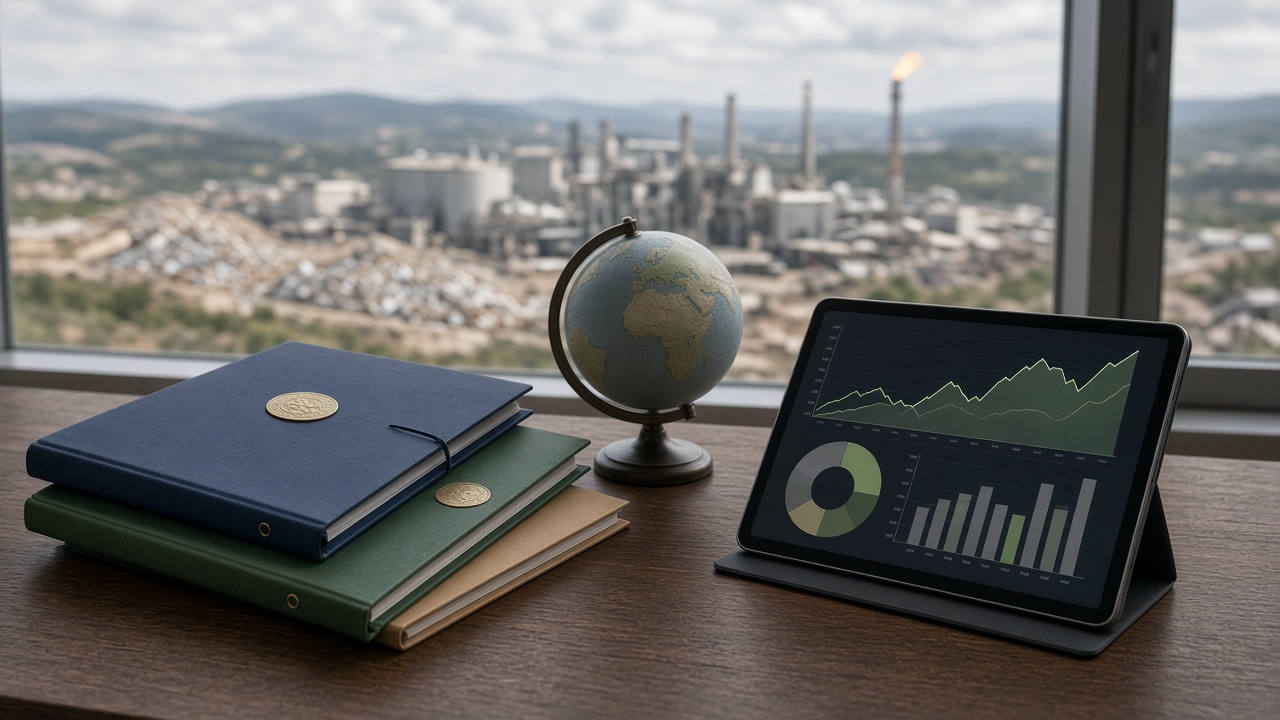
Project folders and a small globe beside a tablet with carbon-market charts, with a blurred landfill facility in the distance

At Loma Los Colorados, Chile’s largest landfill, a company called KDM Energía is developing a project to capture methane from areas of the site where gas is not currently being collected. Like Santa Marta, which we explored yesterday, the facility will use some of the captured gas to generate electricity. However, electricity sales alone would not make the new project financially viable. This is where an organization called the KliK Foundation, based in Switzerland, comes in. It plans to purchase carbon credits generated by the project. But why would an organization in Switzerland pay to reduce methane emissions in Chile?

チリ最大の埋立地ロマ・ロス・コロラドスで、KDMエネルヒアという会社が、現在ガスが回収されていない区域からメタンを捕捉するプロジェクトを進めています。昨日取り上げたサンタ・マルタと同様、施設は捕捉したガスの一部を使って発電します。しかし電力販売だけでは、新しいプロジェクトを経済的に成り立たせられません。ここでスイスに拠点を置くKliK財団という組織が登場します。プロジェクトが生むカーボンクレジットの購入を計画しています。しかし、なぜスイスの組織がチリのメタン排出削減に資金を出すのでしょうか。

The answer lies partly in Swiss climate policy. Under Swiss law, companies that supply fossil fuels are required to offset a certain proportion of the greenhouse gas emissions resulting from the use of their fuels. They can meet part of this obligation by financing emission reduction projects abroad. The KliK Foundation purchases carbon credits on behalf of these companies. The underlying idea is that greenhouse gases do not respect national borders. A tonne of greenhouse gas emissions avoided in Chile has essentially the same effect on the global climate as an equivalent reduction in Switzerland.

答えの一部はスイスの気候政策にあります。スイス法のもと、化石燃料を供給する企業は、燃料使用から生じる温室効果ガス排出の一定割合を相殺するよう求められます。この義務の一部は、海外の排出削減プロジェクトへの資金提供で満たせます。KliK財団はこれらの企業に代わってカーボンクレジットを購入します。根底にある考えは、温室効果ガスは国境を尊重しないということです。チリで回避された温室効果ガス1トンは、スイスでの同等の削減と本質的に同じ地球気候への効果があります。

However, the cost of reducing emissions depends partly on how much a country has already done. In countries that have already introduced energy-efficient vehicles, cleaner power generation and modern industrial equipment, further progress may require groundbreaking technologies. Steelmakers, for example, may need to replace coal with hydrogen produced using clean energy. Governments may also have to impose stricter regulations on businesses or require households to replace fossil-fuel heating systems. Such measures can involve considerable costs for society as a whole. In countries where large amounts of methane still escape from landfills, by contrast, installing gas collection systems may achieve substantial emission reductions at a relatively low cost. This difference creates an economic reason for wealthier countries to finance projects abroad.

しかし、排出削減の費用は、国がすでにどれだけ進めたかに部分的に左右されます。エネルギー効率の高い車両、よりクリーンな発電、近代的な産業設備をすでに導入した国では、さらなる進展に画期的な技術が必要になるかもしれません。たとえば鉄鋼メーカーは、クリーンエネルギーで作った水素で石炭を置き換える必要があるかもしれません。政府は企業により厳しい規制を課したり、家庭に化石燃料の暖房システムの交換を求めたりしなければならなくなるかもしれません。そうした措置は社会全体にかなりの費用を伴いうります。対照的に、埋立地からなお大量のメタンが逃げる国では、ガス回収システムの設置が比較的低費用で大幅な排出削減を達成しえます。この違いが、豊かな国が海外プロジェクトに資金を出す経済的理由を生みます。

For this system to work, however, the same emission reduction must not be counted twice. Under the 2015 Paris Agreement, countries set their own national climate targets. Suppose a project in Chile reduces emissions by an amount equivalent to 1,000 tonnes of carbon dioxide. If Chile authorizes the sale of the credits to Switzerland for use towards Switzerland’s climate target, Chile must give up the right to count those reductions towards its own target. Without this rule, both countries could claim credit for the same 1,000 tonnes of emission reductions. Article 6 of the Paris Agreement provides a framework for international cooperation, with rules to authorize the transfer of credits, verify emission reductions and prevent double counting.

しかしこの仕組みが機能するには、同じ排出削減が二重に数えられてはなりません。2015年のパリ協定のもと、各国は自らの国別気候目標を設定します。チリのプロジェクトが二酸化炭素1,000トン相当の排出を減らしたとしましょう。チリがそのクレジットをスイスの気候目標に使うためにスイスへの売却を認可するなら、チリは自国目標にその削減を数える権利を手放さなければなりません。この規則がなければ、両国が同じ1,000トンの排出削減の功績を主張できてしまいます。パリ協定第6条は国際協力の枠組みを提供し、クレジット移転の認可、排出削減の検証、二重計上の防止の規則を含みます。

Japan is also actively involved in this kind of international cooperation through its Joint Crediting Mechanism, or JCM. On January 16, 2026, Japan and Chile signed an updated bilateral agreement, building on a partnership established in 2015. Under the mechanism, Japanese public funding and private investment can help introduce low-carbon technologies in partner countries, and a share of the resulting emission reductions can be used towards Japan’s climate target under the applicable rules. Existing projects in Chile include the installation of rooftop solar panels at university campuses. For Japan, the mechanism offers an opportunity to promote its environmental technologies abroad while contributing to its climate goals.

日本も、二国間クレジット制度(JCM)を通じて、この種の国際協力に積極的に関与しています。2026年1月16日、日本とチリは2015年に始まったパートナーシップを踏まえ、更新された二国間協定に署名しました。この仕組みのもと、日本の公的資金と民間投資がパートナー国への低炭素技術の導入を助け、生じた排出削減の一部は適用規則のもとで日本の気候目標に使えます。チリの既存プロジェクトには、大学キャンパスへの屋上太陽光パネルの設置が含まれます。日本にとってこの仕組みは、気候目標に貢献しつつ、環境技術を海外で広める機会を提供します。

Nevertheless, international carbon markets present a dilemma for both buyers and sellers. Wealthier countries may become too dependent on inexpensive carbon credits from abroad and put off necessary changes to their own industries. Meanwhile, countries like Chile have a limited supply of low-cost opportunities to reduce emissions. Once methane collection systems have been installed at most major landfills, for example, further emission reductions may require more advanced technologies and greater investment. If Chile has sold too many of its low-cost emission reductions to other countries, it may find itself having to pay for much more expensive measures to meet its own climate targets. The price at which it sells carbon credits today should therefore reflect not only the cost of reducing emissions now, but also the potential cost of reducing them in the future.

それでも、国際炭素市場は買い手と売り手の両方にジレンマをもたらします。豊かな国は海外の安価なカーボンクレジットに依存しすぎ、自国産業に必要な変化を先送りするかもしれません。一方、チリのような国は、低費用で排出を減らす機会の供給が限られています。たとえば主要な埋立地のほとんどにメタン回収システムが設置されたあと、さらなる排出削減にはより高度な技術と大きな投資が必要になるかもしれません。チリが低費用の排出削減を他国に売りすぎれば、自国の気候目標を達成するためにより高価な措置に費用を払わなければならなくなるかもしれません。したがって今日カーボンクレジットを売る価格は、いま排出を減らす費用だけでなく、将来減らす潜在的な費用も反映すべきです。

Vocabulary

  1. financially viable — Capable of generating enough income to cover costs and continue operating successfully. Example: The railway project would not be financially viable without government support.
  2. come in — To become involved in a situation or play a useful role at a particular stage. Example: Many small businesses lack the resources to develop their own software. This is where external technology providers come in.
  3. offset — To balance or compensate for a negative effect, loss, or cost by producing a positive effect or gain elsewhere. Example: The company hopes to offset rising production costs by improving operational efficiency.
  4. groundbreaking — Introducing important new ideas, methods, or discoveries that represent a major advance in a particular field. Example: Researchers are developing groundbreaking technologies that could transform the way electricity is stored.
  5. impose — To officially introduce a rule, restriction, tax, or obligation that people are required to accept or follow. Example: The government has imposed stricter environmental standards on industrial facilities.
  6. claim credit for — To say that one is responsible for an achievement or deserves recognition for it. Example: Several departments contributed to the project’s success, but the manager claimed credit for the entire achievement.
  7. double counting — The practice or error of counting the same item, amount, or achievement more than once. Example: The accounting system was redesigned to prevent double counting of company expenses.
  8. bilateral — Involving two countries, organizations, or parties. Example: The two countries signed a bilateral agreement to strengthen economic and technological cooperation.
  9. dilemma — A difficult situation in which a choice must be made between options that each have disadvantages. Example: The company faces a dilemma between maintaining affordable prices and covering its rising production costs.
  10. put off — To delay doing something until a later time. Example: The factory put off replacing its outdated equipment because of financial difficulties.

Comprehension Questions

  1. Why is the KliK Foundation planning to purchase carbon credits from the Chilean landfill project?
    1. It intends to import electricity from Chile into Switzerland.
    2. It wants to help Swiss fuel suppliers meet their legal emission offset obligations.
    3. It has been asked by the Chilean government to manage the landfill.
    4. It plans to replace Swiss fossil fuels with methane produced in Chile.

    KliK財団がチリの埋立地プロジェクトからカーボンクレジットを購入する計画なのはなぜですか?

  2. Why may further emission reductions be more expensive in countries that have already introduced cleaner technologies?
    1. Such countries are no longer allowed to use existing environmental technologies.
    2. Their industries produce no greenhouse gas emissions.
    3. They are required to purchase all their environmental equipment from abroad.
    4. Many relatively inexpensive measures have already been introduced, leaving more costly technological and regulatory challenges.

    よりクリーンな技術をすでに導入した国で、さらなる排出削減がより高価になりうるのはなぜですか?

  3. What is the purpose of preventing double counting under Article 6 of the Paris Agreement?
    1. To ensure that the same emission reduction is not used by two countries to meet their respective climate targets.
    2. To prevent countries from investing in more than one environmental project.
    3. To require all countries to achieve identical emission reduction targets.
    4. To prevent private companies from participating in international carbon markets.

    パリ協定第6条のもとで二重計上を防ぐ目的は何ですか?

  4. How does Japan’s Joint Crediting Mechanism contribute to Japan’s climate policy?
    1. It requires partner countries to purchase all their environmental equipment from Japan.
    2. It allows Japan to transfer responsibility for its domestic emissions entirely to other countries.
    3. It supports low-carbon projects abroad and allows Japan to use a share of the resulting emission reductions towards its own climate target.
    4. It replaces Japan’s domestic environmental regulations with international agreements.

    日本の二国間クレジット制度は、日本の気候政策にどう貢献しますか?

  5. Why might selling too many low-cost carbon credits create problems for Chile in the future?
    1. Foreign investment would automatically become illegal under the Paris Agreement.
    2. Chile might have to introduce more expensive emission reduction measures to meet its own climate targets.
    3. Chile would be required to return all the revenue earned from previous carbon credit sales.
    4. Methane collection systems would become less effective once their carbon credits were sold.

    低費用のカーボンクレジットを売りすぎることが、将来チリに問題を生みうるのはなぜですか?

Discussion Questions

  1. What benefits can both investing countries and host countries gain from international emission reduction projects?

    国際的な排出削減プロジェクトから、投資国と受け入れ国の両方が得られる利益は何ですか?

  2. As relatively inexpensive emission reduction measures are exhausted, how should governments distribute the growing financial burden among businesses, households and taxpayers?

    比較的安価な排出削減措置が尽きるにつれ、政府は増大する財政負担を企業・家庭・納税者のあいだでどう配分すべきでしょうか?

  3. What rules could prevent wealthy countries from becoming excessively dependent on carbon credits purchased abroad?

    豊かな国が海外で購入したカーボンクレジットに過度に依存するのを防ぐ規則は何でしょうか?

  4. What factors should Chile consider when deciding how many carbon credits to sell and at what price?

    チリは、いくつのカーボンクレジットをいくらで売るか決めるとき、どのような要因を考慮すべきでしょうか?

  5. How could Japan use international environmental cooperation not only to achieve its climate targets but also to encourage long-term technological development in partner countries?

    日本は、気候目標の達成だけでなく、パートナー国の長期的な技術発展を促すためにも、国際的な環境協力をどう使えうるでしょうか?

Speaking Practice

Topic: The Economics of International Carbon Markets

Speak for approximately one minute about the benefits and potential risks of purchasing emission reductions abroad. You may use the following points to organize your response: Why emission reduction costs differ from country to country. How international carbon markets can make environmental projects financially viable. Why double counting must be prevented. Why both purchasing and selling countries need to consider their long-term climate targets. Try to use at least three expressions from today’s Vocabulary section.

トピック:国際炭素市場の経済学。海外で排出削減を購入する利益と潜在的リスクについて、およそ1分話してください。次の点を使って整理しても構いません。排出削減費用が国ごとに異なる理由。国際炭素市場が環境プロジェクトを経済的に成り立たせうる方法。二重計上を防がなければならない理由。購入国と売却国の両方が長期の気候目標を考慮する必要がある理由。今日のVocabularyから少なくとも三つの表現を使ってください。