
← News Topics

Turning Waste into Wealth

Day 3 — When Waste Becomes Profitable, Will We Still Try to Reduce It?

廃棄物を富に変える ― メタンの科学と経済 ― 第3日:ごみが儲かると、それでも減らそうとするか

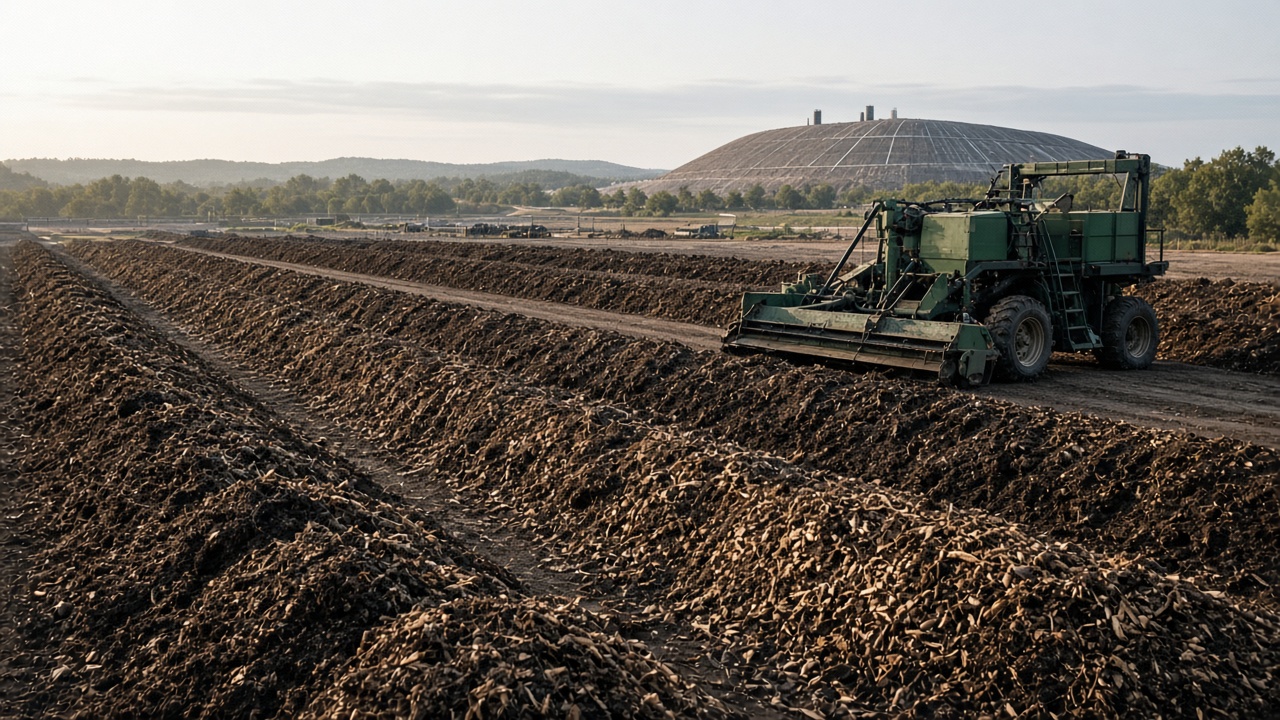
Compost windrows and wood chips at an outdoor facility with a distant capped landfill mound

At the Loma Los Colorados landfill in Chile, garbage has become a valuable business resource. The landfill operator receives payments for accepting waste and generates electricity from the methane released by decomposing organic material. Carbon credits offer another potential source of revenue. However, this business model raises an uncomfortable question. If the amount of waste sent to landfills falls significantly, operators may lose not only income from waste disposal fees but also future revenue from electricity sales and carbon credits. Could an environmental business that depends on a steady supply of garbage eventually run counter to efforts to reduce waste?

チリのロマ・ロス・コロラドス埋立地では、ごみが価値あるビジネス資源になっています。埋立地運営者は廃棄物の受け入れで料金を受け取り、有機物の分解で出るメタンから発電します。カーボンクレジットも別の潜在的収入源です。しかしこのビジネスモデルは、居心地の悪い問いを提起します。埋立地に送られる廃棄物の量が大幅に減れば、運営者は処分料金の収入だけでなく、電力販売とカーボンクレジットからの将来の収入も失うかもしれません。安定したごみの供給に依存する環境ビジネスは、やがて廃棄物削減の取り組みに逆行しうるのでしょうか。

There is another reason why capturing methane alone is not enough. In May 2026, Reuters reported that a study by the United Nations Environment Programme had identified Loma Los Colorados as one of the world’s largest individual sources of methane emissions. The landfill operator disputed the estimate, questioning the reliability of the satellite measurements. Nevertheless, even well-designed gas collection systems cannot capture all the methane produced beneath a landfill. Gas can escape through cracks in the surface or from areas where collection pipes have not yet been installed. Preventing methane from being produced in the first place may therefore be more effective than trying to capture it afterwards.

メタンの捕捉だけでは不十分な別の理由もあります。2026年5月、ロイターは国連環境計画の研究がロマ・ロス・コロラドスを世界最大級の個別メタン排出源の一つと特定したと報じました。埋立地運営者はその推計に異議を唱え、衛星測定の信頼性に疑問を呈しました。それでも、よく設計されたガス回収システムでさえ、埋立地の下で生じるメタンをすべて捕捉することはできません。ガスは地表の亀裂から、または回収パイプがまだ設置されていない区域から逃げえます。したがって、あとから捕捉しようとするより、そもそもメタンが生じないようにする方が効果的かもしれません。

One way to achieve this is through composting. Instead of burying food scraps and garden waste, composting facilities mix them with materials such as dry leaves and wood chips. The mixture is regularly turned or supplied with air so that oxygen can reach the microorganisms inside it. Under these conditions, organic matter decomposes with far less methane production than in a landfill. The resulting material, known as compost, contains nutrients that can improve soil quality and support plant growth. Chile’s government aims to increase the proportion of municipal organic waste converted into useful resources, including compost and biogas, from less than one percent when its national strategy was developed to 66 percent by 2040.

これを達成する一つの方法は堆肥化です。食品くずや庭の廃棄物を埋める代わりに、堆肥化施設はそれらを乾いた葉や木片などの材料と混ぜます。混合物は定期的に撹拌されるか空気を供給され、内部の微生物に酸素が届くようにします。これらの条件のもとでは、有機物は埋立地よりはるかに少ないメタン生成で分解します。生じる材料はコンポストと呼ばれ、土壌の質を改善し植物の成長を支える栄養を含みます。チリ政府は、都市の有機廃棄物のうち堆肥やバイオガスを含む有用資源に転換される割合を、国家戦略策定時の1%未満から2040年までに66%へ増やすことを目指しています。

However, composting faces a major economic obstacle. According to Chile’s National Organic Waste Strategy, composting facilities were charging an average of 43,000 Chilean pesos per tonne of waste when the strategy was developed, more than four times the cost of disposal at a landfill. Municipal governments operating on tight budgets therefore had little financial incentive to choose composting. Moreover, establishing a large-scale composting operation requires investment in equipment, suitable land and separate waste collection systems. Households and restaurants must also learn to separate food waste from plastics and other materials. Environmentally preferable solutions are not necessarily the cheapest options for those who have to pay for them.

しかし堆肥化は大きな経済的障害に直面しています。チリの国家有機廃棄物戦略によると、戦略策定時に堆肥化施設は廃棄物1トンあたり平均43,000チリ・ペソを請求しており、埋立処分費用の4倍超でした。厳しい予算で運営する自治体政府にとって、堆肥化を選ぶ金銭的動機はほとんどありませんでした。さらに、大規模な堆肥化事業の確立には、設備、適した土地、分別収集システムへの投資が必要です。家庭やレストランも、食品廃棄物をプラスチックなどから分けることを学ばなければなりません。環境面で望ましい解決策は、支払う側にとって必ずしも最も安い選択肢ではありません。

Governments could help level the playing field by changing the economic incentives. One option identified for consideration in Chile’s national strategy is a landfill tax, which would make it more expensive to bury waste. Another is to allow composting projects to earn carbon credits under appropriate schemes, based on the methane emissions they prevent. Such measures could encourage waste management companies to invest in composting facilities rather than rely exclusively on landfill operations. However, higher waste disposal charges could eventually be passed on to households and businesses. Governments would therefore need to introduce changes gradually, giving companies time to adapt and ensuring that the additional financial burden does not fall disproportionately on low-income families.

政府は経済的動機を変えることで、競争条件を公平にする助けができます。チリの国家戦略で検討対象として挙げられた一つの選択肢は埋立税で、廃棄物を埋めることをより高くします。もう一つは、適切な制度のもとで、堆肥化プロジェクトが防ぐメタン排出に基づきカーボンクレジットを得られるようにすることです。そうした措置は、廃棄物管理会社が埋立運営だけに頼るのではなく、堆肥化施設への投資を促しえます。しかし、より高い廃棄物処分料金は最終的に家庭や企業に転嫁されえます。したがって政府は変更を段階的に導入し、企業に適応する時間を与え、追加の財政負担が低所得世帯に不釣り合いにかからないようにする必要があります。

None of this means that existing methane recovery projects should be abandoned. Even if Chile stopped sending organic waste to landfills tomorrow, waste that has already been buried would continue to produce methane for years to come. Capturing that gas remains essential. The long-term challenge, however, is to wean the waste management industry off its dependence on burying ever more garbage. A well-designed environmental policy should make it profitable for companies to deal with the waste society has already produced, while giving them an equally strong incentive to prevent future waste from ending up in landfills. The ultimate measure of success should not be how much energy we can extract from our garbage, but how little garbage we need to bury.

これは既存のメタン回収プロジェクトを放棄すべきだという意味ではありません。たとえチリが明日から有機廃棄物を埋立地に送るのをやめても、すでに埋められた廃棄物はこれから何年もメタンを生み続けます。そのガスの捕捉はなお不可欠です。しかし長期的な課題は、廃棄物管理産業を、ますます多くのごみを埋める依存から徐々に切り離すことです。うまく設計された環境政策は、社会がすでに出した廃棄物を扱うことを企業にとって採算の取れるものにしつつ、将来の廃棄物が埋立地に行き着くのを防ぐ同等に強い動機も与えるべきです。成功の最終的な尺度は、ごみからどれだけエネルギーを取り出せるかではなく、どれだけ少ないごみを埋める必要があるかであるべきです。

Vocabulary

  1. run counter to — To be in opposition to a particular aim, principle, expectation, or belief. Example: The decision to expand coal production runs counter to the country’s long-term climate goals.
  2. dispute — To question or challenge the truth, accuracy, or validity of something. Example: The company disputed the findings of the independent investigation.
  3. in the first place — Originally or from the beginning, often used when discussing how a problem arose or could have been prevented. Example: Rather than spending money repairing the damage, we should consider how to prevent it in the first place.
  4. composting — The process of allowing organic waste to decompose under controlled conditions to produce material that improves soil quality. Example: The local government encourages household composting as a way to reduce food waste sent to landfills.
  5. tight budget — A situation in which there is only a limited amount of money available to spend. Example: Many public hospitals have to maintain high standards of care while operating on tight budgets.
  6. level the playing field — To create fairer conditions in which different people, companies, or organizations have a more equal opportunity to compete. Example: The new regulations are intended to level the playing field between small businesses and large corporations.
  7. pass on — To transfer something, such as a cost, benefit, or responsibility, to another person or organization. Example: Manufacturers may pass rising energy costs on to consumers through higher prices.
  8. disproportionately — To a greater or lesser degree than would be expected, reasonable, or fair in relation to something else. Example: Rising food prices disproportionately affect households with limited incomes.
  9. wean something off — To gradually reduce something’s dependence on a particular resource, practice, or system until it is no longer necessary. Example: The government is developing a long-term strategy to wean the economy off its dependence on fossil fuels.
  10. extract — To remove or obtain something from a substance, material, or other source. Example: Scientists are developing new methods to extract valuable metals from discarded electronic devices.

Comprehension Questions

  1. What potential conflict does the first paragraph identify?
    1. Landfill operators are unable to generate electricity from methane.
    2. Carbon credits make waste disposal more expensive for landfill operators.
    3. Companies that profit from receiving and processing waste may have financial reasons to favor a continued supply of garbage.
    4. Electricity generated from methane cannot be sold commercially.

    第1段落が指摘している潜在的な対立は何ですか?

  2. Why does the article argue that methane recovery alone is not sufficient?
    1. Even well-designed gas collection systems cannot capture all the methane produced in landfills.
    2. Methane recovery systems increase the amount of organic waste produced by households.
    3. Satellite measurements have proved that methane recovery is technically impossible.
    4. Methane can only be captured before organic waste is buried.

    記事がメタン回収だけでは不十分だと主張するのはなぜですか?

  3. Why does composting generally produce less methane than landfill disposal?
    1. Organic waste is burned before it begins to decompose.
    2. Wood chips absorb all the methane released by food waste.
    3. Composting prevents microorganisms from breaking down organic matter.
    4. Oxygen is supplied to the organic material, allowing it to decompose under conditions that produce less methane.

    堆肥化が一般に埋立処分より少ないメタンしか生じないのはなぜですか?

  4. Why have municipal governments in Chile had little financial incentive to choose composting?
    1. Chilean law prohibits municipalities from investing in composting facilities.
    2. Composting has historically been considerably more expensive than landfill disposal.
    3. Composting facilities cannot accept household food waste.
    4. Municipal governments receive no funding for waste collection.

    チリの自治体政府が堆肥化を選ぶ金銭的動機をほとんど持たなかったのはなぜですか?

  5. What is the main argument of the final paragraph?
    1. Existing methane recovery projects should be closed immediately.
    2. Electricity generation should become the primary objective of waste management policy.
    3. Environmental policies should encourage both the recovery of methane from existing landfills and a reduction in the amount of waste buried in the future.
    4. Landfill operators should receive financial rewards for accepting increasing amounts of garbage.

    最終段落の主な主張は何ですか?

Discussion Questions

  1. How can governments prevent environmental businesses from becoming financially dependent on the problems they were originally established to solve?

    政府は、環境ビジネスがもともと解決するために設立された問題に金銭的に依存するのをどう防げますか?

  2. When an environmentally preferable method of waste disposal is considerably more expensive than conventional methods, how should governments decide whether to promote it?

    環境面で望ましい廃棄物処理方法が従来の方法よりかなり高いとき、政府はそれを推進するかどうかをどう決めるべきでしょうか?

  3. What are the potential advantages and disadvantages of introducing a landfill tax? How could governments protect low-income households from its financial impact?

    埋立税を導入する潜在的な利点と欠点は何ですか。政府は低所得世帯をその財政的影響からどう守れますか?

  4. What changes would be necessary in your community to make the separate collection and composting of food waste practical on a large scale?

    食品廃棄物の分別収集と堆肥化を大規模に実用的にするには、あなたの地域でどのような変化が必要でしょうか?

  5. How should governments measure the success of their waste management policies? What indicators would provide a more complete picture than the amount of electricity generated from waste?

    政府は廃棄物管理政策の成功をどう測るべきでしょうか。廃棄物から発電される電力量より完全な全体像を与える指標は何ですか?

Speaking Practice

Topic: Making Waste Reduction a Profitable Business

Speak for approximately one minute about how governments can encourage businesses to reduce waste while remaining profitable. You may use the following points to organize your response: Why landfill operators may become financially dependent on a steady supply of waste. Why preventing methane production may be more effective than capturing it afterwards. How landfill taxes and carbon credits could encourage investment in composting. How governments can balance environmental benefits, business profitability, and household costs. Try to use at least three expressions from today’s Vocabulary section.

トピック:廃棄物削減を採算の取れるビジネスにする。企業が採算を保ちつつ廃棄物を減らすよう、政府がどう促せるかについて、およそ1分話してください。次の点を使って整理しても構いません。埋立地運営者が安定した廃棄物供給に金銭的に依存しうる理由。メタン生成を防ぐことがあとから捕捉するより効果的でありうる理由。埋立税とカーボンクレジットが堆肥化への投資をどう促しうるか。政府が環境便益、企業の採算性、家庭の費用をどうバランスできるか。今日のVocabularyから少なくとも三つの表現を使ってください。