
In September 2026, Jordanian air defenses intercepted Iranian missiles crossing the region. The action indirectly protected Israel, but it did not mean that Jordan supported every Israeli policy. Jordan was also protecting its population, airspace, and national sovereignty. At the same time, its government continued to criticize Israeli actions affecting Palestinians. This combination shows why dividing the region into a pro-Israel camp and a pro-Iran camp does not explain the Middle East.
2026年9月、ヨルダンの防空部隊は、地域を横切るイランのミサイルを迎撃しました。この行動は間接的にイスラエルを守りましたが、ヨルダンがイスラエルのあらゆる政策を支持しているという意味ではありませんでした。ヨルダンは自国の国民、領空、そして国家主権も守っていたのです。同時に、同国政府はパレスチナ人に影響を与えるイスラエルの行動を批判し続けました。この組み合わせは、地域を親イスラエル陣営と親イラン陣営に分けても中東を説明できない理由を示しています。
The diplomatic map is already complicated. Egypt signed a peace treaty with Israel in 1979, and Jordan did so in 1994. The UAE and Bahrain established formal relations with Israel in 2020. Saudi Arabia has not recognized Israel, while Qatar and Oman have no full diplomatic relations with it. However, diplomatic relations do not necessarily determine a country’s broader political alignment.
外交の地図はすでに複雑です。エジプトは1979年にイスラエルと平和条約を結び、ヨルダンは1994年に同様の条約を結びました。UAEとバーレーンは2020年にイスラエルと正式な関係を樹立しました。サウジアラビアはイスラエルを承認しておらず、カタールとオマーンも同国と完全な外交関係を持っていません。しかし、外交関係が必ずしもその国のより広い政治的な立ち位置を決めるわけではありません。
Jordan and Egypt demonstrate how apparently conflicting policies can coexist. Both governments maintain peace with Israel partly because stable borders and security coordination are important. Yet both support a Palestinian state and have strongly opposed the forced movement of Palestinians into their territories. A peace treaty therefore means that governments have agreed not to fight each other. It does not require them to approve of each other’s policies.
ヨルダンとエジプトは、一見矛盾する政策がいかに共存しうるかを示しています。両政府がイスラエルとの平和を維持しているのは、一つには安定した国境と安全保障上の連携が重要だからです。しかし両国ともパレスチナ国家を支持し、パレスチナ人を自国の領土へ強制的に移動させることに強く反対してきました。したがって平和条約とは、政府どうしが互いに戦わないことに合意したという意味です。互いの政策を認めることまでは求めていないのです。
The smaller Gulf states have developed different roles. Bahrain has formal relations with Israel and close security links with the United States. Qatar hosts an important U.S. military base but also maintains channels to Hamas and Iran. In 2026, it carried messages between Washington and Tehran in an attempt to end the Iran war. Oman has also helped organize talks and proposals concerning the Strait of Hormuz. An intermediary must be able to speak to opposing sides, so communication should not automatically be mistaken for support.
より小さな湾岸諸国は、それぞれ異なる役割を築いてきました。バーレーンはイスラエルと正式な関係を持ち、アメリカと緊密な安全保障上のつながりがあります。カタールは重要な米軍基地を受け入れる一方で、ハマスやイランとの連絡ルートも保っています。2026年には、イラン戦争を終わらせようとワシントンとテヘランの間でメッセージを伝えました。オマーンもホルムズ海峡をめぐる協議や提案の取りまとめに協力してきました。仲介者は対立する双方と話せなければならないため、対話をそのまま支持と取り違えるべきではありません。
Some countries are even harder to place on a single map because political and military authority is fragmented. Iraq’s government maintains relations with both the United States and Iran, while some armed groups in Iraq have close links to Tehran. Lebanon’s government and Hezbollah are not the same actor, even though Hezbollah has major political and military influence. In Yemen, the internationally recognized government and the Iran-aligned Houthis are enemies. Calling an entire country “pro-Iran” can therefore hide the conflicts taking place inside it.
政治的・軍事的な権力が分裂しているため、一枚の地図の上に位置づけるのがさらに難しい国もあります。イラク政府はアメリカともイランとも関係を保っていますが、イラク国内の一部の武装勢力はテヘランと密接なつながりを持っています。レバノン政府とヒズボラは、ヒズボラが大きな政治的・軍事的影響力を持っているとはいえ、同じ主体ではありません。イエメンでは、国際的に承認された政府とイランと連携するフーシ派は敵どうしです。したがって、国全体を「親イラン」と呼ぶことは、その内部で起きている対立を見えなくしてしまうおそれがあります。
Government policy and public opinion may also move in different directions. The Palestinian issue creates strong domestic pressure across much of the Arab world. A government may quietly exchange intelligence with Israel while publicly criticizing its actions in Gaza or the West Bank. At the same time, people who oppose Israeli policies do not necessarily support Iran. Many Arab governments and citizens also distrust Tehran’s influence and the armed groups it supports.
政府の政策と世論が異なる方向に動くこともあります。パレスチナ問題は、アラブ世界の多くで強い国内の圧力を生んでいます。ある政府は、ガザや西岸地区でのイスラエルの行動を公には批判しながら、水面下ではイスラエルと情報を交換しているかもしれません。同時に、イスラエルの政策に反対する人々が必ずしもイランを支持しているわけではありません。多くのアラブ諸国の政府や市民は、テヘランの影響力やイランが支援する武装勢力にも不信感を抱いています。
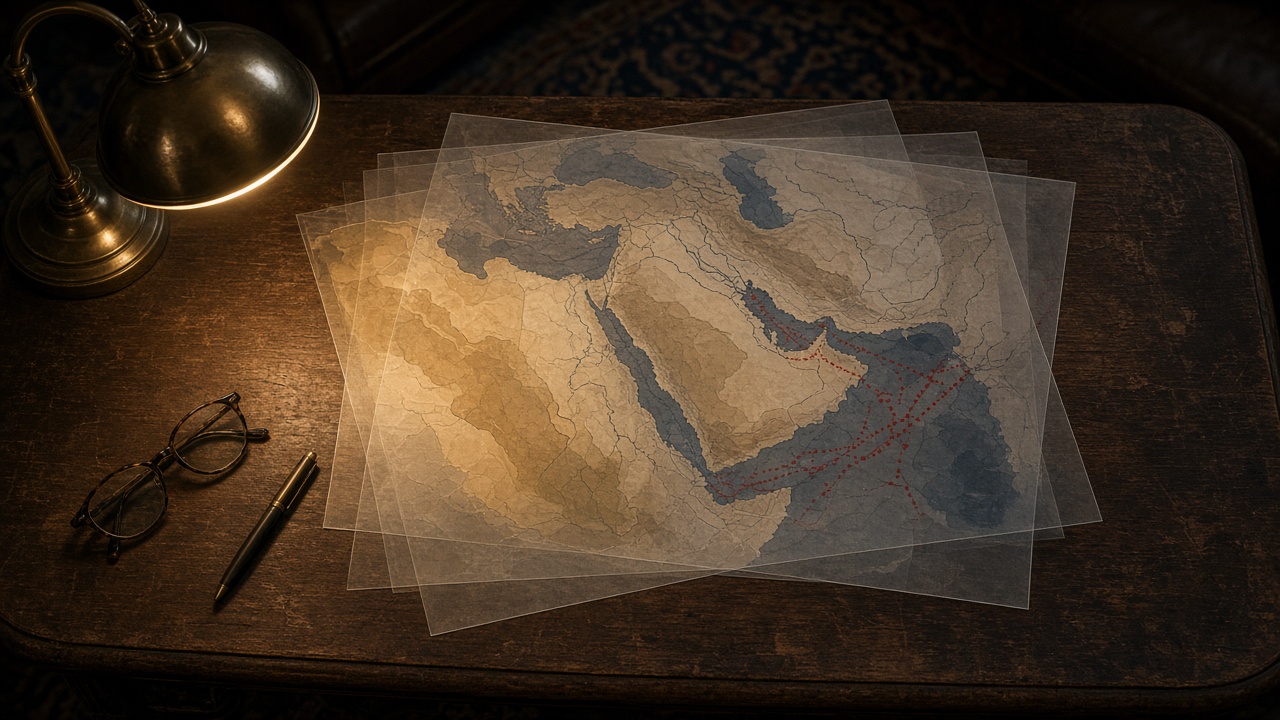
To understand the region, it is helpful to imagine several maps that overlap. One shows formal diplomatic relations. Another shows military threats and security partnerships. A third shows trade, energy routes, mediation, and public opinion. The borders on these maps are different. A country can defend itself against Iranian missiles, criticize Israel, host American forces, and negotiate with Tehran—all at the same time. These positions look contradictory only when the Middle East is divided into two fixed camps.
この地域を理解するには、重なり合う何枚もの地図を思い浮かべるとよいでしょう。一枚は正式な外交関係を示します。別の一枚は軍事的な脅威と安全保障上の協力関係を示します。三枚目は貿易、エネルギーの輸送路、仲介、世論を示します。これらの地図の境界線はそれぞれ異なります。ある国が、イランのミサイルから自らを守り、イスラエルを批判し、米軍を受け入れ、テヘランと交渉する―そのすべてを同時に行うことがありうるのです。これらの立場が矛盾して見えるのは、中東を固定された二つの陣営に分けたときだけです。