
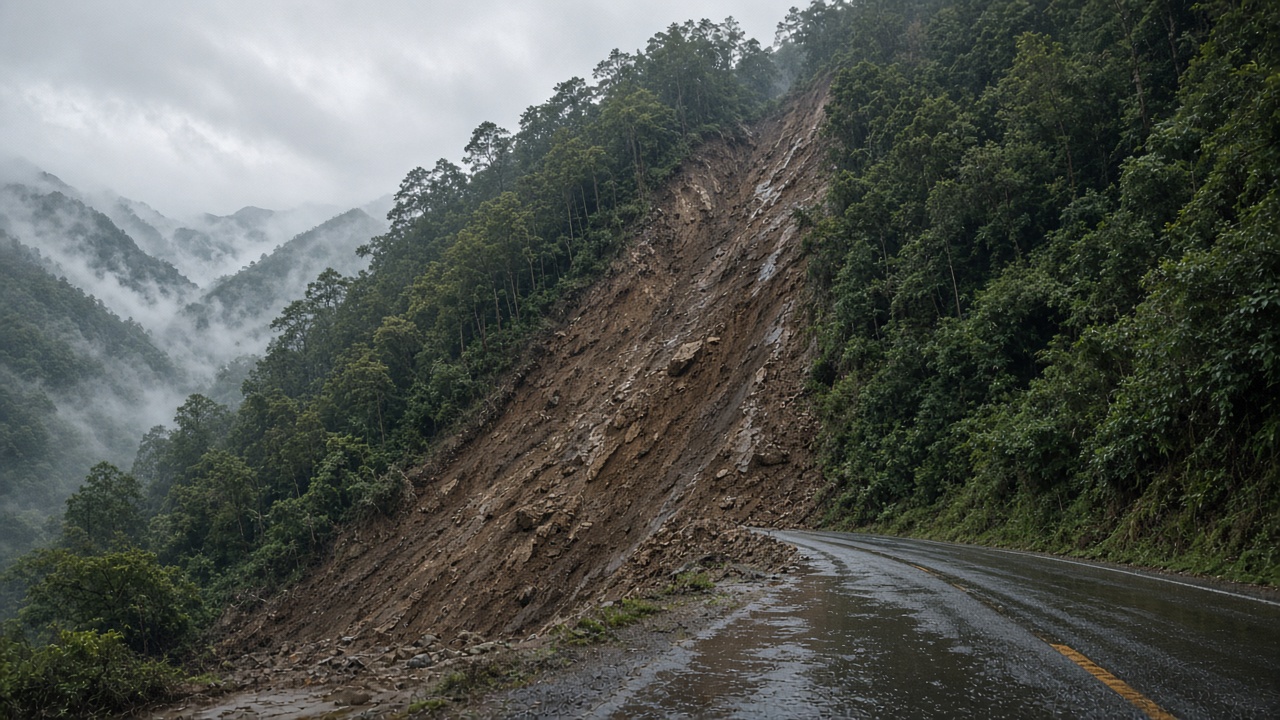
In September 2026, Typhoon Dujuan battered Japan’s Pacific coast with torrential rain. Landslides killed at least four people, six others were reported missing, and about 45,000 homes lost power. Earlier that month, Nagoya recorded 104.5 millimetres of rain in a single hour, while landslides struck areas including Mount Fuji. Japan has advanced weather forecasts and disaster-warning systems. Why, then, do landslides continue to cause deaths?
2026年9月、台風杜鵑(ドゥジュアン)が日本の太平洋岸を豪雨で襲いました。土砂崩れで少なくとも4人が死亡し、他に6人が行方不明と報じられ、約45,000戸が停電しました。その月の初めには、名古屋で1時間に104.5ミリの雨が記録され、富士山周辺を含む地域でも土砂崩れが起きました。日本には進んだ天気予報と災害警報システムがあります。では、なぜ土砂崩れは今も死者を出し続けるのでしょうか?
Geography is part of the answer. Much of Japan is mountainous, while many homes, roads, and railway lines have been built in narrow valleys or close to steep slopes. The country is also prone to typhoons and seasonal rain. This places large numbers of people and important transport routes close to areas where soil and rock may become unstable.
地理がその答えの一部です。日本の多くは山がちで、一方で多くの家、道路、鉄道路線が狭い谷や急斜面の近くに建てられてきました。国はまた、台風と季節の雨に見舞われやすいです。これは多数の人々と重要な交通路を、土と岩が不安定になりうる場所の近くに置くことになります。
The danger grows as rain enters the ground. At first, soil can absorb a large amount of water. After hours or days of rain, however, it becomes saturated. Water fills the spaces between soil and rocks, reducing the friction that helps hold a slope in place. Once the amount of water passes a critical threshold, part of the hillside can move suddenly, sometimes with little visible warning.
危険は雨が地面に入るにつれて大きくなります。最初、土は大量の水を吸収できます。しかし何時間も何日も雨が続いたあと、土は飽和します。水が土と岩のあいだの空間を満たし、斜面をその場に保つのを助ける摩擦を減らします。水量が重要な閾値を超えると、斜面の一部は突然動くことがあり、ときには目に見える警告がほとんどありません。
The speed and location of the rain create another problem. A linear rainband can repeatedly send powerful rain clouds over the same narrow area. One neighbourhood may receive extreme rainfall while another nearby receives much less. Forecasts can show where dangerous rain is likely, but it remains difficult to pinpoint exactly which slope will fail and when.
雨の速さと場所は別の問題を生みます。線状降水帯は、同じ狭い地域の上に強力な雨雲を繰り返し送ることができます。一つの地区が極端な降雨を受ける一方で、近くの別の地区ははるかに少ない場合があります。予報は危険な雨が起きそうな場所を示せますが、どの斜面がいつ失敗するかを正確に特定するのは依然として難しいです。
Japan tries to manage this uncertainty through risk maps, rainfall measurements, and a five-level warning system. Yet receiving a warning is not the same as reaching safety. Residents must decide whether to leave, where to go, and which route remains usable. Some people hesitate when their homes still appear safe, while others may receive an evacuation order at night or after roads have already become dangerous. To heed a warning often means acting before the danger is visible.
日本はリスク地図、雨量測定、五段階の警報システムを通じてこの不確実性を管理しようとします。しかし警告を受けることは、安全に到達することと同じではありません。住民は、出るかどうか、どこへ行くか、どの道がまだ使えるかを決めなければなりません。家がまだ安全に見えるときためらう人もいれば、夜や道路がすでに危険になったあとに避難指示を受ける人もいます。警告に従うことはしばしば、危険が見える前に行動することを意味します。
Physical protection also plays an important role. Japan has built drainage systems, reinforced slopes, protective nets, and sabo dams that control moving soil and rocks. These countermeasures have protected many communities, but they cannot cover every hillside. New danger may also appear outside previously identified areas, while unusually intense rain can exceed what older structures were designed to manage.
物理的な防護も重要な役割を果たします。日本は排水システム、補強された斜面、防護ネット、動く土と岩を制御する砂防ダムを建設してきました。これらの対策は多くの共同体を守ってきましたが、すべての斜面を覆うことはできません。新しい危険は以前に特定された区域の外にも現れることがあり、異常に激しい雨は、古い構造物が管理するよう設計された量を超えることがあります。
The Nepal–Tibet disaster and Japan’s recent landslides began in different ways. Nepal experienced a massive failure of glacier ice and rock, while Japan’s landslides were mainly connected to rain entering and weakening slopes. The shared lesson is not that the hazards are identical. It is that natural processes can outpace both protective infrastructure and human decision-making. Disaster preparedness cannot remove every danger, but it can create the time people need to move before their escape routes disappear.
ネパールとチベットの災害と、日本の最近の土砂崩れは、違う始まり方をしました。ネパールは氷河の氷と岩の大規模な失敗を経験し、一方で日本の土砂崩れは主に、雨が斜面に入って弱めることに結びついていました。共有される教訓は、危険が同一だということではありません。自然の過程が防護インフラと人間の意思決定の両方を上回ることがある、ということです。災害への備えはすべての危険を取り除くことはできませんが、逃げ道が消える前に人々が動くのに必要な時間を作り出すことはできます。