
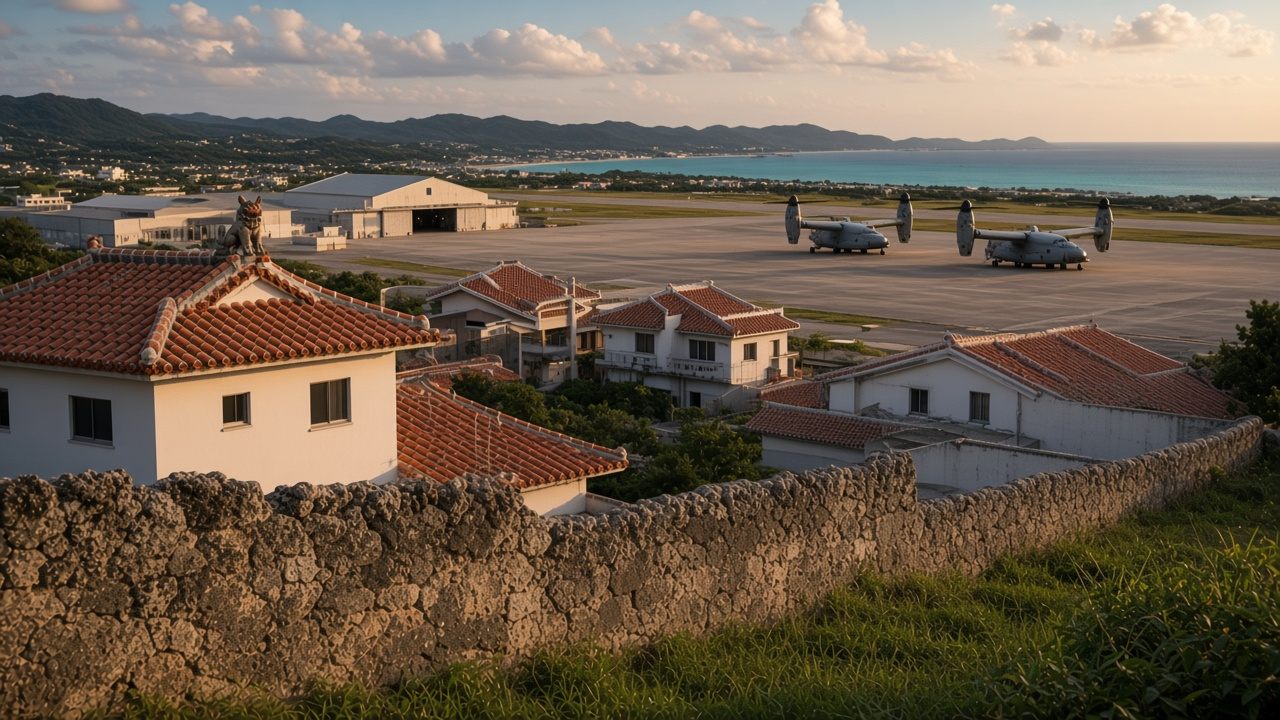
Okinawa accounts for only about 0.6% of Japan’s land area, yet it contains roughly 70% of the total land area of facilities used exclusively by U.S. forces in Japan. This figure measures land, rather than the number of bases or troops. Why has such a large military presence become concentrated in one small prefecture? The answer begins with a war that ended more than eighty years ago.
沖縄は日本の国土面積のわずか約0.6%を占めるにすぎませんが、日本国内で米軍が専用で使用する施設の総面積の約70%がそこにあります。この数字は、基地や兵士の数ではなく、土地の面積を測ったものです。なぜ、これほど大きな軍事的存在が一つの小さな県に集中するようになったのでしょうか。その答えは、80年以上前に終わった戦争から始まります。
In 1945, Okinawa became the scene of a brutal ground battle between Japanese and U.S. forces. Civilians were caught in the fighting, and entire communities were destroyed. American forces built military facilities on land that included villages and farmland. Some residents who had fled or been placed in camps later found that they could not return home: their land had become part of a military base.
1945年、沖縄は日本軍と米軍の間で行われた凄惨な地上戦の舞台となりました。民間人が戦闘に巻き込まれ、地域社会がまるごと破壊されました。米軍は、村や農地を含む土地の上に軍事施設を建設しました。避難していた住民や収容所に入れられていた住民の中には、後になって家に帰れないことを知った人々もいました。自分たちの土地が軍事基地の一部になっていたのです。
After Japan’s defeat, the country was placed under Allied occupation, meaning that the victorious countries, led by the United States, controlled its government. In 1952, this occupation ended on the mainland, and Japan regained its sovereignty—the authority to govern itself. Okinawa, however, remained under U.S. administration. Meanwhile, the Cold War increased its military importance, especially after the establishment of the People’s Republic of China in 1949 and the outbreak of the Korean War in 1950.
日本の敗戦後、国は連合国による占領下に置かれました。つまり、アメリカを中心とする戦勝国が日本の統治を管理したということです。1952年、本土ではこの占領が終わり、日本は主権、すなわち自らを統治する権限を回復しました。しかし沖縄は、引き続きアメリカの施政下に置かれました。その一方で、冷戦によって、特に1949年の中華人民共和国の成立と1950年の朝鮮戦争の勃発の後、沖縄の軍事的な重要性は高まりました。
During the 1950s, U.S. authorities forcibly acquired more land in Okinawa, using armed soldiers and heavy machinery in operations remembered as “bayonets and bulldozers.” Meanwhile, opposition to bases grew on the mainland, where some facilities were reduced or closed. Marine units were also relocated to Okinawa. The growing imbalance therefore reflected political decisions and different postwar experiences as well as military geography.
1950年代、アメリカ当局は武装した兵士と重機を使って、沖縄でさらに多くの土地を強制的に接収しました。この接収は「銃剣とブルドーザー」として記憶されています。その一方で、本土では基地への反対が強まり、一部の施設は縮小または閉鎖されました。海兵隊の部隊も沖縄へ移駐しました。したがって、広がっていく不均衡は、軍事的な地理だけでなく、政治的な決定や戦後の異なる経験も反映していたのです。
On May 15, 1972, Okinawa returned to Japanese administration after twenty-seven years of U.S. rule. This reversion restored Japanese government authority, but many bases remained under the Japan–U.S. security arrangements. Today, Japan’s government argues that Okinawa’s proximity to Taiwan, China and important sea routes allows rapid responses to regional crises and strengthens deterrence—discouraging an attack by making its likely costs clear. Geography helps explain the value of a military presence, but does not settle how much of the burden Okinawa should carry.
1972年5月15日、沖縄は27年間にわたるアメリカの統治を経て、日本の施政下に戻りました。この本土復帰によって日本政府の権限は回復しましたが、多くの基地は日米安全保障体制のもとで残されました。現在、日本政府は、沖縄が台湾や中国、重要な海上交通路に近いことで、地域の危機に迅速に対応でき、抑止力が高まると主張しています。抑止力とは、攻撃をした場合に生じうる代償を明確にすることで、攻撃を思いとどまらせることです。地理は軍事的存在の価値を説明する助けにはなりますが、沖縄がどれだけの負担を背負うべきかという問題に答えを出すものではありません。
For residents, that burden extends beyond base fences. Aircraft noise, accidents and environmental concerns affect surrounding communities. Debates about bases therefore involve both security and fairness. Some military land has been returned, but the concentration has persisted. Japan still faces the responsibility of deciding how the costs of national security should be shared, rather than allowing decisions made decades ago to determine that distribution indefinitely.
住民にとって、その負担は基地のフェンスの外にまで及んでいます。航空機の騒音、事故、環境への懸念が、周辺の地域社会に影響を与えています。そのため、基地をめぐる議論は、安全保障と公平性の両方に関わっています。一部の軍用地は返還されましたが、基地の集中は続いています。日本は今もなお、何十年も前に下された決定にその配分をいつまでも委ねるのではなく、国の安全保障のコストをどのように分かち合うべきかを決める責任に直面しているのです。