
← News Topics

Okinawa and the U.S. Bases — Security, Burden, and Trust

Day 3: What Is the Japan–U.S. Status of Forces Agreement?

沖縄と米軍基地 ― 安全保障、負担、そして信頼 ― 第3日:日米地位協定とは何か

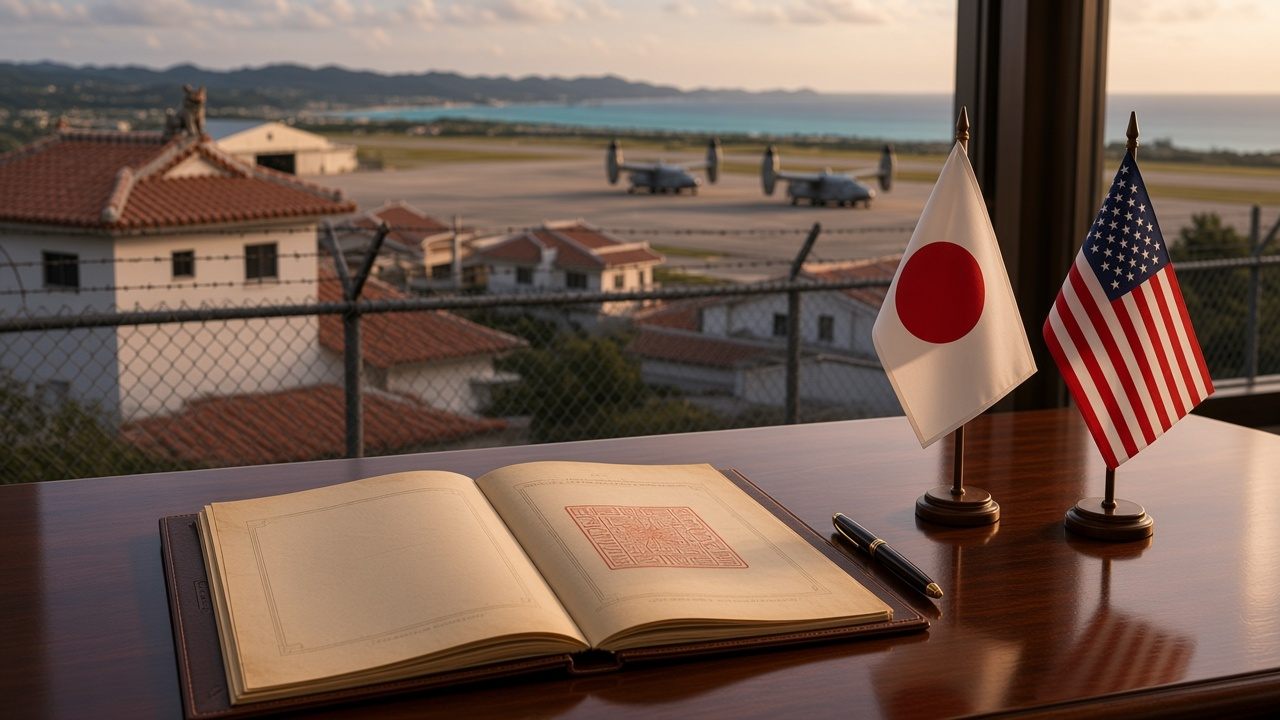
An open treaty binder and fountain pen on a wooden table beside Japanese and U.S. flags, with an Okinawan coastal airfield soft-focus beyond the window

When one country allows another country’s troops to stay on its territory, everyday questions arise. Which facilities may the troops use? How do they enter the country? What happens if someone is injured or a service member is suspected of a crime? Japan and the United States answer these questions through the Status of Forces Agreement, or SOFA. It provides a legal framework for the U.S. military presence in Japan.

ある国が、別の国の軍隊を自国の領土に駐留させることを認めると、日常的な疑問が生じます。部隊はどの施設を使ってよいのか。どのように入国するのか。けが人が出たり、軍人が犯罪の疑いをかけられたりした場合はどうなるのか。日本とアメリカは、これらの問いに地位協定(Status of Forces Agreement)、略してSOFAを通じて答えています。この協定は、日本における米軍の駐留のための法的枠組みを提供しています。

The current agreement replaced an earlier administrative agreement made in 1952. It was signed in Washington on January 19, 1960, by representatives including Japanese Prime Minister Nobusuke Kishi and U.S. Secretary of State Christian Herter. It took effect that June. It sets out which facilities U.S. forces may use in Japan and how service members and their families may enter and stay in the country. It also specifies when certain taxes apply and how claims for damage caused by U.S. military activities are handled. Another part of the agreement deals with criminal cases involving U.S. personnel. The agreement is therefore broader than the question of what happens after an arrest.

現行の協定は、1952年に結ばれたそれ以前の行政協定に取って代わりました。1960年1月19日、ワシントンで、日本の岸信介首相やアメリカのクリスチャン・ハーター国務長官を含む代表者によって署名され、その年の6月に発効しました。協定は、米軍が日本でどの施設を使えるか、軍人とその家族がどのように入国し、滞在できるかを定めています。また、どのような場合に特定の税金がかかるか、米軍の活動によって生じた損害の請求がどのように扱われるかも定めています。協定の別の部分は、米軍関係者が関わる刑事事件を扱っています。したがってこの協定は、逮捕の後に何が起こるかという問いよりも広い範囲をカバーしています。

In criminal cases, one important question is jurisdiction: which country has the right to bring a case before its courts? When an alleged offense is connected to a service member’s official duty, the United States generally has the primary right to exercise that jurisdiction. For many other alleged offenses, including those against Japanese civilians outside official duties, Japan generally has the primary right. Having that right means Japan can prosecute the case; it does not automatically answer a separate question about who holds the suspect before trial.

刑事事件では、一つの重要な問いが裁判管轄権です。つまり、どちらの国に、自国の裁判所で事件を審理する権利があるのか、という問いです。容疑のある行為が軍人の公務に関連している場合、一般にアメリカがその裁判管轄権を行使する第一次の権利を持ちます。公務外で日本の民間人に対して行われた容疑のある行為を含む、ほかの多くの容疑に対しては、一般に日本が第一次の権利を持ちます。その権利を持つということは、日本が事件を起訴できることを意味します。しかし、それは裁判前に誰が容疑者の身柄を確保するかという、別の問いへの答えを自動的に与えるものではありません。

That separate question is custody. If a U.S. service member is already in American hands when Japan is to exercise jurisdiction, the agreement normally allows the United States to keep the suspect until Japan formally files charges. If Japanese police make the arrest, they can retain the suspect when they judge that there is sufficient reason and need to do so. The distinction matters: Japan may have the right to bring a case even while the U.S. military holds the person being investigated.

その別の問いが、身柄の拘束です。日本が裁判管轄権を行使しようとする時点で、米軍人がすでにアメリカ側の管理下にある場合、協定は通常、日本が正式に起訴するまでアメリカが容疑者を拘束し続けることを認めています。日本の警察が逮捕した場合には、十分な理由と必要があると判断すれば、容疑者の身柄を確保し続けることができます。この区別は重要です。捜査対象の人物を米軍が拘束している間でも、日本は事件を起訴する権利を持ちうるからです。

The 1995 rape of a girl in Okinawa brought the custody rule under intense public scrutiny. Later that year, the two governments agreed that Japan could request an earlier transfer of a suspect held by the United States in specific murder or rape cases. The United States promised to give such requests favorable consideration. That opened a path to transfer before formal charges, but the decision was not automatic.

1995年に沖縄で起きた少女への性的暴行事件は、身柄に関するルールを、強い社会的な監視の下に置きました。その年の後半、両政府は、アメリカが拘束している容疑者について、特定の殺人や性的暴行の事件では、日本がより早い引き渡しを要請できることに合意しました。アメリカは、そうした要請に好意的な配慮を与えると約束しました。これによって、正式な起訴前に引き渡す道は開かれましたが、その決定は自動的なものではありませんでした。

The distinction also clarifies the October 2026 case discussed in Day 1. Japanese police arrested the Marine and kept him in custody, so Japan did not need to request a transfer from the U.S. military. The older custody problem did not arise in the same way. Yet the case has renewed attention to SOFA because the agreement shapes how two governments deal with incidents involving U.S. personnel. Understanding precisely which rule applies is a starting point for judging whether the current arrangements deserve to change.

この区別は、第1日で扱った2026年10月の事件も明らかにします。日本の警察が海兵隊員を逮捕し、身柄を確保し続けたため、日本は米軍に引き渡しを要請する必要がありませんでした。以前の身柄の問題は、同じ形では生じませんでした。それでもこの事件が地位協定への関心を再び高めたのは、協定が、米軍関係者が関わる事件を両政府がどのように扱うかを形づくっているからです。どのルールが正確に適用されるかを理解することは、現行の取り決めを変えるべきかどうかを判断するための出発点になります。

Vocabulary

  1. framework — a structure of rules or ideas that guides how something works. Example: The two countries created a framework for cooperation.
  2. administrative agreement — an agreement that sets out practical rules for how governments carry out a policy. Example: The administrative agreement explained how the foreign troops could operate in the country.
  3. jurisdiction — the legal authority to deal with a case or try someone in court. Example: The court had jurisdiction over crimes committed in that area.
  4. alleged — said to have happened or been done, but not yet proved. Example: Police are investigating the alleged offense.
  5. official duty — work that someone performs as part of their formal job or role. Example: The officer was carrying out an official duty when the accident occurred.
  6. prosecute — to bring a criminal case against someone in court. Example: The authorities decided to prosecute the suspect under Japanese law.
  7. retain — to keep possession or control of something. Example: Police decided to retain custody of the suspect during the investigation.
  8. scrutiny — careful and detailed examination, especially by the public or authorities. Example: The agreement came under greater scrutiny after the incident.
  9. transfer — the act of moving someone or something from one person or authority to another. Example: The two governments discussed the transfer of the suspect before formal charges were filed.

Comprehension Questions

  1. What is the main purpose of the Status of Forces Agreement described in the article?
    1. To decide how many U.S. troops Japan must accept each year.
    2. To provide rules for the U.S. military presence in Japan, including facilities and the treatment of personnel.
    3. To give U.S. military courts authority over every crime committed in Japan.
    4. To determine Japan’s entire national defense policy.

    記事で説明されている地位協定の主な目的は何ですか?

  2. Which statement about the current agreement is correct?
    1. It was signed when Okinawa returned to Japanese administration in 1972.
    2. It was created only to address criminal cases involving service members.
    3. It replaced a 1952 administrative agreement and took effect in 1960.
    4. It removed all earlier arrangements concerning U.S. facilities in Japan.

    現行の協定について正しいのはどの文ですか?

  3. According to the article, when does Japan generally have the primary right to exercise jurisdiction?
    1. When a U.S. service member is suspected of an offense against a Japanese civilian outside official duties.
    2. Whenever a U.S. service member is on a base.
    3. Only after the U.S. military has prosecuted the suspect.
    4. Only if the suspect agrees to be tried in Japan.

    記事によると、日本が一般に裁判管轄権を行使する第一次の権利を持つのはどのような場合ですか?

  4. Why is jurisdiction different from custody?
    1. Jurisdiction concerns taxes, while custody concerns military facilities.
    2. Jurisdiction applies only before an arrest, while custody applies only after a conviction.
    3. The country with the right to prosecute may not be holding the suspect during the investigation.
    4. Custody automatically gives a country the right to prosecute.

    裁判管轄権と身柄の拘束が異なるのはなぜですか?

  5. What changed after the 1995 agreement on criminal procedures?
    1. The United States became required to transfer every suspect immediately after an incident.
    2. Japan gained a way to request custody before formal charges in specific murder or rape cases, although transfer was not automatic.
    3. Japan gave up the right to prosecute cases involving U.S. service members.
    4. Japanese police were no longer permitted to arrest U.S. service members.

    1995年の刑事手続きに関する合意の後、何が変わりましたか?

Discussion Questions

  1. Why might two countries need detailed rules when one country’s military is stationed in the other?

    ある国の軍隊がもう一方の国に駐留する場合、なぜ両国に詳細なルールが必要になりうるのでしょうか?

  2. When Japan has the right to prosecute a case but the suspect is held by the U.S. military, what concerns might arise for investigators, the suspect, and the public?

    日本に事件を起訴する権利がある一方で、容疑者が米軍に拘束されている場合、捜査当局、容疑者、そして世間にはどのような懸念が生じうるでしょうか?

  3. The 1995 arrangement allows Japan to request an early transfer in certain cases, but does not guarantee it. What are the strengths and limits of this approach?

    1995年の取り決めは、特定の事件で日本が早期の引き渡しを要請することを認めていますが、それを保証するものではありません。この方法の長所と限界は何でしょうか?

  4. What information would help residents judge whether a criminal case involving U.S. personnel was handled fairly?

    米軍関係者が関わる刑事事件が公正に扱われたかどうかを、住民が判断するうえで役立つ情報は何でしょうか?

  5. When reviewing an agreement like SOFA, how should governments weigh military needs, effective investigations, and the trust of local communities?

    地位協定のような取り決めを見直すとき、政府は軍事上の必要、効果的な捜査、そして地域社会の信頼をどのように天秤にかけるべきでしょうか?

Speaking Practice

Speak for about one minute about how the Status of Forces Agreement affects a criminal case involving a U.S. service member in Japan.

日米地位協定が、日本で米軍人が関わる刑事事件にどのように影響するのかについて、約1分間話してください。

Include:

次の点を含めてください。

  • what kinds of issues SOFA covers

    地位協定がどのような問題を扱っているか

  • the difference between the right to prosecute and custody of a suspect

    起訴する権利と容疑者の身柄の拘束の違い

  • what the 1995 arrangement changed

    1995年の取り決めが何を変えたか

  • why the October 2026 case followed a different path on custody

    2026年10月の事件が、身柄の点で異なる道筋をたどった理由