
← News Topics

Okinawa and the U.S. Bases — Security, Burden, and Trust

Day 4: Can Security and Local Trust Coexist?

沖縄と米軍基地 ― 安全保障、負担、そして信頼 ― 第4日:安全保障と地域の信頼は両立できるのか

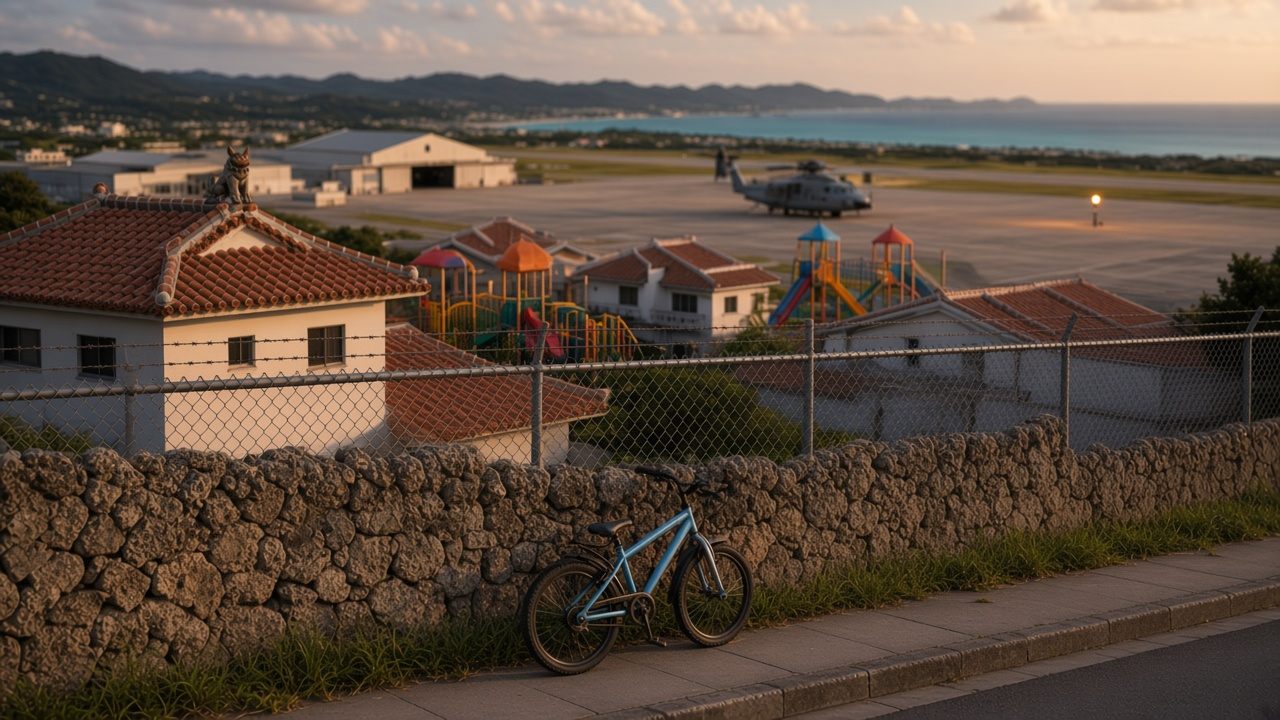
A Marine Corps airfield surrounded by Okinawan houses with red-tiled roofs, a school playground, and a residential sidewalk with a bicycle outside the perimeter fence at late afternoon

A military base can serve a national purpose while creating problems for the people who live beside it. In Okinawa, debates about U.S. bases often begin with different meanings of safety. Japan and the United States consider how their forces would respond to a regional crisis. Nearby residents also think about aircraft noise, accidents, and whether their concerns will be heard.

軍事基地は国の目的に役立つ一方で、そのそばに暮らす人々には問題を生むことがあります。沖縄では、米軍基地をめぐる議論は、しばしば「安全」の異なる意味から始まります。日本とアメリカは、自国の部隊が地域の危機にどう対応するかを考えます。近くに住む住民は、航空機の騒音や事故、そして自分たちの懸念がきちんと聞いてもらえるかどうかも考えます。

The Japanese government sees Okinawa as strategic to the U.S.–Japan alliance. It argues that forces stationed there help the two countries respond quickly to threats. But that argument does not, by itself, answer a local question: how much of the cost of this security should Okinawa continue to carry?

日本政府は、沖縄を日米同盟にとって戦略的に重要だと見ています。そこに駐留する部隊が、両国が脅威に迅速に対応する助けになると主張しています。しかし、その主張だけでは、地元の問いには答えられません。この安全保障のコストのうち、どれだけを沖縄が引き続き背負うべきなのか、という問いです。

Futenma Air Station is a U.S. Marine Corps airfield in the city of Ginowan, surrounded by homes and schools. Japan and the United States agreed in 1996 that it should be returned, provided its functions could be moved elsewhere. Nearly three decades later, it remains in use. The Japanese government plans to build a replacement facility at Henoko, another part of Okinawa, and says this relocation would allow Futenma to close while reducing the military footprint. Okinawa Prefecture strongly opposes the plan: it would keep the facility within Okinawa, and the long construction period creates uncertainty about when Futenma could close. Opposition has been expressed through elections, a 2019 prefectural referendum on the land reclamation, and years of legal disputes.

普天間飛行場は、宜野湾市にある米海兵隊の飛行場で、住宅や学校に囲まれています。日本とアメリカは1996年に、機能を別の場所へ移せることを条件に、返還すべきだと合意しました。それからおよそ30年が経った今も、飛行場は使われ続けています。日本政府は、沖縄の別の場所である辺野古に代替施設を建設する計画を立てており、この移設によって普天間を閉鎖でき、軍事的な占有面積も減らせると説明しています。沖縄県はこの計画に強く反対しています。施設が沖縄の中に残るうえ、長い建設期間のために、普天間がいつ閉鎖できるかも不確かになるからです。反対は、選挙、2019年の埋立てをめぐる県民投票、そして長年の法的争いを通じて示されてきました。

Other changes are under way. Some aircraft functions have moved outside Okinawa, and a phased transfer of Marines to Guam has begun. These steps give both governments a way to show progress, but residents may judge them by what changes in daily life: fewer flights over homes, less noise, and land returned for public use.

ほかの変化も進んでいます。一部の航空機機能は沖縄の外へ移り、海兵隊のグアムへの段階的な移駐も始まっています。これらの措置は、両政府に進展を示す手段を与えます。しかし住民は、日常生活で何が変わるかによって判断するかもしれません。住宅上空の飛行が減ること、騒音が減ること、そして公共利用のために土地が返還されることです。

Trust also depends on what happens when something goes wrong. Okinawa Prefecture has asked for quicker access to bases for environmental inspection and clearer information about incidents. It also seeks consultation before major decisions about facilities are made. For the prefecture, accountability means more than announcing a plan: it means allowing local authorities to examine problems and take part in decisions that affect residents.

信頼は、何か問題が起きたときに何が起こるかにも左右されます。沖縄県は、環境検査のための基地へのより迅速な立ち入りと、事故や事件についてのより明確な情報提供を求めてきました。また、施設に関する重要な決定が行われる前の協議も求めています。県にとって説明責任とは、計画を発表すること以上の意味を持ちます。それは、地方当局が問題を調べ、住民に影響する決定に参加できるようにすることを意味します。

Closing Futenma would bring a major change for the people living around it. Yet the proposed replacement would keep a significant airfield function in Okinawa, even as other military activities move elsewhere. This is why the governments and Okinawa Prefecture can look at the same plan and reach different conclusions about “burden reduction.” The disagreement concerns what will change for each community, how soon it will change, and whose views shape those decisions.

普天間の閉鎖は、その周辺に住む人々にとって大きな変化をもたらすでしょう。しかし提案されている代替施設は、ほかの軍事活動が別の場所へ移るとしても、重要な飛行場の機能を沖縄に残すことになります。だからこそ、両政府と沖縄県は同じ計画を見ながら、「負担軽減」について異なる結論に達しうるのです。意見の食い違いは、各地域で何が変わるのか、それがどれだけ早く変わるのか、そして誰の見解がそれらの決定を形づくるのか、という点にあります。

Vocabulary

  1. strategic — important to a long-term plan or goal. Example: The port has a strategic location near major shipping routes.
  2. relocation — the act of moving something or someone to a new place. Example: The relocation of the hospital will take several years.
  3. footprint — the amount of land or space used by an organization or activity. Example: The company reduced its office footprint after more employees began working from home.
  4. oppose — to disagree with a plan or action and speak or act against it. Example: Local residents oppose the construction of a new highway.
  5. uncertainty — a situation in which something is not known or cannot be predicted. Example: Uncertainty about the opening date made planning difficult.
  6. phased — done in several stages rather than all at once. Example: The city announced a phased introduction of its new bus system.
  7. inspection — a careful examination to check a condition or identify a problem. Example: An inspection found damage to the bridge.
  8. consultation — a discussion held before making a decision, especially with people affected by it. Example: The council began consultations with residents before changing the traffic rules.
  9. accountability — the responsibility to explain decisions and accept their consequences. Example: Publishing the results of the investigation would improve accountability.

Comprehension Questions

  1. What two views of safety does the article describe?
    1. The safety of tourists and the safety of military equipment
    2. The ability to respond to a regional crisis and the daily safety of nearby residents
    3. The safety of aircraft and the safety of buildings
    4. The safety of Okinawa and the safety of Guam

    記事は、「安全」についてのどのような二つの見方を述べていますか?

  2. What was a condition of the 1996 agreement to return Futenma?
    1. All U.S. forces had to leave Japan.
    2. Okinawa had to build more housing.
    3. The airfield had to stop all training immediately.
    4. Its functions had to be moved elsewhere.

    1996年の普天間返還合意の条件は何でしたか?

  3. Why does Okinawa Prefecture oppose the Henoko plan?
    1. It would keep an airfield facility within Okinawa, while its long construction period leaves Futenma’s closing date uncertain.
    2. It would move all U.S. forces to Guam.
    3. It would increase the number of homes around Futenma.
    4. It would prevent any land from being returned in Japan.

    沖縄県が辺野古の計画に反対するのはなぜですか?

  4. Which change has already begun?
    1. The complete closure of Futenma
    2. The closure of every U.S. base in Okinawa
    3. A phased transfer of Marines from Okinawa to Guam
    4. The replacement of the Status of Forces Agreement

    すでに始まっている変化はどれですか?

  5. According to the article, why can the governments and Okinawa Prefecture reach different conclusions about “burden reduction”?
    1. They disagree about where Ginowan is located.
    2. They may assess differently what changes for each community, when those changes happen, and whose views influence the decisions.
    3. They have different definitions of a Marine.
    4. Okinawa Prefecture does not want Futenma to close.

    記事によると、両政府と沖縄県が「負担軽減」について異なる結論に達しうるのはなぜですか?

Discussion Questions

  1. Besides the amount of land occupied by bases, what should be measured to determine whether Okinawa’s burden is decreasing?

    基地が占める土地の量以外に、沖縄の負担が減っているかどうかを判断するために、何を測るべきでしょうか?

  2. How could the governments reduce risks for people living near Futenma while the dispute over its replacement continues?

    代替施設をめぐる争いが続くあいだ、政府は普天間の近くに住む人々のリスクをどのように減らせるでしょうか?

  3. What information would help residents judge whether the transfer of Marines to Guam has improved daily life in Okinawa?

    海兵隊のグアムへの移駐が、沖縄の日常生活を改善したかどうかを住民が判断するうえで、役立つ情報は何でしょうか?

  4. How should local authorities be involved when an accident or possible environmental problem occurs at a military base?

    軍事基地で事故や環境上の問題の可能性がある場合、地方当局はどのように関与すべきでしょうか?

  5. At what stage of a major base decision should local communities be consulted, and how should their views affect the outcome?

    基地に関する重要な決定のどの段階で地域社会と協議すべきでしょうか。また、その見解は結果にどのように影響すべきでしょうか?

Speaking Practice

How should Okinawa’s base burden be measured?

沖縄の基地負担は、どのように測るべきでしょうか?

Speak for about one minute.

約1分間話してください。

Try to include:

次の点を含めてみてください。

  • why the Japanese government considers the bases important

    日本政府が基地を重要だと考える理由

  • why closing Futenma matters to nearby residents

    普天間の閉鎖が近くの住民にとって重要な理由

  • why the proposed move to Henoko remains disputed

    辺野古への移設案が今も争われている理由

  • one way to measure whether Okinawa’s burden has actually decreased

    沖縄の負担が実際に減ったかどうかを測る一つの方法