
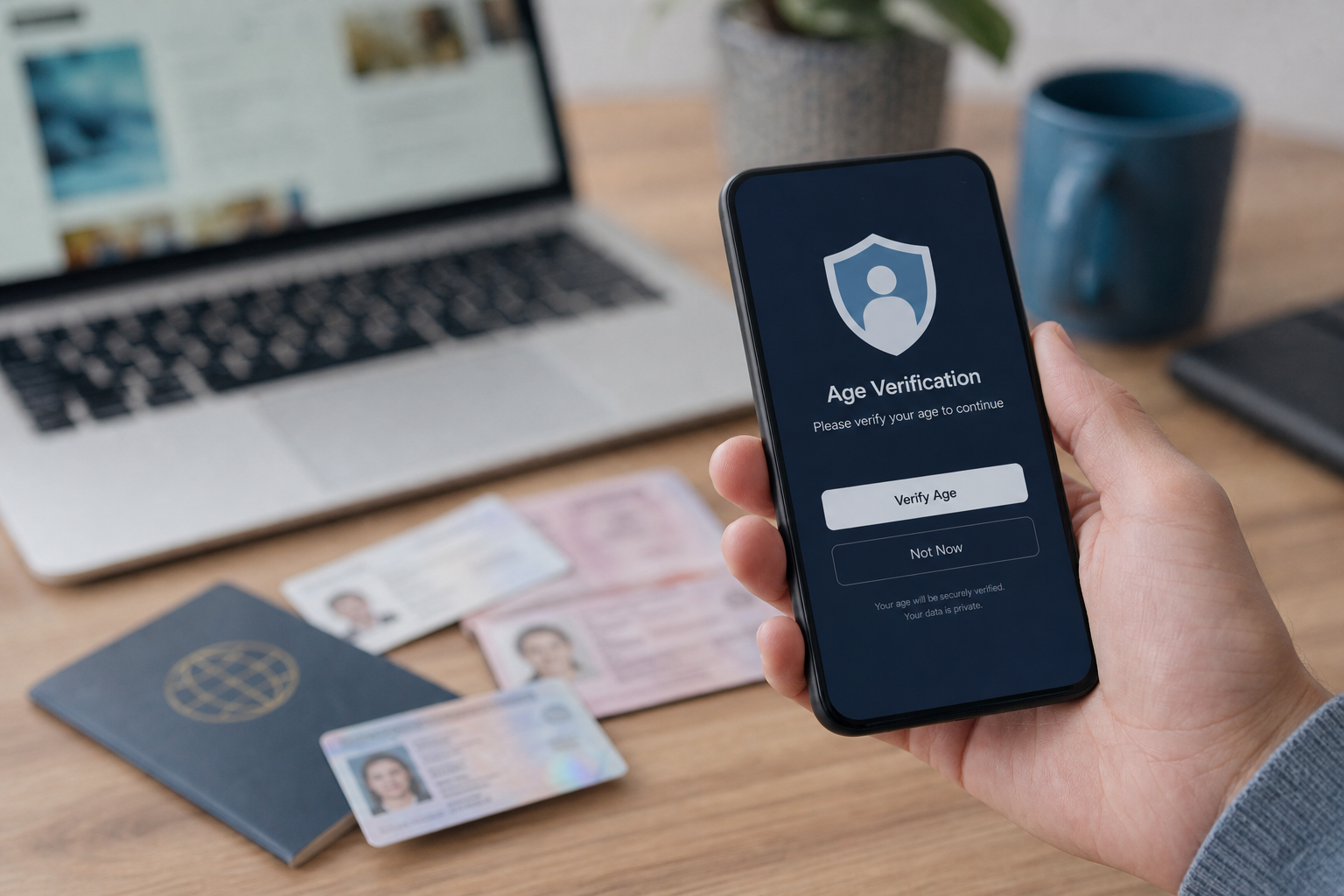
The settlement described in Day 1 requires Meta to improve how it verifies the ages of Facebook and Instagram users. This sounds simple, but it creates a difficult technical question: How can a platform know whether someone is really 12, 15, or 25? Children under 13 are not permitted to use these services, while teenagers receive special protections. If users enter a false birth year, however, the correct rules may never be applied.
第1日で述べた和解は、メタがFacebookとInstagramのユーザーの年齢を確認する方法を改善することを求めています。これは単純に聞こえますが、難しい技術的な問いを生み出します。プラットフォームはどうやって誰かが本当に12歳、15歳、または25歳かを知ることができるのでしょうか。13歳未満の子どもはこれらのサービスを使うことを許可されていませんが、ティーンエイジャーは特別な保護を受けます。しかし、ユーザーが偽の生年を入力すれば、正しい規則が適用されないかもしれません。
Platforms can rely on several kinds of information. They can ask for a government ID, use information supplied by a mobile device, or examine a video selfie. Artificial intelligence can also estimate a person’s age from their face or online behavior. These approaches are not identical. Age verification checks evidence of a person’s actual age, while age estimation produces a probable age or age range. Collecting more information may improve accuracy, but it can also increase the risk to users’ privacy.
プラットフォームは、いくつかの種類の情報に頼ることができます。政府発行の身分証明書を求めたり、モバイル端末が提供する情報を使ったり、動画の自撮りを調べたりできます。人工知能はまた、顔やオンラインでの行動から人の年齢を推定することもできます。これらの方法は同じではありません。年齢確認は実際の年齢の証拠を調べますが、年齢推定は可能性の高い年齢または年齢幅を出します。より多くの情報を集めると正確さが上がるかもしれませんが、ユーザーのプライバシーへのリスクも増えることがあります。
Meta has not historically required most users to show an ID. Instead, it has looked for clues such as birthday messages, school-grade celebrations, and the ages of connected users. The new settlement does not require everyone to upload an ID or video selfie. It focuses particularly on children under 13. Meta must examine their friend networks, make suspected child accounts easier to report, and improve its ability to identify users who are too young.
メタはこれまで、ほとんどのユーザーに身分証明書の提示を求めてきませんでした。代わりに、誕生日のメッセージ、学年のお祝い、つながっているユーザーの年齢などの手がかりを探してきました。新しい和解は、すべての人に身分証明書や動画の自撮りをアップロードすることを求めていません。特に13歳未満の子どもに焦点を当てています。メタは友人ネットワークを調べ、子どもだと疑われるアカウントをより報告しやすくし、若すぎるユーザーを特定する能力を改善しなければなりません。
The settlement also allows Meta to temporarily use some data from identified child accounts to train an AI detection system. An independent auditor will examine the company’s age-checking efforts. Even with better technology, however, errors are unavoidable. A child may get around the system by entering a false age or using another person’s account. At the same time, a system may misclassify an adult as a child and unnecessarily limit that person’s access.
和解はまた、特定された子どもアカウントからの一部のデータを、AI検知システムを訓練するために一時的に使うことをメタに認めています。独立した監査人が、同社の年齢確認の取り組みを調べます。しかし、より良い技術があっても、誤りは避けられません。子どもは偽の年齢を入力したり、他人のアカウントを使ったりしてシステムをすり抜けるかもしれません。同時に、システムが大人を子どもと誤分類し、その人のアクセスを不必要に制限するかもしれません。
US law already limits how companies collect personal information from children. Under the Children’s Online Privacy Protection Act, or COPPA, online services generally need parental consent before collecting personal information from children under 13. However, this creates a chicken-or-the-egg problem: a platform may need to collect information to determine whether a user is under 13, but it may not know whether COPPA applies until it has determined the user’s age. Stronger age checks could therefore protect children while also requiring platforms to gather more information about them.
米国法はすでに、企業が子どもから個人情報を集める方法を制限しています。児童オンラインプライバシー保護法、すなわちCOPPAの下では、オンラインサービスは一般に、13歳未満の子どもから個人情報を集める前に親の同意を必要とします。しかし、これは鶏が先か卵が先かの問題を生み出します。プラットフォームはユーザーが13歳未満かどうかを判断するために情報を集める必要があるかもしれませんが、ユーザーの年齢を判断するまでCOPPAが適用されるかどうかわからないかもしれません。したがって、より強い年齢確認は子どもを保護しうる一方で、プラットフォームに彼らについてのより多くの情報を集めることも求めます。
In February 2026, the Federal Trade Commission said it would not take action against companies that collect personal information solely to determine a user’s age. However, this protection is limited. State governments may still have the authority to bring their own cases, and information collected for age checking must not be used for unrelated purposes. The Meta settlement therefore demands more active age checking without ordering the company to use the most intrusive methods.
2026年2月、連邦取引委員会は、ユーザーの年齢を判断するためだけに個人情報を集める企業に対して措置を取らないと述べました。しかし、この保護は限定的です。州政府は依然として独自に訴訟を起こす権限を持つかもしれず、年齢確認のために集められた情報は無関係な目的に使ってはなりません。したがってメタの和解は、最も侵入的な方法を使うよう命じることなく、より積極的な年齢確認を求めています。
Age checks also create a serious privacy concern for the public as a whole. A platform cannot check only the users it already knows are children, because identifying those users is the purpose of the check. It may therefore need to examine everyone in order to separate children from adults. As a result, adult users could also be asked to provide identification, facial images, or other personal information before accessing online services. Such intrusive checks could weaken anonymous expression and increase the harm caused by a data leak. Supporters respond that some loss of privacy may be justified when the aim is to protect children, but there is no general agreement about how much personal information a platform should be allowed to collect.
年齢確認はまた、公衆全体にとって深刻なプライバシー上の懸念を生み出します。プラットフォームは、すでに子どもだとわかっているユーザーだけを調べることはできません。なぜなら、そうしたユーザーを特定すること自体が確認の目的だからです。したがって、子どもと大人を分けるために、全員を調べる必要があるかもしれません。その結果、成人ユーザーもまた、オンラインサービスにアクセスする前に身分証明書、顔の画像、または他の個人情報の提供を求められることがあります。そのような侵入的な確認は、匿名での表現を弱め、データ漏洩による害を増やすことがあります。支持者は、目的が子どもを守ることであるとき、ある程度のプライバシーの喪失は正当化されうると答えますが、プラットフォームがどれだけの個人情報を集めてよいかについての一般的な合意はありません。
There is no perfect way to confirm age while collecting no personal information. A responsible system should minimize the data it collects, delete information when it is no longer needed, explain how decisions are made, and allow users to challenge mistakes. Independent testing will also be necessary to determine whether Meta’s methods work. The real choice is not simply between child safety and privacy. It is how to improve safety without demanding more personal information than the task genuinely requires.
個人情報をまったく集めずに年齢を確認する完璧な方法はありません。責任あるシステムは、集めるデータを最小限にし、不要になった情報を削除し、決定がどのようになされるかを説明し、ユーザーが誤りに異議を唱えることを認めるべきです。メタの方法が機能するかどうかを判断するには、独立した検証も必要です。本当の選択は、単に子どもの安全かプライバシーかではありません。その仕事が本当に必要とする以上の個人情報を求めずに、安全をどう改善するかです。