
← News Topics

Trade, Power, and the New World Economy

Day 2: Cheap Goods, Costly Change

貿易、権力、そして新しい世界経済 ― 第2日:安い商品、高くつく変化

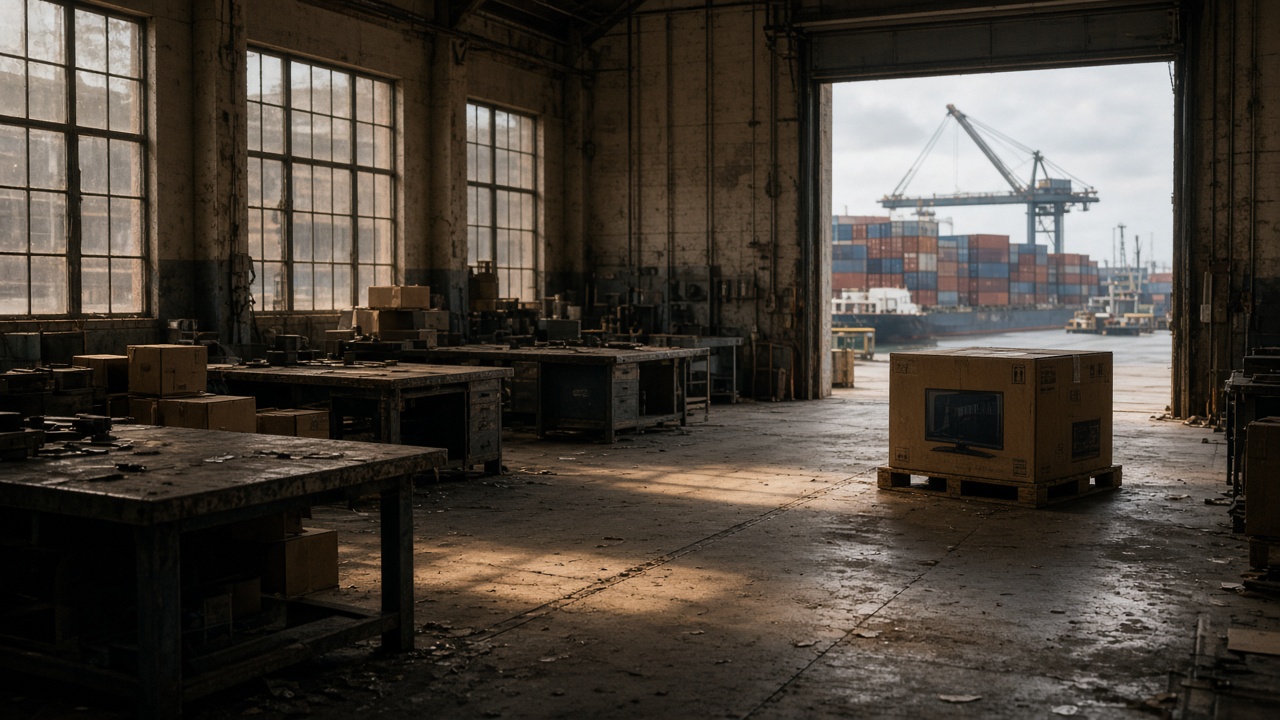
Empty American factory floor with an imported television carton and a busy container port beyond the loading bay

When an imported television becomes cheaper, millions of consumers may each save a small amount of money. These benefits are diffuse: they are spread across many people and many purchases. Because no single saving seems dramatic, consumers may not connect lower prices with international trade. Yet together, these small savings can significantly improve living standards.

輸入されたテレビが安くなると、何百万もの消費者がそれぞれわずかな金額を節約できるかもしれません。これらの利益は拡散的です。多くの人と多くの購入に広がっています。一つの節約が劇的に見えないため、消費者は低い価格を国際貿易と結びつけないかもしれません。しかし、これらの小さな節約は合わせて、生活水準を大きく改善しえます。

After China joined the World Trade Organization in 2001, imports from China increased rapidly. Many Western companies expanded production there or used offshoring to move part of their operations abroad. China offered more than low wages. It also had a large workforce, improving ports and roads, and networks of suppliers that could produce goods quickly and on a huge scale.

中国が2001年に世界貿易機関に加盟したあと、中国からの輸入は急速に増えました。多くの西側企業はそこで生産を拡大するか、オフショアリングを使って事業の一部を海外へ移しました。中国が提供したのは低い賃金だけではありません。大きな労働力、改善しつつある港と道路、そして商品をすばやく巨大な規模で生産できる供給業者のネットワークもありました。

The costs of this change were distributed very differently. Some American towns depended heavily on factories that produced furniture, clothing, electronics, or machinery. When those factories closed, the damage fell disproportionately on particular communities. Many displaced workers could not simply move to another region or begin a completely new career.

この変化のコストは、きわめて違う形で配分されました。一部のアメリカの町は、家具、衣類、電子機器、または機械を生産する工場に大きく依存していました。それらの工場が閉じると、損害は特定の共同体に不釣り合いに集中しました。職を失った多くの労働者は、単に別の地域へ移ったり、まったく新しいキャリアを始めたりすることはできませんでした。

International trade was not the only cause of manufacturing job losses. Automation also allowed factories to produce more goods with fewer employees. However, research on the “China shock” found that regions facing stronger competition from Chinese imports experienced deeper and longer-lasting employment losses. The effects did not quickly disappear as workers moved into other industries.

国際貿易は、製造雇用の喪失の唯一の原因ではありませんでした。自動化も工場がより少ない従業員でより多くの商品を生産することを可能にしました。しかし、「中国ショック」に関する研究は、中国からの輸入とのより強い競争に直面した地域が、より深く長く続く雇用の喪失を経験したことを見出しました。その影響は、労働者が他の産業へ移るにつれてすばやく消えたわけではありませんでした。

This creates an important distinction. A country may gain in aggregate because consumers pay lower prices and successful companies earn more. However, national gains do not automatically compensate the workers and communities carrying the heaviest costs. Training programs are of little use if they do not lead to real jobs, and temporary financial support cannot rebuild an entire local economy.

これは重要な区別を生みます。消費者の支払う価格が下がり、成功した企業がより多く稼ぐため、国は集計では得をするかもしれません。しかし、国家の利益は、最も重いコストを負う労働者と共同体に自動的に補償するわけではありません。訓練プログラムは、実際の仕事につながらなければほとんど役に立たず、一時的な金銭的支援は地域経済全体を再建できません。

Tariffs may appear to offer a simple answer, but they also have costs. They can raise prices for consumers and businesses, while other countries may respond with retaliation against exports. Moreover, a protected factory may return with highly automated equipment and employ far fewer people than it did in the past. Trade restrictions alone cannot recreate the economic world that existed before globalization.

関税は単純な答えを提供するように見えるかもしれませんが、それにもコストがあります。消費者と企業の価格を上げる一方で、他の国は輸出への報復で応じるかもしれません。さらに、保護された工場は高度に自動化された設備とともに戻り、過去よりもはるかに少ない人を雇うかもしれません。貿易制限だけでは、グローバル化以前に存在した経済世界を再現できません。

Japan faces a related challenge. Trade with China provides Japanese companies and consumers with important benefits, but heavy dependence on one country can become dangerous during a crisis. Japan is therefore trying to strengthen economic resilience by diversifying suppliers and protecting essential industries. The broader lesson is that successful trade policy cannot be judged only by lower prices or national totals. It must also ask whether people carrying the heaviest costs are offered a realistic path to a new livelihood.

日本は関連する課題に直面しています。中国との貿易は日本企業と消費者に重要な利益を与えますが、一国への重い依存は危機のときに危険になりえます。したがって日本は、供給業者を多様化し、不可欠な産業を守ることで経済的な強靭性を強めようとしています。より広い教訓は、成功した貿易政策は低い価格や国家の合計だけで判断できないということです。最も重いコストを負う人々に、新しい生計への現実的な道が示されているかどうかも問わなければなりません。

Vocabulary

  1. diffuse — spread across a wide area or among many people. Example: The benefits of the new transport system were diffuse and difficult to measure.
  2. offshoring — the practice of moving business operations or production to another country. Example: The company reduced costs through offshoring, but several local employees lost their jobs.
  3. disproportionately — to a greater degree than is reasonable or expected in comparison with others. Example: Rising food prices disproportionately affect low-income families.
  4. displace — to cause someone to lose a job or position, especially because of economic or technological change. Example: New machinery may displace some workers while creating different types of jobs.
  5. automation — the use of machines or technology to perform work previously done by people. Example: Automation has increased production at the factory, but fewer workers are now required.
  6. aggregate — formed by combining several separate amounts into a total. Example: The aggregate cost of the project was much higher than the original estimate.
  7. compensate — to provide money or another benefit for a loss or disadvantage. Example: The airline agreed to compensate passengers whose flights were canceled.
  8. retaliation — harmful action taken in response to another harmful action. Example: The government feared that the new import restrictions would lead to trade retaliation.
  9. resilience — the ability to recover from difficulties or continue operating during disruption. Example: Using several suppliers can improve a company’s resilience during a crisis.

Comprehension Questions

  1. Why are the consumer benefits of cheaper imports often overlooked?
    1. Imported products are usually more expensive.
    2. Consumers do not know where products are made.
    3. The savings are spread across many people and purchases.
    4. Governments prevent consumers from seeing price changes.

    より安い輸入の消費者利益がしばしば見落とされるのはなぜですか?

  2. What made the China shock especially difficult for affected communities?
    1. Most workers immediately moved to other countries.
    2. Factory losses were concentrated in particular regions and lasted for years.
    3. Chinese companies stopped selling products in the United States.
    4. Local factories were unable to use imported materials.

    中国ショックが影響を受けた共同体にとって特に困難だったのは何ですか?

  3. What does the article say about automation?
    1. It had no effect on manufacturing employment.
    2. It affected only factories in China.
    3. It completely explains the decline of American manufacturing.
    4. It also reduced factory employment, but it does not remove the effects of import competition.

    記事は自動化について何と言っていますか?

  4. What does the article identify as a major policy failure?
    1. National gains did not provide sufficient practical support to affected workers and communities.
    2. Consumers refused to buy domestically produced goods.
    3. Companies were legally prevented from hiring factory workers.
    4. Governments spent too much money rebuilding every closed factory.

    記事が主要な政策の失敗として指摘しているのは何ですか?

  5. What is the article’s main point about tariffs?
    1. They always restore all the jobs that were previously lost.
    2. They reduce prices for consumers and prevent international conflict.
    3. They may protect some industries, but they can also raise costs and cause retaliation.
    4. They are useful only when factories avoid automation.

    関税についての記事の主な論点は何ですか?

Discussion Questions

  1. Should consumers accept higher prices in order to protect domestic jobs?

    国内の雇用を守るため、消費者はより高い価格を受け入れるべきですか?

  2. What responsibility does a government have toward workers displaced by international trade?

    国際貿易で職を失った労働者に対して、政府はどんな責任を負いますか?

  3. How should a country decide which industries are essential to national resilience?

    国は、どの産業が国家の強靭性に不可欠かをどう決めるべきですか?

  4. How can Japan benefit from trade with China while reducing dangerous dependencies?

    日本は危険な依存を減らしつつ、中国との貿易からどう利益を得られますか?

  5. If a factory returns to a country but uses mostly automated equipment, has the original employment problem been solved?

    工場が国に戻っても主に自動化された設備を使うなら、もともとの雇用問題は解決したことになりますか?

Speaking Practice

Speak for about one minute about whether governments should protect domestic manufacturing jobs from foreign competition.

政府が国内の製造雇用を外国の競争から守るべきかどうかについて、約1分間話してください。

Include:

  • one benefit of international trade

    国際貿易の利益一つ

  • one problem caused by concentrated job losses

    集中した雇用喪失が引き起こす問題一つ

  • whether tariffs are an effective solution

    関税が効果的な解決策かどうか

  • what support displaced workers should receive

    職を失った労働者が受けるべき支援

  • one lesson that Japan can learn

    日本が学べる教訓一つ