
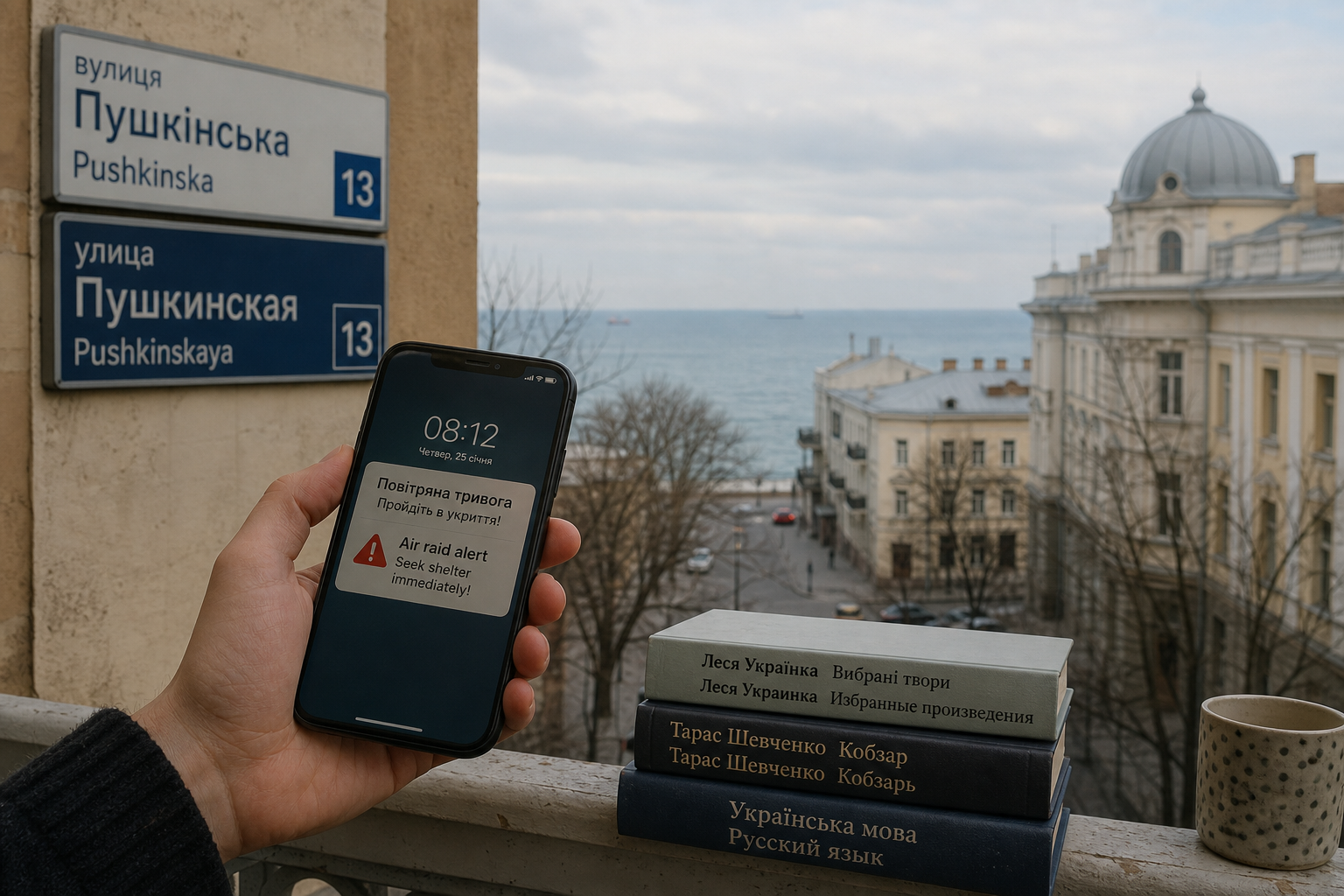
An air-raid siren sounds in Odesa. People check their phones to find out whether a drone or missile is approaching. Some prepare to move to a safer place. Yet many of their conversations continue in Russian—the language of the country attacking them. This may sound contradictory, but it is part of daily life in Ukraine.
オデーサで空襲警報が鳴ります。人々は、ドローンやミサイルが近づいているかどうかを知るために電話を確認します。一部の人は、より安全な場所へ移る準備をします。しかし、多くの会話はロシア語で続きます。彼らを攻撃している国の言語です。これは矛盾しているように聞こえるかもしれませんが、ウクライナの日常生活の一部です。
Odesa has always been a multilingual city. Ukrainian is the national language, but Russian is the native language of many residents. They grew up speaking it with their parents, friends, and neighbors. This does not mean that they see themselves as Russian. Many strongly identify as Ukrainian and want no connection with the Russian state.
オデーサはいつも多言語の都市でした。ウクライナ語は国語ですが、ロシア語は多くの住民の母語です。彼らは親、友人、近所の人々とそれを話しながら育ちました。これは、彼らが自分をロシア人だと考えていることを意味しません。多くは強くウクライナ人だと自覚し、ロシア国家とのつながりを望んでいません。
The Kremlin has repeatedly portrayed Russian-speaking Ukrainians as people who need protection from Kyiv. President Vladimir Putin has used this claim to help justify Russian actions in Ukraine. Yet Russian forces have destroyed homes and killed civilians in cities where Russian is widely spoken. For many Ukrainians, the invasion itself has shown that language does not determine political allegiance.
クレムリンは、ロシア語を話すウクライナ人を、キーウから保護を必要とする人々として繰り返し描いてきました。ウラジーミル・プーチン大統領は、ウクライナにおけるロシアの行動を正当化する助けとして、この主張を使ってきました。しかしロシア軍は、ロシア語が広く話される都市で家を破壊し、民間人を殺してきました。多くのウクライナ人にとって、侵攻そのものが、言語は政治的な忠誠を決定しないことを示しています。
The war has nevertheless changed how some people feel about Russian. Ukrainians who once used it every day have chosen to switch to Ukrainian. Some want to strengthen a language that was suppressed under Russian and Soviet rule. Others wish to distance themselves from the invading country. For them, speaking Ukrainian has become a personal act of resistance.
それでも戦争は、一部の人々がロシア語についてどう感じるかを変えました。かつて毎日それを使っていたウクライナ人が、ウクライナ語に切り替えることを選びました。一部は、ロシアおよびソ連の支配の下で抑圧された言語を強めたいと考えます。他の人は、侵攻する国から距離を置きたいと願います。彼らにとって、ウクライナ語を話すことは、個人的な抵抗の行為になっています。
Not everyone wants to make that change. Russian remains the language of many families, friendships, and soldiers serving in the Ukrainian military. Some people can speak Ukrainian but feel more comfortable expressing emotions or telling jokes in Russian. They argue that they should not have to abandon part of their own lives in order to prove their loyalty.
誰もがその変化を望んでいるわけではありません。ロシア語は、多くの家族、友情、そしてウクライナ軍で奉仕する兵士の言語のままでもあります。一部の人はウクライナ語を話せますが、感情を表したり冗談を言ったりするときはロシア語の方が楽だと感じます。彼らは、忠誠を証明するために自分の生活の一部を捨てる必要はないと主張します。
Ukraine’s language law requires Ukrainian in many areas of public life, including government and customer service. It does not prohibit people from speaking Russian in private. However, the social atmosphere has changed during the war. Russian speakers may come under pressure even when they fully support Ukraine, while critics of stricter language policies may hesitate to speak publicly.
ウクライナの言語法は、政府と顧客サービスを含む公的生活の多くの領域でウクライナ語を求めています。私的にロシア語を話すことを禁止してはいません。しかし、社会的な雰囲気は戦争のあいだに変わりました。ロシア語話者は、ウクライナを完全に支持していても圧力を受けることがあり、より厳しい言語政策の批判者は公に話すのをためらうかもしれません。
The question is therefore not simply whether Ukraine should protect its national language. Ukrainian clearly plays a central role in the country’s independence and resistance. The harder question is whether a nation at war can promote that language without treating its Russian-speaking citizens as less Ukrainian. Ultimately, who should define Ukrainian identity: history, language, or the choices people make?
したがって問いは、単にウクライナが国語を守るべきかどうかではありません。ウクライナ語は、国の独立と抵抗において明らかに中心的な役割を果たしています。より難しい問いは、戦争中の国が、ロシア語を話す市民をよりウクライナ人らしくないものとして扱うことなく、その言語を推進できるかどうかです。結局のところ、ウクライナ人のアイデンティティを誰が定義すべきでしょうか。歴史、言語、それとも人々が行う選択でしょうか。