
← News Topics

Ukraine: When Language Becomes Part of War

Day 2: Why Is Ukraine Reclaiming Its Own Language?

ウクライナ:言語が戦争の一部になるとき ― 第2日:ウクライナはなぜ自らの言語を取り戻そうとしているのか

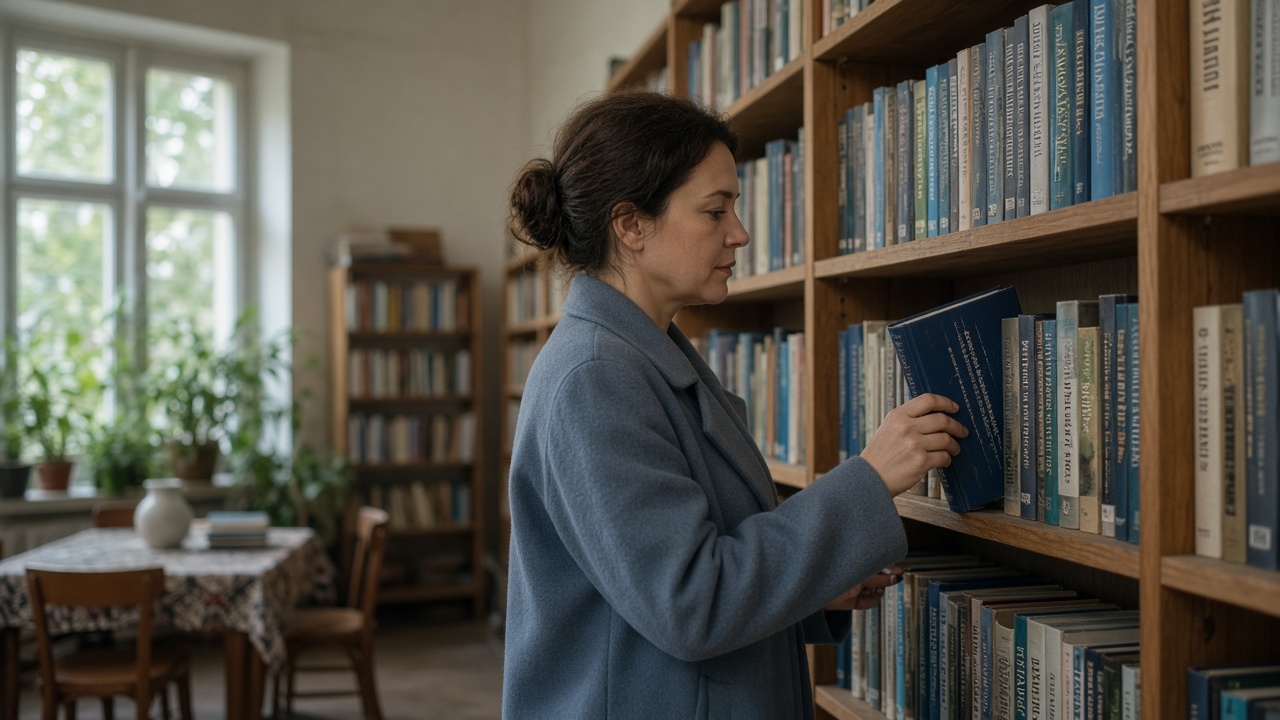
Ukrainian books in a library suggesting reclaiming language and culture

When Ukraine became independent in 1991, Ukrainian became the country’s only state language. Yet Russian remained common in cities such as Odesa, Kharkiv, and Kyiv. This was not simply the result of personal choice. It reflected centuries of political power. To understand why many Ukrainians are now trying to reclaim their language, we must look at how Russian became so influential.

ウクライナが1991年に独立したとき、ウクライナ語は国の唯一の国家語になりました。しかしロシア語は、オデーサ、ハルキウ、キーウのような都市で一般的なままでした。これは単に個人の選択の結果ではありませんでした。何世紀にもわたる政治権力を反映していました。多くのウクライナ人が今、自らの言語を取り戻そうとしている理由を理解するには、ロシア語がどのようにしてそれほど影響力を持つようになったかを見なければなりません。

During the nineteenth century, the Russian Empire controlled much of present-day Ukraine. Imperial officials often treated Ukrainian as a minor form of Russian rather than a separate language. Government decrees restricted Ukrainian books, education, and public performances. These measures did not eliminate Ukrainian, but they helped suppress its development in public and cultural life.

19世紀、ロシア帝国は現在のウクライナの多くを支配していました。帝国の役人はしばしば、ウクライナ語を別の言語ではなく、ロシア語の小さな形として扱いました。政府の法令は、ウクライナ語の本、教育、公演を制限しました。これらの措置はウクライナ語を根絶しませんでしたが、公的・文化的生活におけるその発展を抑える助けとなりました。

The early Soviet government briefly promoted Ukrainian during the 1920s. Schools, newspapers, and public institutions began using it more widely. Under Joseph Stalin, however, this policy was reversed. Ukrainian writers and intellectuals were arrested or killed, and Russian became increasingly important in government, higher education, and professional life. Over time, Ukrainian was often marginalized, especially in major cities.

初期のソビエト政府は、1920年代に短期間ウクライナ語を推進しました。学校、新聞、公的機関がより広くそれを使い始めました。しかしヨシフ・スターリンの下で、この政策は逆転しました。ウクライナ人の作家と知識人は逮捕または殺害され、ロシア語は政府、高等教育、職業生活でますます重要になりました。時間が経つにつれ、ウクライナ語はしばしば周辺化され、特に大都市でそうでした。

After independence, Ukraine did not suddenly become entirely Ukrainian-speaking. Millions of citizens continued to use Russian at home, and much of the country’s television, music, and popular culture came from Russia. Ukraine therefore took a gradual approach. A 2019 law strengthened Ukrainian in public services, government, and the media, while specifically excluding private communication. Russian-speaking citizens could retain their family language.

独立後、ウクライナは突然完全にウクライナ語を話す国にはなりませんでした。何百万人もの市民が家庭でロシア語を使い続け、国のテレビ、音楽、大衆文化の多くはロシアから来ていました。そのためウクライナは漸進的なアプローチを取りました。2019年の法律は、公共サービス、政府、メディアでウクライナ語を強化する一方、私的なコミュニケーションは明確に除外しました。ロシア語を話す市民は、家族の言語を保持できました。

Russia’s seizure of Crimea and involvement in eastern Ukraine in 2014 became a turning point. Moscow claimed that Russian speakers needed its protection. After Russia launched its full-scale invasion in 2022, this argument became even harder for many Ukrainians to accept. Russian forces attacked cities where Russian was widely spoken. Some Russian-speaking Ukrainians began using Ukrainian to reject Moscow’s claim that speaking Russian made them part of the “Russian world.”

2014年のロシアによるクリミアの奪取とウクライナ東部への関与は、転換点となりました。モスクワは、ロシア語話者がその保護を必要としていると主張しました。ロシアが2022年に全面侵攻を開始したあと、この主張は多くのウクライナ人にとってさらに受け入れがたくなりました。ロシア軍は、ロシア語が広く話される都市を攻撃しました。一部のロシア語を話すウクライナ人は、ロシア語を話すことが自分たちを「ロシア世界」の一部にするというモスクワの主張を拒むために、ウクライナ語を使い始めました。

Events in occupied territory have made the issue feel even more urgent. The United Nations has reported that Russian authorities have imposed Russian laws, education, and curricula while suppressing Ukrainian culture. In many schools, Ukrainian textbooks have been replaced with Russian ones that support Moscow’s version of the war. For Ukrainians, this suggests that language can be used not only to express identity but also to erase it.

占領地での出来事は、この問題をより緊急に感じさせるものにしました。国連は、ロシア当局がロシアの法律、教育、カリキュラムを押しつけながら、ウクライナ文化を抑圧してきたと報告しています。多くの学校では、ウクライナ語の教科書が、モスクワ版の戦争を支持するロシア語の教科書に置き換えられてきました。ウクライナ人にとって、これは言語がアイデンティティを表すためだけでなく、それを消すためにも使われうることを示唆しています。

Promoting Ukrainian is therefore about more than replacing one language with another. Many Ukrainians see it as correcting a long historical imbalance and protecting the country’s future. However, this history does not mean that every Russian-speaking Ukrainian supports Russia. Ukraine is trying to restore a language that was repeatedly pushed aside while also deciding how much space another deeply rooted language should continue to have.

したがってウクライナ語を推進することは、一つの言語を別のものに置き換えること以上のものです。多くのウクライナ人は、それを長い歴史的不均衡を正し、国の未来を守ることだと見ています。しかし、この歴史は、ロシア語を話すすべてのウクライナ人がロシアを支持することを意味しません。ウクライナは、繰り返し脇へ押しやられた言語を取り戻そうとしながら、深く根づいたもう一つの言語がどのくらいの空間を持ち続けるべきかも決めています。

Vocabulary

  1. reclaim — to take back something that was lost, taken away, or controlled by someone else. Example: The community is working to reclaim traditions that disappeared during colonial rule.
  2. decree — an official order issued by a government or ruler. Example: The king issued a decree prohibiting foreign ships from entering the port.
  3. suppress — to prevent an activity, idea, or form of expression from developing or continuing. Example: The government attempted to suppress criticism by closing independent newspapers.
  4. reverse — to change a decision, policy, or situation to its opposite. Example: The new administration may reverse its predecessor’s education policy.
  5. marginalize — to treat a person, group, or idea as unimportant or place it outside the center of society. Example: Minority languages may become marginalized when they are excluded from schools and public services.
  6. retain — to continue to have or keep something. Example: Many immigrant families retain their original language across several generations.
  7. turning point — an event that causes an important change in a situation. Example: The election became a turning point in the country’s political history.
  8. impose — to force a rule, system, or belief to be accepted. Example: The occupying power may impose new laws on the local population.
  9. erase — to remove or destroy something so that it is no longer present or remembered. Example: Changing the names of historical sites can be an attempt to erase a community’s past.

Comprehension Questions

  1. Why did Russian remain widely used after Ukrainian independence?
    1. Ukraine prohibited the teaching of Ukrainian.
    2. Russian influence had developed over centuries.
    3. Most Ukrainians had recently moved from Russia.
    4. Ukrainian had never existed as a separate language.

    ウクライナ独立後もロシア語が広く使われ続けたのはなぜですか?

  2. What happened to Ukrainian under the Russian Empire?
    1. It became the empire’s main official language.
    2. It was used in every university.
    3. Government measures restricted its public and cultural use.
    4. It completely disappeared from private life.

    ロシア帝国の下でウクライナ語に何が起きましたか?

  3. How did Soviet language policy change under Stalin?
    1. The promotion of Ukrainian was reversed.
    2. Russian was removed from public institutions.
    3. Every Soviet republic became independent.
    4. Ukrainian became the only language used in higher education.

    スターリンの下でソビエトの言語政策はどう変わりましたか?

  4. Why was 2014 a turning point?
    1. Ukraine joined the Soviet Union.
    2. Russia used the situation of Russian speakers to support its actions in Ukraine.
    3. Ukraine prohibited all private conversations in Russian.
    4. Odesa stopped using both Russian and Ukrainian.

    2014年が転換点だったのはなぜですか?

  5. What has the United Nations reported about occupied areas?
    1. Russian authorities have protected Ukrainian education.
    2. Schools have been allowed to choose any national curriculum.
    3. Russian systems have been introduced while Ukrainian identity has been suppressed.
    4. Language has played no role in the occupation.

    国連は占領地域について何を報告していますか?

Discussion Questions

  1. Can promoting a national language help a country recover from foreign rule?

    国語を推進することは、外国支配からの回復を国に助けることができますか?

  2. Should governments try to correct historical inequalities between languages?

    政府は言語間の歴史的な不平等を正そうとすべきですか?

  3. Why might an occupying power change school textbooks and place names?

    占領勢力が学校の教科書や地名を変えることがあるのはなぜですか?

  4. Can a language be both part of a person’s identity and a tool used by a foreign government?

    言語は、人のアイデンティティの一部であると同時に、外国政府が使う道具にもなりえますか?

  5. How can Ukraine strengthen Ukrainian without marginalizing Russian-speaking citizens?

    ウクライナは、ロシア語を話す市民を周辺化せずに、ウクライナ語をどう強められますか?

Speaking Practice

Speak for about one minute about why Ukraine is promoting the Ukrainian language.

ウクライナがウクライナ語を推進している理由について、約1分間話してください。

Include:

  • how Ukrainian was treated under Russian and Soviet rule

    ロシアとソ連の支配の下でウクライナ語がどう扱われたか

  • why Russian remained common after independence

    独立後もロシア語が一般的だった理由

  • how 2014 and 2022 changed attitudes

    2014年と2022年が態度をどう変えたか

  • what is happening to Ukrainian culture in occupied areas

    占領地域でウクライナ文化に何が起きているか